
Catalogue Search | MBRL


Are you sure you want to remove the book from the shelf?

{{itemTitle}}
61,937
result(s) for
"heritage tourism"
Sort by:

Creating and managing experiences in cultural tourism
\"A key tool in creating a destination experience is the experience economy. This is even more true for cultural tourism experiences since culture's intrinsic values are inherently linked to experiences. The book Creating and Managing Experiences in Cultural Tourism aims to provide theoretical and practical background on the experience economy applied in sustainable cultural tourism. This entails a wide range of subjects addressing cultural heritage, creative industries and contemporary culture. Theoretical approaches to experience creation are presented to offer the \"rules\" of designing the cultural tourism experiences. With inspirational and innovative examples, it provides an insight into the field of cultural tourism from prominent editors, authors and contributors in their respective fields\"-- Provided by publisher.
Book
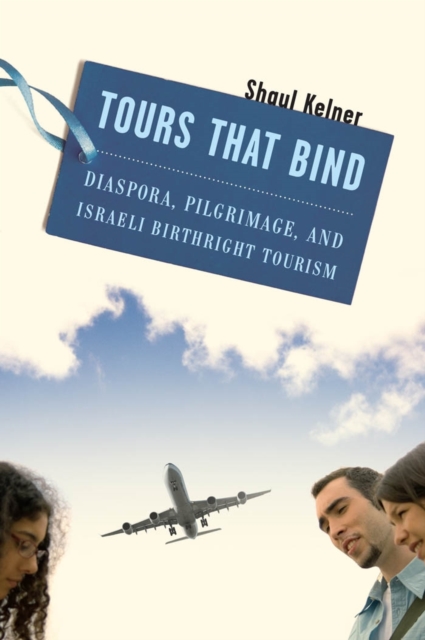
Tours That Bind
Since 1999 hundreds of thousands of young American Jews have visited Israel on an all-expense-paid 10-day pilgrimage-tour known as Birthright Israel. The most elaborate of the state-supported homeland tours that are cropping up all over the world, this tour seeks to foster in the American Jewish diaspora a lifelong sense of attachment to Israel based on ethnic and political solidarity. Over a half-billion dollars (and counting) has been spent cultivating this attachment, and despite 9/11 and the ongoing Israeli-Palestinian conflict the tours are still going strong. Based on over seven years of first-hand observation in modern day Israel, Shaul Kelner provides an on-the-ground look at this hotly debated and widely emulated use of tourism to forge transnational ties. We ride the bus, attend speeches with the Prime Minister, hang out in the hotel bar, and get a fresh feel for young American Jewish identity and contemporary Israel. We see how tourism's dynamism coupled with the vibrant human agency of the individual tourists inevitably complicate tour leaders' efforts to rein tourism in and bring it under control. By looking at the broader meaning of tourism, Kelner brings to light the contradictions inherent in the tours and the ways that people understandtheir relationship to place both materially and symbolically. Rich in detail, engagingly written, and sensitive to the complexities of modern travel and modern diaspora Jewishness, Tours that Bind offers a new way of thinking about tourism as a way through which people develop understandings of place, society, and self.
eBook


Asian Heritage Management
The prevalent global heritage discourse has been primarily Euro-centric in its origin, premise, and praxis. Diverse cultural, historical, and geographical contexts, such as that of Asia, call for more context-specific approaches to heritage management. This book explores this complexity of managing the cultural heritage in Asia.
Case studies include sites of Angkor, Himeji Castle, Kathmandu Valley, Luang Prabang, Lumbini, and Malacca, and the book uses these to explore the religious worldviews, heritage policies, intangible heritage dimensions, traditional preservation practices, cultural tourism, and the notion of cultural landscape that are crucial in understanding the cultural heritage in Asia. It critiques the contemporary regulatory frameworks in operation and focuses on the issues of global impact on the local cultures in the region. The book goes on to emphasize the need for integrated heritage management approaches that encompass the plurality of heritage conservation concerns in Asian countries.
Themes are discussed from the vantage point of heritage scholars and practitioners in the South, Southeast, and East Asia. This book thus presents a distinctive Asian perspective which is a valuable source for students and practitioners of heritage within and beyond the Asian context.
eBook


Legendary Hawai'i and the Politics of Place
Hawaiian legends figure greatly in the image of tropical paradise that has come to represent Hawai'i in popular imagination. But what are we buying into when we read these stories as texts in English-language translations? Cristina Bacchilega poses this question in her examination of the way these stories have been adapted to produce a legendary Hawai'i primarily for non-Hawaiian readers or other audiences.With an understanding of tradition that foregrounds history and change, Bacchilega examines how, following the 1898 annexation of Hawai'i by the United States, the publication of Hawaiian legends in English delegitimized indigenous narratives and traditions and at the same time constructed them as representative of Hawaiian culture. Hawaiian mo'olelo were translated in popular and scholarly English-language publications to market a new cultural product: a space constructed primarily for Euro-Americans as something simultaneously exotic and primitive and beautiful and welcoming. To analyze this representation of Hawaiian traditions, place, and genre, Bacchilega focuses on translation across languages, cultures, and media; on photography, as the technology that contributed to the visual formation of a westernized image of Hawai'i; and on tourism as determining postannexation economic and ideological machinery.In a book with interdisciplinary appeal, Bacchilega demonstrates both how the myth of legendary Hawai'i emerged and how this vision can be unmade and reimagined.
eBook

Sustainability Assessment of Cultural Heritage Tourism: Case Study of Pingyao Ancient City in China
Cultural heritage tourism (CHT) has become an important part of the tourism industry. Therefore, it is essential to evaluate the sustainability of CHT destinations for tourism development. The majority of existing studies have examined the destination sustainability of ecotourism with the considerations of three stakeholder groups, namely, resource administration, tourist, and local community. However, the impact of tourism enterprises on destination sustainability has been constantly ignored in CHT-related studies. To fill these gaps, this study aims at developing an indicator system for comprehensively assessing the sustainability of CHT destinations. Specifically, this study identified an evaluation indicator system based on the Delphi technique and applied it to the context of Pingyao Ancient City in China. Results demonstrated that scores obtained by all four stakeholder groups ranged between 3.0 and 4.0 and the overall sustainability score was only 63.94, indicating that Pingyao was in the “somewhat sustainable” state according to the criteria (0−25, unsustainable; 25−50, somewhat unsustainable; 50−75, somewhat sustainable; 75−100, sustainable) specified in previous studies. A more balanced outcome should be achieved where each stakeholder’s interests are fully considered, but not at the expense of the others. The findings are of great significance for heritage tourism literature and sustainable destination management.
Journal Article

Handbook of research on cultural tourism and sustainability
\"This publication gives a different perspective of cultural tourism with some updated theoretical frameworks of the topics in analysis, complemented with case studies, best practices and some data related to international and differentiated tourism contexts (urban, natural, rural, historical centers)\"-- Provided by publisher.
BOOK

The Politics of Heritage Tourism in China
This volume unravels the politics surrounding behind China’s hegemonic project of heritage tourism development in Lijiang. It provides a compelling study of the dialectical relationships between global and domestic capital, the state, tourists and locals as they collude, collaborate and contest one another to ready Lijiang for tourist consumption.
Using rich material from insightful interviews and quantitative data, the authors show how complex tourism development can be even as it strives to do good for the community. Su and Teo investigate the practices of contestation and negotiation of identity within Lijiang; analyze the negotiations that transform material and vernacular landscapes; and suggests strategies that will enable sustained tourism interest in this location. Linking Gramsci’s theory on hegemony to the cultural politics of space, this book has two major strengths: it establishes a theoretical framework to conceptualize power relations in tourism space and provides critical insights into the rapidly shifting socio-political landscape of contemporary China. Comparisons with other Chinese heritage sites are also provided.
By addressing the power struggles inevitable in the process of tourism development, The Politics of Heritage Tourism in China provides an innovative understanding of China’s dynamic politics in a period of transition. As such, it will address the needs of students and academic scholars working in the fields of China studies, tourism, cultural studies, urban studies, sociology, geography, political science and heritage studies.
1. Rethinking tourism politics 2. The cultural politics of tourism: exploring the complexity of hegemony 3. Locating Lijiang: connections and process 4. Producing heritage: Lijiang’s immersion into global tourism 5. Consuming heritage: tourists’ expectations and influence on Lijiang 7. Local agency in heritage tourism 8. Conclusion: cultural politics of heritage tourism and beyond
Xiaobo Su is Assistant Professor at the Department of Geography, University of Oregon.
Peggy Teo is an independent scholar working on tourism issues in Asia. She is also co-editor of Interconnected Worlds: Tourism in Southeast Asia (Pergamon, 2001) and Asia on Tour: Exploring the Rise of Asian Tourism (Routledge, 2009)
eBook