
Catalogue Search | MBRL


Are you sure you want to remove the book from the shelf?

{{itemTitle}}
289,552
result(s) for
"historic sites"
Sort by:


The Archaeology of Improvement in Britain, 1750–1850
In this innovative 2007 study, Sarah Tarlow shows how the archaeology of this period manifests a widespread and cross-cutting ethic of improvement. Theoretically informed and drawn from primary and secondary sources in a range of disciplines, the author considers agriculture and the rural environment, towns, and buildings such as working-class housing and institutions of reform. From bleach baths to window glass, rubbish pits to tea wares, the material culture of the period reflects a particular set of values and aspirations. Tarlow examines the philosophical and historical background to the notion of improvement and demonstrates how this concept is a useful lens through which to examine the material culture of later historical Britain.
eBook


Archaeology, Narrative, and the Politics of the Past
In this innovative work, Julia King moves nimbly among a
variety of sources and disciplinary
approaches—archaeological, historical, architectural,
literary, and art-historical—to show how places take on,
convey, and maintain meanings. Focusing on the beautiful
Chesapeake Bay region of Maryland, King looks at the ways in
which various groups, from patriots and politicians of the
antebellum era to present-day archaeologists and
preservationists, have transformed key landscapes into
historical, indeed sacred, spaces. The sites King examines
include the region’s vanishing tobacco farms; St.
Mary’s City, established as Maryland’s first
capital by English settlers in the seventeenth century; and
Point Lookout, the location of a prison for captured
Confederate soldiers during the Civil War. As the author
explores the historical narratives associated with such places,
she uncovers some surprisingly durable myths as well as
competing ones. St. Mary’s City, for example, early on
became the center of Maryland’s “founding
narrative” of religious tolerance, a view commemorated in
nineteenth-century celebrations and reflected even today in
local museum exhibits and preserved buildings. And at Point
Lookout, one private group has established a Confederate
Memorial Park dedicated to those who died at the prison, thus
nurturing the Lost Cause ideology that arose in the South in
the late 1800s, while nearby the custodians of a 1,000-acre
state park avoid controversy by largely ignoring the
area’s Civil War history, preferring instead to
concentrate on recreation and tourism, an unusually popular
element of which has become the recounting of ghost stories. As
King shows, the narratives that now constitute the public
memory in southern Maryland tend to overlook the region’s
more vexing legacies, particularly those involving slavery and
race. Noting how even her own discipline of historical
archaeology has been complicit in perpetuating old narratives,
King calls for research—particularly archaeological
research—that produces new stories and
“counter-narratives” that challenge old perceptions
and interpretations and thus convey a more nuanced grasp of a
complicated past.
eBook


The economics of uniqueness
In a world where half of the population lives in cities and more than 90 percent of urban growth is occurring in the developing world, cities struggle to modernize without completely losing their unique character, which is embodied by their historic cores and cultural heritage assets. As countries develop, cultural heritage can provide a crucial element of continuity and stability: the past can become a foundation for the future. This book collects innovative research papers authored by leading scholars and practitioners in heritage economics, and presents the most current knowledge on how heritage assets can serve as drivers of local economic development. What this book tries to suggest is a workable approach to explicitly take into account the cultural dimensions of urban regeneration in agglomerations that have a history and possess a unique character, going beyond an approach based solely on major cultural heritage assets or landmarks. The knowledge disseminated through this book will help stakeholders involved in preparation, implementation, and supervision of development investments to better assess the values of cultural heritage assets and incorporate them in urban development policies.
eBook

The geek atlas : 128 places where science & technology come alive
The history of science is all around us, if you know where to look. With this unique traveler's guide, you'll learn about 128 destinations around the world where discoveries in science, mathematics, or technology occurred or is happening now. Travel to Munich to see the world's largest science museum, watch Foucault's pendulum swinging in Paris, ponder a descendant of Newton's apple tree at Trinity College, Cambridge, and more. Each site in The Geek Atlas focuses on discoveries or inventions, and includes information about the people and the science behind them. Full of interesting photos and illustrations, the book is organized geographically by country (by state within the U.S.), complete with latitudes and longitudes for GPS devices. - Publisher.
Book
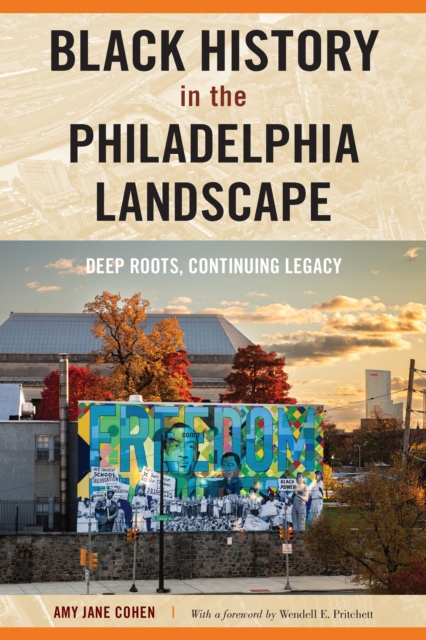
Black History in the Philadelphia Landscape
Black Philadelphians have shaped Philadelphia history since colonial times.In Black History in the Philadelphia Landscape , Amy Cohen recounts notable aspects of the Black experience in Philadelphia from the late 1600s to the 1960s and how this history is marked in the contemporary city.
eBook


Museums, Monuments, and National Parks
The rapid expansion of the field of public history since the 1970s has led many to believe that it is a relatively new profession. In this book, Denise D. Meringolo shows that the roots of public history actually reach back to the nineteenth century, when the federal government entered into the work of collecting and preserving the nation’s natural and cultural resources. Scientists conducting research and gathering specimens became key figures in a broader effort to protect and interpret the nation’s landscape. Their collaboration with entrepreneurs, academics, curators, and bureaucrats alike helped pave the way for other governmental initiatives, from the Smithsonian Institution to the parks and monuments today managed by the National Park Service. All of these developments included interpretive activities that shaped public understanding of the past. Yet it was not until the emergence of the educationoriented National Park Service history program in the 1920s and 1930s that public history found an institutional home that grounded professional practice simultaneously in the values of the emerging discipline and in government service. Even thereafter, tensions between administrators in Washington and practitioners on the ground at National Parks, monuments, and museums continued to define and redefine the scope and substance of the field. The process of definition persists to this day, according to Meringolo, as public historians establish a growing presence in major universities throughout the United States and abroad.
eBook