
Catalogue Search | MBRL


Are you sure you want to remove the book from the shelf?

{{itemTitle}}
2,698
result(s) for
"history of the Democratic Party"
Sort by:

The Education Myth
The Education Myth questions
the idea that education represents the best, if not the only, way
for Americans to access economic opportunity. As Jon
Shelton shows, linking education to economic well-being was not
politically inevitable. In the eighteenth and nineteenth centuries,
for instance, public education was championed as a way to help
citizens learn how to participate in a democracy. By the 1930s,
public education, along with union rights and social security,
formed an important component of a broad-based fight for social
democracy.
Shelton demonstrates that beginning in the 1960s, the political
power of the education myth choked off powerful social democratic
alternatives like A. Philip Randolph and Bayard Rustin's Freedom
Budget. The nation's political center was bereft of any realistic
ideas to guarantee economic security and social dignity for the
majority of Americans, particularly those without college degrees.
Embraced first by Democrats like Lyndon Johnson, Jimmy Carter, and
Bill Clinton, Republicans like George W. Bush also pushed the
education myth. The result, over the past four decades, has been
the emergence of a deeply inequitable economy and a drastically
divided political system.
eBook

Red State
In November 1960, the Democratic party dominated Texas. The newly elected vice president, Lyndon Johnson, was a Texan. Democrats held all thirty statewide elective positions. The state legislature had 181 Democrats and no Republicans or anyone else. Then fast forward fifty years to November 2010. Texas has not voted for a Democratic president since 1976. Every statewide elective office is held by Republicans. Representing Texas in Washington is a congressional delegation of twenty-five Republicans and nine Democrats. Republicans control the Texas Senate by a margin of nineteen to twelve and the Texas House of Representatives by 101 to 49. Red State explores why this transformation of Texas politics took place and what these changes imply for the future. As both a political scientist and a Republican party insider, Wayne Thorburn is especially qualified to explain how a solidly one-party Democratic state has become a Republican stronghold. He analyzes a wealth of data to show how changes in the state’s demographics—including an influx of new residents, the shift from rural to urban, and the growth of the Mexican American population—have moved Texas through three stages of party competition, from two-tiered politics, to two-party competition between Democrats and Republicans, and then to the return to one-party dominance, this time by Republicans. His findings reveal that the shift from Democratic to Republican governance has been driven not by any change in Texans’ ideological perspective or public policy orientation—even when Texans were voting Democrat, conservatives outnumbered liberals or moderates—but by the Republican party’s increasing identification with conservatism since 1960.
eBook
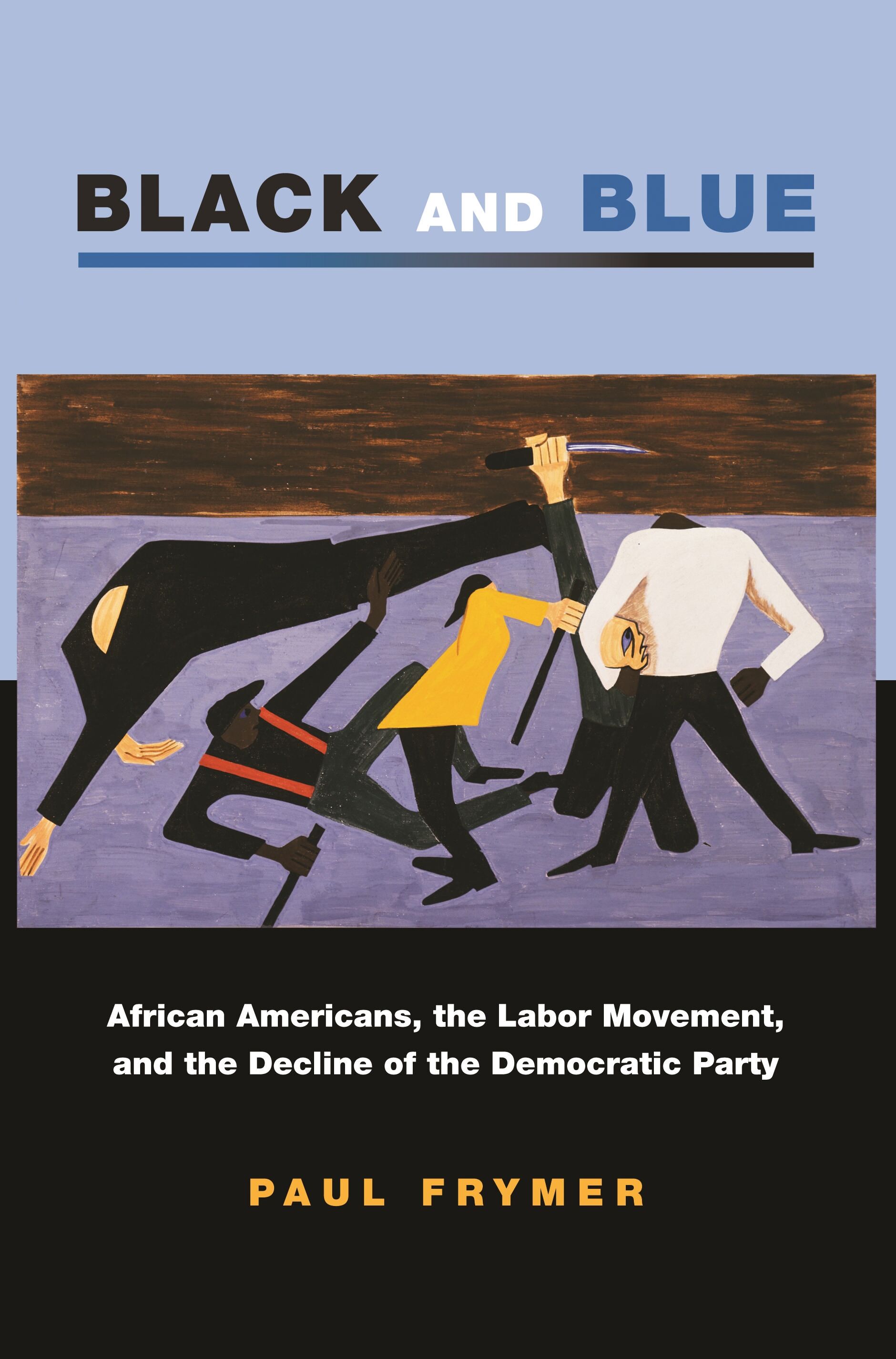
Black and blue
In the 1930s, fewer than one in one hundred U.S. labor union members were African American. By 1980, the figure was more than one in five.Black and Blueexplores the politics and history that led to this dramatic integration of organized labor. In the process, the book tells a broader story about how the Democratic Party unintentionally sowed the seeds of labor's decline.
The labor and civil rights movements are the cornerstones of the Democratic Party, but for much of the twentieth century these movements worked independently of one another. Paul Frymer argues that as Democrats passed separate legislation to promote labor rights and racial equality they split the issues of class and race into two sets of institutions, neither of which had enough authority to integrate the labor movement.
From this division, the courts became the leading enforcers of workplace civil rights, threatening unions with bankruptcy if they resisted integration. The courts' previously unappreciated power, however, was also a problem: in diversifying unions, judges and lawyers enfeebled them financially, thus democratizing through destruction. Sharply delineating the double-edged sword of state and legal power,Black and Bluechronicles an achievement that was as problematic as it was remarkable, and that demonstrates the deficiencies of race- and class-based understandings of labor, equality, and power in America.
eBook

Confessions of an interest group
Following World War II, the Catholic Church in Europe faced the challenge of establishing political influence with newly emerging democratic governments. The Church became, as Carolyn Warner pointedly argues, an interest group like any other, seeking to attain and solidify its influence by forming alliances with political parties. The author analyzes the Church's differing strategies in Italy, France, and Germany using microeconomic theories of the firm and historical institutionalism. She demonstrates how only a strategic perspective can explain the choice and longevity of the alliances in each case. In so doing, the author challenges earlier work that ignores the costs to interest groups and parties of sustaining or breaking their reciprocal links.
eBook

Making Minnesota Liberal
In Making Minnesota Liberal, Jennifer A. Delton delves into the roots of Minnesota politics and traces the change from the regional, third-party, class-oriented politics of the Farmer-Labor party to the national, two-party, pluralistic liberalism of the Democratic-Farmer-Labor party (DFL). While others have examined how anticommunism and the Cold War shaped this transformation, Delton takes a new approach, showing the key roles played by antiracism and the civil rights movement. In telling this story, Delton contributes to our understanding not only of Minnesota’s political history but also of the relationship between antiracism and American politics in the twentieth century.
eBook

The Origins of Christian Democracy
This book is a pioneering contribution to the history of the founding of the West German political system after the Second World War. The political cooperation between Catholics and Protestants that resulted in the formation of the Christian Democratic Union (CDU) in occupied and early West Germany represented a significant change from a long history of hostility in confessional relations. Given that the CDU went on to dominate politics in West Germany well into the 1960s, Maria D. Mitchell argues that an understanding of what made this interconfessional party possible is crucial to an exploration of German history in the postwar period. She examines the political history of party formation as well as the religious beliefs and motivations that shaped the party's philosophy and positions. She provides an authoritative guide to the complex processes of maneuvering and negotiation that produced the CDU during 1945-46. The full range of political possibilities is discussed, including the suppressed alternatives to the Adenauer/Erhard axis that eventually defined the party's trajectory during the 1950s and the abortive Christian Socialism associated with Jacob Kaiser.
eBook
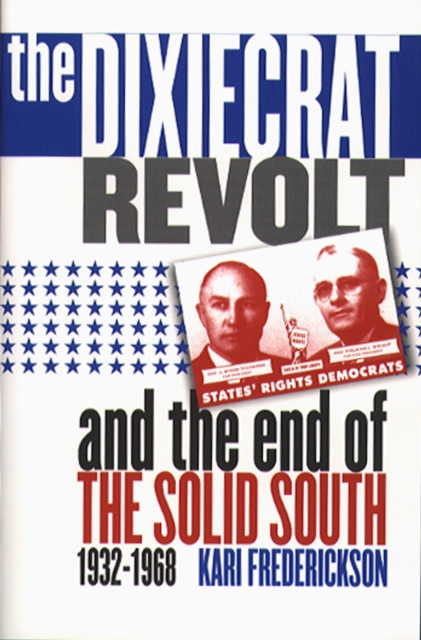
The Dixiecrat revolt and the end of the Solid South, 1932-1968
In 1948, a group of conservative white southerners formed the States' Rights Democratic Party, soon nicknamed the \"Dixiecrats,\" and chose Strom Thurmond as their presidential candidate. Thrown on the defensive by federal civil rights initiatives and unprecedented grassroots political activity by African Americans, the Dixiecrats aimed to reclaim conservatives' former preeminent position within the national Democratic Party and upset President Harry Truman's bid for reelection. The Dixiecrats lost the battle in 1948, but, as Kari Frederickson reveals, the political repercussions of their revolt were significant.
Frederickson situates the Dixiecrat movement within the tumultuous social and economic milieu of the 1930s and 1940s South, tracing the struggles between conservative and liberal Democrats over the future direction of the region. Enriching her sweeping political narrative with detailed coverage of local activity in Alabama, Louisiana, Mississippi, and South Carolina - the flashpoints of the Dixiecrat campaign - she shows that, even without upsetting Truman in 1948, the Dixiecrats forever altered politics in the South. By severing the traditional southern allegiance to the national Democratic Party in presidential elections, the Dixiecrats helped forge the way for the rise of the Republican Party in the region.
eBook

Preserving the white man's republic : Jacksonian democracy, race, and the transformation of American conservatism
As Lynn's book shows, this movement sent conservatism on a new, populist trajectory, one in which democracy can be called upon to legitimize inequality and hierarchy, a uniquely American conservatism that endures in our republic today.
eBook
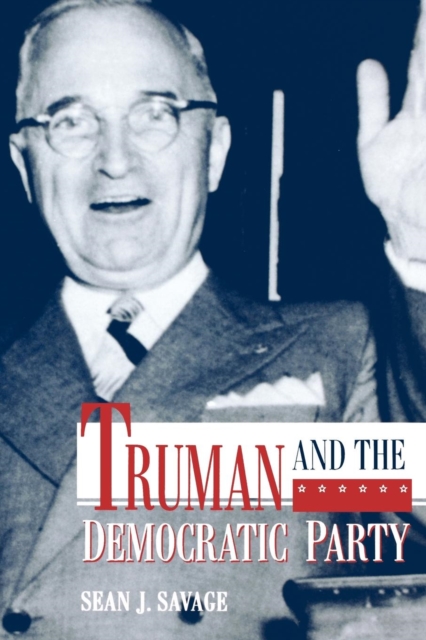
Truman and the Democratic Party
What best defines a Democrat in the American political arena -- idealistic reformer or pragmatic politician? Harry Truman adopted both roles and in so doing defined the nature of his presidency.
Truman and the Democratic Partyis the first book to deal exclusively with the president's relationship with the Democratic party and his status as party leader. Sean J. Savage addresses Truman's twin roles of party regular and liberal reformer, examining the tension that arose from this duality and the consequences of that tension for Truman's political career.
Truman saw the Democratic party change during his lifetime from a rural-dominated minority party often lacking a unifying agenda to an urban-dominated majority party with strong liberal policy objectives. A seasoned politician who valued party loyalty and recognized the value of political patronage, Truman was also attracted to a liberal ideology that threatened party unity by alienating southern Democrats. By the time he succeeded Franklin Roosevelt, the diversity of opinions and demands among party members led Truman to alternate between two personas: the reformer committed to liberal policy goal -- civil rights, national health insurance, federal aid to education -- and the party regular who sought greater harmony among fellow Democrats.
Drawing on personal interview with former Truman administration members and party officials and on archival materials -- most notably papers of the Democratic National Committee at the Harry S. Truman Library -- Savage has produced a fresh perspective that is both shrewd and insightful. This book offers historians and political scientists a new way of looking at the Truman administration and its impact on key public policies.
eBook

Roosevelt's Purge
In his first term in office, Franklin Roosevelt helped pull the nation out of the Great Depression with his landmark programs. In November 1936, every state except Maine and Vermont voted enthusiastically for his reelection. But then the political winds shifted. Not only did the Supreme Court block some of his transformational experiments, but he also faced serious opposition within his own party. Conservative Democrats such as Senators Walter George of Georgia and Millard Tydings of Maryland allied themselves with Republicans to vote down New Deal bills. Susan Dunn tells the dramatic story of FDR's unprecedented battle to drive his foes out of his party by intervening in Democratic primaries and backing liberal challengers to conservative incumbents. Reporters branded his tactic a \"purge\"-and the inflammatory label stuck. Roosevelt spent the summer months of 1938 campaigning across the country, defending his progressive policies and lashing out at conservatives. Despite his efforts, the Democrats took a beating in the midterm elections. The purge stemmed not only from FDR's commitment to the New Deal but also from his conviction that the nation needed two responsible political parties, one liberal, the other conservative. Although the purge failed, at great political cost to the president, it heralded the realignment of political parties that would take place in the 1960s, 1970s, and 1980s. By the end of the century, the irreconcilable tensions within the Democratic Party had exploded, and the once solidly Democratic South was solid no more. It had taken sixty years to resolve the tangled problems to which FDR devoted one frantic, memorable summer.
eBook