
Catalogue Search | MBRL


Are you sure you want to remove the book from the shelf?

{{itemTitle}}
337
result(s) for
"holy sites"
Sort by:

Essential Oil Analysis and Antimicrobial Evaluation of Three Aromatic Plant Species Growing in Saudi Arabia
Arabian flora is a rich source of bioactive compounds. In this study, we investigated three aromatic plant species with the aim of finding valuable sources of antimicrobial agents against common pathogenic microorganisms. We focused especially on microorganisms, which cause outbreaks of infectious disease during mass gatherings and pilgrimages season in Saudi Arabia. The essential oils of three aromatic plant species were hydrodistilled from flowering aerial parts of Lavandula pubescens Decne. and Pulicaria incisa subsp. candolleana E.Gamal-Eldin, and from leaves, stems, ripe and unripe fruits of Juniperus procera Hochst. Ex Endl. They were subsequently analyzed by gas chromatography-mass spectrometry (GC-MS). The main constituents of L. pubescens were found to be carvacrol (55.7%), methyl carvacrol (13.4%), and β-bisabolene (9.1%). P. incisa subsp. Candolleana essential oil was rich in linalool (33.0%), chrysanthenone (10.3%), eugenol (8.9%), and cis-chrysanthenol (8.0%); the major components of J. procera essential oil were α-pinene (31.3–62.5%) and δ-3-carene (7.3–30.3%). These essential oils were tested against thirteen American Type Culture Collection (ATCC) strains of Gram-positive and Gram-negative bacteria using the agar diffusion assay. The only effective essential oil was that of L. pubescens and the most sensitive strains were Acinetobacter baumannii, Salmonella typhimurium, Shigella sonnei, Enterococcus faecalis and Staphylococcus epidermidis. Carvacrol, the major constituent of L. pubescens, was tested on these strains and was compared with vancomycin, amikacin, and ciprofloxacin. The Minimum Inhibitory Concentration (MIC) and Minimum Bactericidal Concentration (MBC) assays of L. pubescens essential oil and carvacrol revealed that Gram-negative strains were more susceptible than the Gram-positive ones.
Journal Article

Detecting Land Surface Temperature Variations Using Earth Observation at the Holy Sites in Makkah, Saudi Arabia
During Hajj, Muslims throughout the globe assemble at the holy sites in Makkah, Saudi Arabia. The Saudi government aims to increase the number of pilgrims. To ensure the pilgrims’ safety from the impact of surface urban heat island (SUHI), a scientific approach using artificial intelligence and Earth observation (EO) is recommended for crowd management and human health. SUHI is usually measured using satellite LST data. UHIs impact the walkability of cities in hot climates. The development of digital technologies has provided researchers with a better understanding of crowd management modeling to control such a mass gathering, especially within the summer season and in drought regions. In this study, an approach was used to detect the UHI in holy sites and understand the factors causing them. To achieve this goal, EO data were used to calculate the LST using the Landsat 8 thermal band (TIRS) and calculating the surface emissivity and Normalized Difference Vegetation Index (NDVI). Then, UHIs were identified by adding the mean of the LST to half of its standard deviation. Based on the results of this study, LST had a strong correlation with NDVI (negative) in Arafah. In addition, the strength of the correlation became much weaker within Mina and Muzdalifah. As for the correlation of LST and elevation, the strength appeared to be weak but negative in Arafah, but stronger in Muzdalifah and Mina. The results show that there is a certain correlation between LST, NDVI, and NDBI and elevation in the study area. Using Earth observation technologies can help in studying climate change.
Journal Article

Assessing Spatiotemporal Distribution of Air Pollution in Makkah, Saudi Arabia, During the Hajj 2023 and 2024 Using Geospatial Techniques
Mass gatherings such as the annual Hajj pilgrimage in Makkah, Saudi Arabia, generate extreme, short-term anthropogenic emission loads with significant air quality and public health implications. This study assesses the spatiotemporal dynamics of key atmospheric pollutants—including nitrogen dioxide (NO2), carbon monoxide (CO), sulfur dioxide (SO2), formaldehyde (HCHO), and aerosols—across Makkah and its holy sites before and during the Hajj seasons of 2023 and 2024. Using high-resolution Sentinel-5P TROPOMI satellite data, pollutant fields were reconstructed at 100 m spatial resolution via cloud-based geospatial analysis on the Google Earth Engine. During Hajj 2023, spatially resolved NO2 concentrations ranged from 15.4 μg/m3 to 38.3 μg/m3 with an average of 24.7 μg/m3, while SO2 during the 2024 event peaked at 51.2 μg/m3 in key hotspots, occasionally exceeding World Health Organization (WHO) guideline values. Aerosol index values showed episodic surges (up to 1.43), particularly over transportation corridors, parking areas, and logistics facilities. CO concentrations reached values as high as 1069.8 μg/m3 in crowded zones, and HCHO concentrations surged up to 9.99 μg/m3 during peak periods. Quantitative correlation analysis revealed that during Hajj, atmospheric chemistry diverged from urban baseline: the NO2–SO2 relationship shifted from strongly negative pre-Hajj (r = −0.74) to moderately positive during the event (r = 0.35), while aerosol–HCHO correlations intensified negatively from r = −0.23 pre-Hajj to r = −0.50 during Hajj. Meteorological analysis indicated significant positive correlations between wind speed and NO2 (r = 0.35) and wind speed and CO (r = 0.35) during 2024, demonstrating that extreme emission rates overwhelmed typical dispersive processes. Relative humidity was positively correlated with aerosol loading (r = 0.37), pointing to hygroscopic growth patterns. These results quantitatively demonstrate that Hajj drives a distinct, event-specific pollution regime, characterized by sharp increases in key pollutant concentrations, altered inter-pollutant and pollutant–meteorology relationships, and spatially explicit hotspots driven by human activity and infrastructure. The integrated satellite–meteorology workflow enabled near-real-time monitoring in a data-sparse environment and establishes a scalable framework for evidence-based air quality management and health risk reduction in mass gatherings.
Journal Article

Jewish–Christian Interaction in Ethiopia as Reflected in Sacred Geography: Expressing Affinity with Jerusalem and the Holy Land and Comemorating the Betä Ǝsraʾel–Solomonic Wars
Affinity with the Holy Land, and especially with Jerusalem, is a common theme in the sacred geography of Abrahamic religions, expressed in prayer houses and holy sites. This theme was especially prominent in Solomonic Ethiopia, both among Ethiopian Orthodox Christians and among the Betä Ǝsraʾel (Ethiopian Jews). This article will examine expressions of affinity with Jerusalem and the Holy Land in Betä Ǝsraʾel holy sites and religious architecture, and shed light on the interreligious discourse related to such expressions, as well as other forms of interreligious discourse expressed by these two communities in sacred geography. This will demonstrate that in Solomonic Ethiopia, affinity with the Holy Land was a core element in expressing an Israelite identity. Both the Betä Ǝsraʾel and the Ethiopian Orthodox Christians saw themselves as the biological and spiritual heirs of the biblical Israelites, and this concept played a key role in shaping their sacred geography to allude to biblical sites and events. This will also demonstrate that, building upon a vocabulary with common features, the sacred geography and religious architecture of each community was a means to express its unique identity. As such, it provides insight regarding differences in religious concepts.
Journal Article
Encountering the Sacred
This innovative study sheds new light on one of the most spectacular changes to occur in late antiquity—the rise of pilgrimage all over the Christian world—by setting the phenomenon against the wide background of the political and theological debates of the time. Asking how the emerging notion of a sacred geography challenged the leading intellectuals and ecclesiastical authorities, Brouria Bitton-Ashkelony deftly reshapes our understanding of early Christian mentalities by unraveling the process by which a territory of grace became a territory of power. Examining ancient writers' responses to the rising practice of pilgrimage, Bitton-Ashkelony offers a nuanced reading of their thinking on the merits and the demerits of pilgrimage, revealing theological and ecclesiastical motivations that have been overlooked, and questioning the long-held assumption of scholars that pilgrimage was only a popular, not an elite, religious practice. In addition to Greek and Latin sources, she includes Syriac material, which allows her to build a rich picture of the emerging theology of landscape that took shape over the fourth to sixth centuries.
eBook
Pilgrimage to the end of the world
Traveling two and a half months and one thousand miles along the ancient route through southern France and northern Spain, Conrad Rudolph made the passage to the holy site of Santiago de Compostela, one of the most important modern-day pilgrimage destinations for Westerners. In this chronicle of his travels to this captivating place, Rudolph melds the ancient and the contemporary, the spiritual and the physical, in a book that is at once travel guide, literary work, historical study, and memoir.
eBook

\... And the Ishmaelites Honour the Site\: Images of Encounters Between Jews and Muslims at Jewish Sacred Places in Medieval Hebrew Travelogues
This paper presents several images of encounters between Jews and Muslims at sacred sites, as portrayed in medieval Jewish travel writings stemming from the Crusades and the Mamlūk period. These images range from examples of shared ownership and practices to situations where different parties vied for control and ownership. The narratives contained in these sources, written predominantly by European authors for a European readership, strive to confirm the Jewish identity of the sacred sites in the Holy Land and Babylonia and the Jews' rights of ownership to them. They not only reverse the relationship between the ruler and the ruled but, at the same time, they convey the message that the real owners of the holy places connected with the narratives of the Hebrew Bible and Jewish history, and ipso facto of the true religion, are the Jews. Jewish travel writings therefore served European Jewish readers not only as a vehicle for spreading the knowledge of the sacred topography, but also as one of the avenues for conducting polemics against Islam.
Journal Article
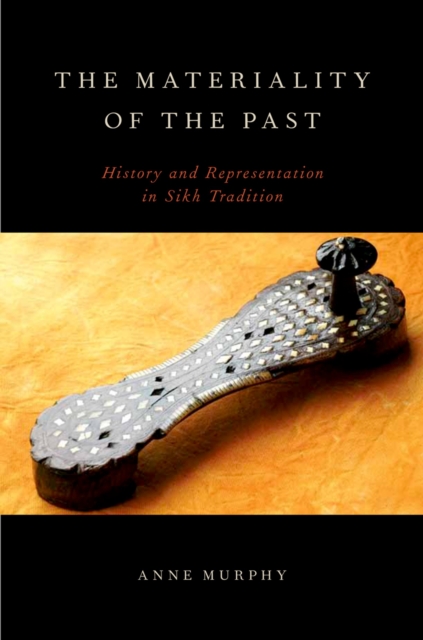
The Materiality of the Past
This book offers an exploration of the material aspects of Sikh identity, showing how material objects, as well as holy sites, and texts, embody and represent the Sikh community as an evolving historical and social construction. Widening traditional scholarly emphasis on holy sites and texts alone to include consideration of iconic objects, such as garments and weaponry, the book moves further and examines the parallel relationships among sites, texts, and objects. It reveals that objects have played dramatically different roles across regimes—signifers of authority in one, mere possessions in another—and like Sikh texts, which have long been a resource for the construction of Sikh identity, material objects have served as a means of imagining and representing the past.
eBook

Rural Sanctuaries as ‘Smart Destinations’ – Sustainability Concerns (Mazovia Region, Poland)
The general objective of this paper is to present and discuss the factors that need to be taken into account to ensure that the development and management of religious tourism at rural sites was sustainable from an economic, environmental and socio-cultural point of view. Among other issues, sustainable religious tourism means accessibility to the sanctuaries, protection of cultural and heritage values of the local community, benefits for the local residents and meaningful experience for visitors. Authors were especially interested in the less popular, more remotely located holy sites in Mazovia Region (Poland) and two concerns: readiness to respond the needs of persons with different disabilities and local community opinion on tourists. As was documented by our research outcomes despite the recent numerous improvements, the most popular rural sanctuaries in Mazovia Region, remain only partially accessible for persons with disabilities. As masses of pilgrims have a significant effect on wellbeing and everyday life quality of residents (contributing both to positive and to negative effects), those who accept that tourists are important for economic development, benefit from it, creating ‘smart host area’. These rural communities which are not knowledgeable about positive impacts – see only negative consequences.
Journal Article

THE VENERATION OF WOMB TOMBS: Body-Based Rituals and Politics at Mary's Tomb and Maqam Abu al-Hijja (Israel/Palestine)
This article examines the social dynamics at sacred \"womb tombs\" in an effort to discern this architectural form's impact on contemporary religious experience, politics, and landscapes. With this objective in mind, Christian veneration at Jerusalem's Tomb of Mary is compared with Muslim worship at Maqam Abu alHijja in the Galilee. Drawing on our ethnographic findings, we posit that the ancient structure of these shrines mimics the poetry of the human body as well as death and regeneration. While pilgrims to these womb tombs seek preternatural intervention for infertility, sickness, pain, and other misfortunes, the venues concomitantly serve as an outlet for voicing indigenous claims to the land and help minorities bolster their sense of belonging. In the process, we have taken stock of a wide range of ethnographic findings: the sites' architectural representation of the human body, the manner in which the tombs are venerated and experienced by local Christians and Muslims, and the politicization of fertility and well-being rituals by minorities within the context of sociopolitical struggles over, above all, territorial rights.
Journal Article