
Catalogue Search | MBRL


Are you sure you want to remove the book from the shelf?

{{itemTitle}}
3,477
result(s) for
"horse breeding"
Sort by:

The purebred Arabian horses of Iraq : myths and realities : the first study of Arabian horses from an Arabic and Islamic viewpoint
The history of Iraq's purebred Arabian Horses, told by a prominent Iraqi whose family has been breeding horses for generations.
Book

Milk productivity of mares
Abstract To determine the milk productivity of Kazakh horses of the Adai region in variants of selection and technological indicators of milk for the production of cumus in the conditions of the Mangyshlak peninsula of the Republic of Kazakhstan. The object of the study was the Kazakh horse of the Adai intra-breed type at “Taushyk” LLP (Tupkaragan District, Mangystau Region). Mares with a more pronounced milk production were selected and analyzed . they have investigated the quality of milk for further processing. A characteristic feature of the dynamics of milk sugar content during lactation has been identified. The highest lactose concentration was observed in the 4th month of lactation, followed by a decline. In the first two months of lactation, no significant changes in lactose content were detected. The milk produced by mares of the Kazakh Aday breed is characterized by a high content of fat and lactose and therefore meets the technological requirements for koumiss production. According to the research results, it was found that the homogeneous selection of parental pairs cup-shaped + cup-shaped ensures the yield of offspring of daughters cup-shaped 70% and rounded 30%. With the improving heterogeneous selection of rounded + cup-shaped, the yield of mares with cup-shaped udders was 60% and rounded 40%. Resumo O objetivo deste estudo foi determinar a produtividade leiteira de éguas da raça Adai, pertencentes ao grupo étnico do Cazaquistão, em diferentes variantes de seleção e indicadores tecnológicos para a produção de cumus, nas condições da península de Mangyshlak, na República do Cazaquistão. O objeto de estudo foi a égua Adai, que faz parte do grupo étnico do Cazaquistão, pertencente à empresa “Taushyk” LLP (Distrito de Tupkaragan, Região de Mangystau). Éguas com maior produção leiteira foram selecionadas e analisadas, e a qualidade do leite foi investigada para posterior processamento. Uma característica da dinâmica do teor de açúcar no leite durante a lactação foi identificada. A maior concentração de lactose foi observada no 4º mês de lactação, seguida por um declínio. Nos dois primeiros meses de lactação, não foram detectadas alterações significativas no teor de lactose. O leite produzido por éguas da raça Adai do Cazaquistão caracteriza-se por um alto teor de gordura e lactose, atendendo, portanto, aos requisitos tecnológicos para a produção de cumus. De acordo com os resultados da pesquisa, constatou-se que a seleção homogênea dos pares parentais em forma de xícara + em forma de xícara garante o rendimento de descendentes de filhas em forma de xícara de 70% e arredondadas de 30%. Com a melhoria da seleção heterogênea de úberes arredondados + em forma de taça, o rendimento de éguas com úberes em forma de taça foi de 60% e arredondado de 40%.
Journal Article


Bridging Breeds: Transcriptomic Insights into Immune Traits of Yili, Thoroughbred, and Kazakh Horses
Background: Studying the genetic characteristics and molecular mechanisms of immune regulation in horses is of great significance for protecting their genetic resources, improving breeding strategies, and enhancing their disease resistance, thereby ensuring their healthy performance in both sports and production. Aims/objectives: This study investigates the genetic characteristics and molecular mechanisms underlying immune regulation in Yili horses, comparing them with Thoroughbreds and Kazakh horses. Methods: Blood samples from each breed were analyzed for physiological, biochemical, and immune indices alongside transcriptome sequencing to identify differentially expressed genes (DEGs). Results: The results revealed significant differences in neutrophil counts, monocytes, red blood cell parameters, glucose levels, and immunoglobulins (IgA, IgG, IgM) among breeds. Yili horses exhibited intermediate values for most parameters, aligning more closely with Thoroughbreds. Transcriptomic analysis identified 3574 DEGs, enriched in immune-related pathways such as platelet activation, antigen processing, and cytokine signaling. Key genes, including TNFRSF14, IFIT3, and IL21R, correlated with immune traits, highlighting hybrid vigor in Yili horses. Functional enrichment underscored pathways like IL-17 signaling and NF-κB regulation, linking genetic differences to immune adaptability. Conclusions: These findings provide molecular insights into breed-specific immune traits, supporting strategies to enhance disease resilience in Yili horses while preserving their athletic performance. This study underscores the importance of integrating transcriptomic and phenotypic data for informed breeding practices in equine conservation and improvement.
Journal Article

Effective methods of horse reproduction in the production of mare’s milk
Abstract The research aims to study the dynamics of reproductive system pathologies in mares of Kazakh and Mugalzhar horse breeds and their impact on the reproductive traits of the breeding stock. The object of the research was horses of the Kazakh and Mugalzhar breeds. The formation of experimental groups was carried out using the pair-analog method. It was found that the frequency of detection of infertile mares is 13.8-25.0%. Subinvolution of the uterus from the total number of infertile mares is 8.3-10.7%, endometritis - 16.6-23.3%, atony and hypotonia of the uterus – 8.3-13.3%, ovarian diseases – 19.6-43.4%, other diseases – 10.0-39.4%. The pregnancy rate of mares of the Kazakh and Mugalzhar breeds was 78.8%. The frequency of abortions, weakly born, and stillborn foals was 2.8%. Successful foaling was 76.0%. It was established that successful foaling in mares under 5 years old is 65.6%, 6-9 years old - 79.5%, and 10 years and older - 74.6%. Pregnancy rates are lowest in mares under 5 years of age (74.4%), compared to 6-9 years of age (88.0%) and 10 years of age and older (82.0%). Milk productivity analysis of first-lactation mares revealed significantly higher yields on farms specializing in mare’s milk production, accompanied by slight improvements in fat and protein content. The findings highlight the strong influence of management practices, nutritional status, and timely reproductive monitoring on the reproductive success of local horse breeds. Resumo A pesquisa tem como objetivo estudar a dinâmica das patologias do sistema reprodutivo em éguas das raças cazaque e mugaljar e seu impacto nas características reprodutivas do plantel de cria. O objeto da pesquisa foram cavalos das raças cazaque e mugaljar. A formação dos grupos experimentais foi realizada utilizando o método de pares análogos. Constatou-se que a frequência de detecção de éguas inférteis é de 13,8-25,0%. A subinvolução do útero representa 8,3-10,7% do total de éguas inférteis, a endometrite – 16,6-23,3%, a atonia e hipotonia uterina – 8,3-13,3%, doenças dos ovários – 19,6-43,4%, e outras doenças – 10,0-39,4%. A taxa de prenhez das éguas das raças cazaque e mugaljar foi de 78,8%. A frequência de abortos, potros nascidos fracos e natimortos foi de 2,8%. Partos bem-sucedidos totalizaram 76,0%. Verificou-se que o índice de partos bem-sucedidos em éguas com menos de 5 anos é de 65,6%, entre 6 e 9 anos – 79,5%, e em éguas com 10 anos ou mais – 74,6%. As taxas de prenhez são menores em éguas com menos de 5 anos (74,4%), em comparação com aquelas de 6-9 anos (88,0%) e de 10 anos ou mais (82,0%). A análise da produtividade de leite de éguas na primeira lactação revelou produções significativamente maiores em fazendas especializadas na produção de leite de égua, acompanhadas de ligeiras melhorias no teor de gordura e proteína. Os resultados destacam a forte influência das práticas de manejo, do estado nutricional e do monitoramento reprodutivo oportuno sobre o sucesso reprodutivo das raças locais de cavalos.
Journal Article
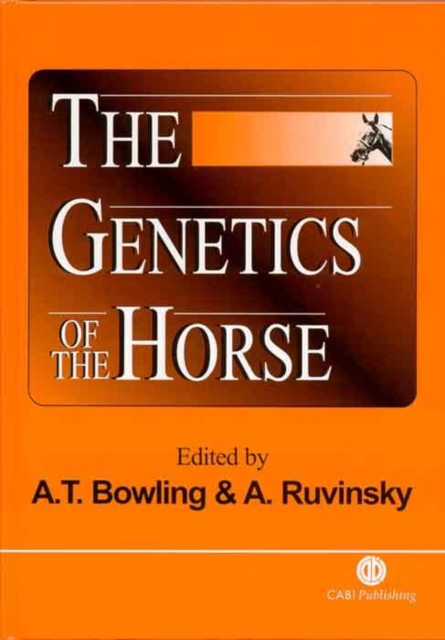
The genetics of the horse
The theory and application of mammalian genetics have been evolving rapidly over the past two decades. This has given scientists fresh insight into the biological processes which affect the functions of the animal in question. This is the latest title in our successful series of genetics books. Reference book providing a comprehensive review of the current research in horse geneticsChapters written by international experts in the field Of worldwide relevance
eBook


The Sport of Kings
The Sport of Kings is an ethnography of the British racing industry based upon two years of participant observation in Newmarket, the international headquarters of flat racing. Racing in Britain provides a lens through which ideas of class, status, tradition and hierarchy can be examined in an environment which is both superficially familiar and richly exotic. This book explores concepts about 'nature' specific to thoroughbred racehorse breeding, and pursues the idea that in making statements about animals, we reveal something of ourselves. It explains the action that takes place on racecourses, in training yards, on studs and at bloodstock auctions. It analyses the consumption of racing through betting on the racecourse and in betting shops, and it proffers an insightful description of a unique class system: that of the humans and animals involved in the production of British flat racing.
eBook