
Catalogue Search | MBRL


Are you sure you want to remove the book from the shelf?

{{itemTitle}}
8,695,764
result(s) for
"humans"
Sort by:
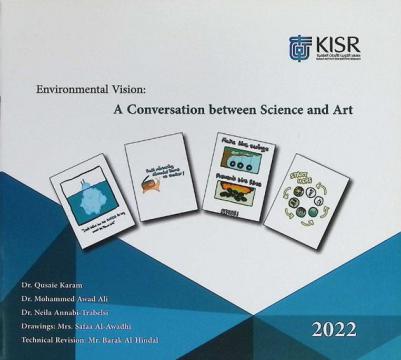
Environmental vision : a conversation between science and art
\"Environmental Vision: A Conversation Between Science and Art\" is a multidisciplinary work that bridges the gap between empirical environmental data and creative expression. Co-authored by Dr. Qusaie Karam, Dr. Mohammed Awad Ali, and Dr. Neila Annabi-Trabelsi, the book explores ecological challenges—such as climate change, biodiversity loss, and pollution—through a dual lens. Scientific chapters provide rigorous analysis and facts, while the artistic contributions, led by the drawings of Mrs. Safaa Al-Awadhi, translate these complex issues into poignant visual narratives. The work aims to foster a deeper emotional connection to the environment, suggesting that while science identifies the problems, art has the power to inspire the cultural shift necessary for sustainable solutions. Reviewed for technical accuracy by Mr. Barak Al-Hindal, this book serves as a unique educational and aesthetic resource for environmentalists, students, and art enthusiasts alike.
BOOK
The anatomy of murder
This is the first comprehensive account of \"Anatomy in National Socialism\". Traces the gradual escalation of ethical transgressions in anatomy during National Socialism from the traditional anatomical work with the dead to human experimentation, and points to the need for vigilance against similar gradual ethical compromise in contemporary medical ethics. Demonstrates the manner in which anatomists became complicit in the complete annihilation of the perceived \"enemies\" of the Nazi-government. Demands the full reconstruction of the biographies and memorialization of Nazi-victims, whose bodies were used for anatomical purposes.
eBook


Animism in rainforest and tundra
Amazonia and Siberia, classic regions of shamanism, have long challenged 'western' understandings of man's place in the world. By exploring the social relations between humans and non-human entities credited with human-like personhood (not only animals and plants, but also 'things' such as artifacts, trade items, or mineral resources) from a comparative perspective, this volume offers valuable insights into the constitutions of humanity and personhood characteristic of the two areas. The contributors conducted their ethnographic fieldwork among peoples undergoing transformative processes of their lived environments, such as the depletion of natural resources and migration to urban centers. They describe here fundamental relational modes that are being tested in the face of change, presenting groundbreaking research on personhood and agency in shamanic societies and contributing to our global understanding of social and cultural change and continuity.
eBook

Phantom plague : how tuberculosis shaped history
\"The definitive social history of tuberculosis, from its origins as a haunting mystery to its modern reemergence that now threatens populations around the world. It killed novelist George Orwell, Eleanor Roosevelt, and millions of others - rich and poor. Desmond Tutu, Amitabh Bachchan, and Nelson Mandela survived it, just. For centuries, tuberculosis has ravaged cities and plagued the human body. In Phantom Plague, Vidya Krishnan, traces the history of tuberculosis from the slums of 19th-century New York to modern Mumbai. In a narrative spanning century, Krishnan shows how superstition and folk-remedies, made way for scientific understanding of TB, such that it was controlled and cured in the West. The cure was never available to black and brown nations. And the tuberculosis bacillus showed a remarkable ability to adapt -- so that at the very moment it could have been extinguished as a threat to humanity, it found a way back, aided by authoritarian governments, the toxic kindness of philanthropists, science denialism, and medical apartheid. Krishnan's original reporting paints a granular portrait of the post-antibiotic era as a new, aggressive, drug resistant strain of TB takes over. Phantom Plague is an urgent, riveting and fascinating narrative that deftly exposes the weakest links in our battle against this ancient foe.\"--Front jacket flap.
BOOK

Ariel's Ecology
What happens if we abandon the assumption that a person is a discrete, world-making agent who acts on and creates place? This, Monique Allewaert contends, is precisely what occurred on eighteenth-century American plantations, where labor practices and ecological particularities threatened the literal and conceptual boundaries that separated persons from the natural world. Integrating political philosophy and ecocriticism with literary analysis, Ariel's Ecology explores the forms of personhood that developed out of New World plantations, from Georgia and Florida through Jamaica to Haiti and extending into colonial metropoles such as Philadelphia. Allewaert's examination of the writings of naturalists, novelists, and poets; the oral stories of Africans in the diaspora; and Afro-American fetish artifacts shows that persons in American plantation spaces were pulled into a web of environmental stresses, ranging from humidity to the demand for sugar. This in turn gave rise to modes of personhood explicitly attuned to human beings' interrelation with nonhuman forces in a process we might call ecological. Certainly the possibility that colonial life revokes human agency haunts works from Shakespeare's Tempest and Montesquieu's Spirit of the Laws to Spivak's theories of subalternity. In Allewaert's interpretation, the transformation of colonial subjectivity into ecological personhood is not a nightmare; it is, rather, a mode of existence until now only glimmering in Che Guevara's dictum that postcolonial resistance is synonymous with \"perfect knowledge of the ground.\"
eBook

The light we carry : overcoming in uncertain times
\"Mrs. Obama offers readers a series of fresh stories and insightful reflections on change, challenge, and power, including her belief that when we light up for others, we can illuminate the richness and potential of the world around us, discovering deeper truths and new pathways for progress. Drawing from her experiences as a mother, daughter, spouse, friend, and First Lady, she shares the habits and principles she has developed to successfully adapt to change and overcome various obstacles--the earned wisdom that helps her continue to \"become.\" She details her most valuable practices, like \"starting kind,\" \"going high,\" and assembling a \"kitchen table\" of trusted friends and mentors. With trademark humor, candor, and compassion, she also explores issues connected to race, gender, and visibility, encouraging readers to work through fear, find strength in community, and live with boldness\"-- Provided by publisher.
Book

A Phase IIA Randomized Clinical Trial of a Multiclade HIV-1 DNA Prime Followed by a Multiclade rAd5 HIV-1 Vaccine Boost in Healthy Adults (HVTN204)
The safety and immunogenicity of a vaccine regimen consisting of a 6-plasmid HIV-1 DNA prime (envA, envB, envC, gagB, polB, nefB) boosted by a recombinant adenovirus serotype-5 (rAd5) HIV-1 with matching inserts was evaluated in HIV-seronegative participants from South Africa, United States, Latin America and the Caribbean.
480 participants were evenly randomized to receive either: DNA (4 mg i.m. by Biojector) at 0, 1 and 2 months, followed by rAd5 (10(10) PU i.m. by needle/syringe) at 6 months; or placebo. Participants were monitored for reactogenicity and adverse events throughout the 12-month study. Peak and duration of HIV-specific humoral and cellular immune responses were evaluated after the prime and boost.
The vaccine was well tolerated and safe. T-cell responses, detected by interferon-γ (IFN-γ) ELISpot to global potential T-cell epitopes (PTEs) were observed in 70.8% (136/192) of vaccine recipients overall, most frequently to Gag (54.7%) and to Env (54.2%). In U.S. vaccine recipients T-cell responses were less frequent in Ad5 sero-positive versus sero-negative vaccine recipients (62.5% versus 85.7% respectively, p = 0.035). The frequency of HIV-specific CD4+ and CD8+ T-cell responses detected by intracellular cytokine staining were similar (41.8% and 47.2% respectively) and most secreted ≥2 cytokines. The vaccine induced a high frequency (83.7%-94.6%) of binding antibody responses to consensus Group M, and Clades A, B and C gp140 Env oligomers. Antibody responses to Gag were elicited in 46% of vaccine recipients.
The vaccine regimen was well-tolerated and induced polyfunctional CD4+ and CD8+ T-cells and multi-clade anti-Env binding antibodies.
ClinicalTrials.gov NCT00125970.
Journal Article

Vaccine efficacy against persistent human papillomavirus (HPV) 16/18 infection at 10 years after one, two, and three doses of quadrivalent HPV vaccine in girls in India: a multicentre, prospective, cohort study
A randomised trial designed to compare three and two doses of quadrivalent human papillomavirus (HPV) vaccine in adolescent girls in India was converted to a cohort study after suspension of HPV vaccination in trials by the Indian Government. In this Article, the revised aim of the cohort study was to compare vaccine efficacy of single dose to that of three and two doses in protecting against persistent HPV 16 and 18 infection at 10 years post vaccination.
In the randomised trial, unmarried girls aged 10–18 years were recruited from nine centres across India and randomly assigned to either two doses or three doses of the quadrivalent HPV vaccine (Gardasil [Merck Sharp & Dohme, Whitehouse Station, NJ, USA]; 0·5 mL administered intramuscularly). After suspension of recruitment and vaccination, the study became a longitudinal, prospective cohort study by default, and participants were allocated to four cohorts on the basis of the number vaccine doses received per protocol: the two-dose cohort (received vaccine on days 1 and 180 or later), three-dose cohort (days 1, 60, and 180 or later), two-dose default cohort (days 1 and 60 or later), and the single-dose default cohort. Participants were followed up yearly. Cervical specimens were collected from participants 18 months after marriage or 6 months after first childbirth, whichever was earlier, to assess incident and persistent HPV infections. Married participants were screened for cervical cancer as they reached 25 years of age. Unvaccinated women age-matched to the married vaccinated participants were recruited to serve as controls. Vaccine efficacy against persistent HPV 16 and 18 infections (the primary endpoint) was analysed for single-dose recipients and compared with that in two-dose and three-dose recipients after adjusting for imbalance in the distribution of potential confounders between the unvaccinated and vaccinated cohorts. This trial is registered with ISRCTN, ISRCTN98283094, and ClinicalTrials.gov, NCT00923702.
Vaccinated participants were recruited between Sept 1, 2009, and April 8, 2010 (date of vaccination suspension), and followed up over a median duration of 9·0 years (IQR 8·2–9·6). 4348 participants had three doses, 4980 had two doses (0 and 6 months), and 4949 had a single dose. Vaccine efficacy against persistent HPV 16 and 18 infection among participants evaluable for the endpoint was 95·4% (95% CI 85·0–99·9) in the single-dose default cohort (2135 women assessed), 93·1% (77·3–99·8) in the two-dose cohort (1452 women assessed), and 93·3% (77·5–99·7) in three-dose recipients (1460 women assessed).
A single dose of HPV vaccine provides similar protection against persistent infection from HPV 16 and 18, the genotypes responsible for nearly 70% of cervical cancers, to that provided by two or three doses.
Bill & Melinda Gates Foundation.
Journal Article

How forests think : toward an anthropology beyond the human
Can forests think? Do dogs dream? In this astonishing book, Eduardo Kohn challenges the very foundations of anthropology, calling into question our central assumptions about what it means to be human -- and thus distinct from all other life forms. Based on four years of fieldwork among the Runa of Ecuador's Upper Amazon, Eduardo Kohn draws on his rich ethnography to explore how Amazonians interact with the many creatures that inhabit one of the world's most complex ecosystems. Whether or not we recognize it, our anthropological tools hinge on those capacities that make us distinctly human. However, when we turn our ethnographic attention to how we relate to other kinds of beings, these tools (which have the effect of divorcing us from the rest of the world) break down. How Forests Think seizes on this breakdown as an opportunity. Avoiding reductionistic solutions, and without losing sight of how our lives and those of others are caught up in the moral webs we humans spin, this book skillfully fashions new kinds of conceptual tools from the strange and unexpected properties of the living world itself. In this groundbreaking work, Kohn takes anthropology in a new and exciting direction-one that offers a more capacious way to think about the world we share with other kinds of beings.
eBook