
Catalogue Search | MBRL


Are you sure you want to remove the book from the shelf?

{{itemTitle}}
1,179
result(s) for
"hydrocolloid"
Sort by:

Nanomaterials for Wound Dressings: An Up-to-Date Overview
As wound healing continues to be a challenge for the medical field, wound management has become an essential factor for healthcare systems. Nanotechnology is a domain that could provide different new approaches concerning regenerative medicine. It is worth mentioning the importance of nanoparticles, which, when embedded in biomaterials, can induce specific properties that make them of interest in applications as materials for wound dressings. In the last years, nano research has taken steps to develop molecular engineering strategies for different self-assembling biocompatible nanoparticles. It is well-known that nanomaterials can improve burn treatment and also the delayed wound healing process. In this review, the first-line of bioactive nanomaterials-based dressing categories frequently applied in clinical practice, including semi-permeable films, semipermeable foam dressings, hydrogel dressings, hydrocolloid dressings, alginate dressings, non-adherent contact layer dressings, and multilayer dressings will be discussed. Additionally, this review will highlight the lack of high-quality evidence and the necessity for future advanced trials because current wound healing therapies generally fail to provide an excellent clinical outcome, either structurally or functionally. The use of nanomaterials in wound management represents a unique tool that can be specifically designed to closely reflect the underlying physiological processes in tissue repair.
Journal Article

Clinical efficacy of chitosan‐based hydrocolloid dressing in the treatment of chronic refractory wounds
This retrospective study aimed to explore the clinical efficacy of chitosan‐based hydrocolloid dressing in treating chronic refractory wounds. A total of 80 patients with chronic refractory wounds were randomly divided into the control group (n = 40) and the study group (n = 40). The control group was given inert saline gauze, while the study group was given chitosan‐based hydrocolloid dressing. After 3 weeks of treatment, the wound healing efficiency, itching pain score, changes in the wound area, dressing change frequency, and cost were measured. There was a significant difference in the wound healing effect (t = 2.738), and degree of pain (t = 4.76) between the study and control groups, after 3 weeks of treatment. Similarly, a prominent reduction in the itching frequency (t = 8.62), and wound area (t = 6.379) was observed in the study group compared to the control group (P < .05). Moreover, the frequency and total cost of dressing change in the study group were also lower than the control group and the difference was statistically significant (P < .05). To summarise, the application of chitosan‐based hydrocolloid dressing in treating chronic refractory can effectively alleviate pain, accelerate wound healing, relieve itching pain, and reduce the overall cost and frequency of dressing change.
Journal Article
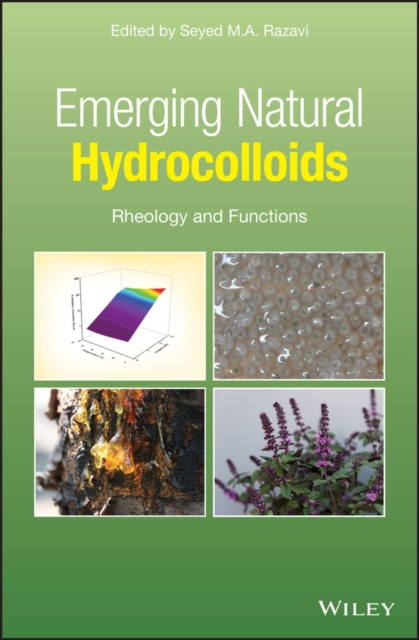
Emerging Natural Hydrocolloids
The first guide devoted to the functions, structures, and applications of natural hydrocolloids In today's health-conscious climate, the demand for natural food products is growing all the time. Natural hydrocolloids, therefore, have never been more popular. With their thickening, stabilizing, gelling, fat replacing, and binding qualities, these naturally occurring, plant-based polymers can fulfil many of the same functions as commercial ingredients like xanthan, guar, gum Arabic, pectin, and starch. Moreover, certain health benefits have been linked with their often biological active compounds and high-fiber compositions, including potential prebiotic effects and the reduction of blood cholesterol levels. Application of these novel hydrocolloids is, however, still underexplored. Emerging Natural Hydrocolloids aims to remedy this by providing a thorough overview of their structure–function relationships, rheological aspects, and potential utility in mainly the food and pharmaceutical industries. This accessible, quick-reference guide features: * A comprehensive and up-to-date survey of the most significant research currently available on natural hydrocolloids * Examinations of the major functions and rheological aspects of novel hydrocolloids * Information on the potential applications of biopolymers within both foods and pharmaceutical systems * Collaborations from an international team of food scientists Emerging Natural Hydrocolloids: Rheology and Functions offers scientists, engineers, technologists, and researchers alike a unique and in-depth account of the uncharted world of novel hydrocolloids, their uses, properties, and potential benefits.
eBook

Fast, strong, and reversible adhesives with dynamic covalent bonds for potential use in wound dressing
Adhesives typically fall into two categories: those that have high but irreversible adhesion strength due to the formation of covalent bonds at the interface and are slow to deploy, and others that are fast to deploy and the adhesion is reversible but weak in strength due to formation of noncovalent bonds. Synergizing the advantages from both categories remains challenging but pivotal for the development of the next generation of wound dressing adhesives. Here, we report a fast and reversible adhesive consisting of dynamic boronic ester covalent bonds, formed between poly(vinyl alcohol) (PVA) and boric acid (BA) for potential use as a wound dressing adhesive. Mechanical testing shows that the adhesive film has strength in shear of 61 N/cm² and transcutaneous adhesive strength of 511 N/cm², generated within 2 min of application. Yet the film can be effortlessly debonded when exposed to excess water. The mechanical properties of PVA/BA adhesives are tunable by varying the cross-linking density. Within seconds of activation by water, the surface boronic ester bonds in the PVA/BA film undergo fast debonding and instant softening, leading to conformal contact with the adherends and reformation of the boronic ester bonds at the interface. Meanwhile, the bulk film remains dehydrated to offer efficient load transmission, which is important to achieve strong adhesion without delamination at the interface. Whether the substrate surface is smooth (e.g., glass) or rough (e.g., hairy mouse skin), PVA/BA adhesives demonstrate superior adhesion compared to the most widely used topical skin adhesive in clinical medicine, Dermabond.
Journal Article

Natural Bioactive-Based Advanced Wound Dressings for Diabetic Wound Healing: A Systematic Review of Emerging Biomaterial Platforms
Diabetic ulcers are complex wounds that are difficult to treat due to persistent inflammation, excessive oxidative stress, impaired angiogenesis, and microbial infections that disrupt normal healing. Advanced wound dressings such as hydrogels, nanofibre matrices, hydrocolloids, and 3D bioprinted constructs are increasingly developed to incorporate natural bioactive compounds with multifunctional therapeutic properties. However, systematic understanding of their mechanisms and translational relevance remains limited.
This study aims to systematically review natural-based hydrogel, hydrocolloid, and hydrofiber formulations in diabetic wound healing.
A Systematic Literature Review following PRISMA guidelines was conducted using ScienceDirect, SpringerLink, PubMed, and Scopus (2020-2025). Risk of bias was assessed using SYRCLE's tool.
From 5256 initial records, 4412 articles were screened, and 14 studies were included after applying eligibility criteria. These studies examined advanced dressings such as hydrogels, hydrocolloids, nanofibers, 3D bioprinted constructs, and hybrid nanocomposites incorporating natural bioactive compounds. The formulations demonstrated antimicrobial, anti-inflammatory, antioxidant, pro-angiogenic, and re-epithelialization effects. Common compounds included curcumin, berberine, propolis, bee venom, and plant extracts combined with polymers such as chitosan, alginate, hyaluronic acid, collagen, and GelMA. Advanced fabrication improved drug delivery, physicochemical properties, and healing outcomes. At the molecular level, these systems modulated pathways such as NF-κB, PI3K/Akt, MAPK, VEGF, and TGF-β/Smad, contributing to reduced inflammation, oxidative stress suppression, enhanced angiogenesis, and extracellular matrix remodeling. Risk of bias assessment indicated unclear risks in randomization and blinding, although internal validity was generally acceptable Translational readiness remained limited (TRL 2-6), with hydrogels and nanosystems showing the highest potential, while 3D bioprinting faces scalability and regulatory challenges.
Natural-based advanced dressings offer a promising strategy for diabetic wound management. Successful clinical translation requires alignment with scalability, stability, cost-effectiveness, and regulatory compliance. Future research should prioritize standardized preclinical models, controlled release systems, and scalable, regulation-compliant biomaterial designs to accelerate clinical application.
Journal Article

A review of extractions of seaweed hydrocolloids: Properties and applications
The term hydrocolloid generally refers to substances that form gels or provide viscous dispersion in the presence of water. Alginate, agar, and carrageenan are three commercially valuable hydrocolloids derived from certain brown and red seaweed and each has their distinct physicochemical properties (i.e. functional and bioactive). Various applications of these seaweed hydrocolloids as thickeners, stabilizers, coagulants and salves (in the wound and burn dressings) and materials to produce bio-medical impressions in the food, pharmaceutical, and biotechnology industries are highlighted in this review. Although the existing industrial methods of extraction for these seaweed hydrocolloids are well-established, still growing demand has exposed certain limitations of those methods, notably efficiency and product consistency. In order to achieve targeted hydrocolloids for specific purposes and functionalities, some novel and green extraction methods have also been proposed and discussed. Microwave-assisted extraction (MAE), ultrasound-assisted extraction (UAE), enzyme-assisted extraction (EAE), supercritical fluid extraction (SFE), pressurized solvent extractions (PSE), reactive extrusion and photo-bleaching process are selectively presented as highly promising candidates that can avoid the use of chemicals and provide novel means of access to seaweed hydrocolloids with both economic and environmental benefits. However, this review does not provide the 'best' method or procedure as many are still under development. Hence, the review gives 'food for thought'as to new processes which might be adopted industrially and concluded that further research is required in order to contribute additional new knowledge and refinement to this field of study.
Journal Article

First-Line Interactive Wound Dressing Update: A Comprehensive Review of the Evidence
Wound management is a significant and growing issue worldwide. Knowledge of dressing products and clinical expertise in dressing selection are two major components in holistic wound management to ensure evidence-based wound care. With expanding global market of dressing products, there is need to update clinician knowledge of dressing properties in wound care. Optimal wound management depends on accurate patient assessment, wound diagnosis, clinicians' knowledge of the wound healing process and properties of wound dressings. We conducted a comprehensive review of the physical properties of wound dressing products, including the advantages and disadvantages, indications and contraindications and effectiveness of first-line interactive/bioactive dressing groups commonly used in clinical practice. These include semipermeable films, foams, hydroactives, alginates, hydrofibers, hydrocolloids, and hydrogels. In making decisions regarding dressing product selection, clinicians need to ensure a holistic assessment of patient and wound etiology, and understand dressing properties when making clinical decisions using wound management guidelines to ensure optimal patient outcomes. This review has highlighted there is lack of high quality evidence and the need for future well designed trials.
Journal Article

Potential Food and Nutraceutical Applications of Alginate: A Review
Alginate is an acidic polysaccharide mainly extracted from kelp or sargassum, which comprises 40% of the dry weight of algae. It is a linear polymer consisting of β-D-mannuronic acid (M) and α-L-guluronic acid (G) with 1,4-glycosidic linkages, possessing various applications in the food and nutraceutical industries due to its unique physicochemical properties and health benefits. Additionally, alginate is able to form a gel matrix in the presence of Ca2+ ions. Alginate properties also affect its gelation, including its structure and experimental conditions such as pH, temperature, crosslinker concentration, residence time and ionic strength. These features of this polysaccharide have been widely used in the food industry, including in food gels, controlled-release systems and film packaging. This review comprehensively covers the analysis of alginate and discussed the potential applications of alginate in the food industry and nutraceuticals.
Journal Article
Effect of hydrocolloid dressings in the management of different grades of pressure wound ulcers in critically ill adult subjects: A meta‐analysis
A meta‐analysis was implemented to appraise the effect of hydrocolloid dressings (HCDs) in the management of different grades of pressure wound ulcers (PWUs) in critically ill adult subjects (CIUSs). Inclusive literature research until April 2023 was done, and 969 interconnected researches were revised. The 8 picked researches, enclosed 679 critically ill adult persons at the utilized researchers' starting point; 355 of them were utilizing HCDs, and 324 were controls. Odds ratio (OR) and 95% confidence intervals (CIs) were utilized to appraise the consequences of HCDs in treating CIUSs by the dichotomous approach and a fixed or random model. HCDs had significantly higher PWU complete healing (OR, 2.15; 95% CI, 1.54–3.02, p < 0.001), PWU stage II ulcers complete healing (OR, 2.82; 95% CI, 1.40–5.69, p = 0.004), and PWU stage III ulcers complete healing (OR, 3.73; 95% CI, 1.23–11.35, p = 0.02) compared to control in critically ill adult persons. HCDs had significantly higher PWU complete healing, PWU stage II ulcers complete healing, and PWU stage III ulcers complete healing compared with control in critically ill adult persons. However, caution needs to be taken when interacting with its values since there was a low sample size of most of the chosen research found for the comparisons in the meta‐analysis.
Journal Article
Characterization of a Novel Alginate Lyase with Two Alginate Lyase Domains from the Marine Bacterium IVibrio/I sp. C42
Alginate is abundant in the cell walls of brown algae. Alginate lyases can degrade alginate, and thus play an important role in the marine carbon cycle and industrial production. Currently, most reported alginate lyases contain only one functional alginate lyase domain. AlyC8 is a putative alginate lyase with two alginate lyase domains (CD1 and CD2) from the marine alginate-degrading strain Vibrio sp. C42. To characterize AlyC8 and its two catalytic domains, AlyC8 and its two catalytic domain-deleted mutants, AlyC8-CD1 and AlyC8-CD2, were expressed in Escherichia coli. All three proteins have noticeable activity toward sodium alginate and exhibit optimal activities at pH 8.0–9.0 and at 30–40 °C, demonstrating that both CD1 and CD2 are functional. However, CD1 and CD2 showed opposite substrate specificity. The differences in substrate specificity and degradation products of alginate between the mutants and AlyC8 demonstrate that CD1 and CD2 can act synergistically to enable AlyC8 to degrade various alginate substrates into smaller oligomeric products. Moreover, kinetic analysis indicated that AlyC8-CD1 plays a major role in the degradation of alginate by AlyC8. These results demonstrate that AlyC8 is a novel alginate lyase with two functional catalytic domains that are synergistic in alginate degradation, which is helpful for a better understanding of alginate lyases and alginate degradation.
Journal Article