
Catalogue Search | MBRL


Are you sure you want to remove the book from the shelf?

{{itemTitle}}
2,231
result(s) for
"immigrant experience"
Sort by:
Mi Voz, Mi Vida
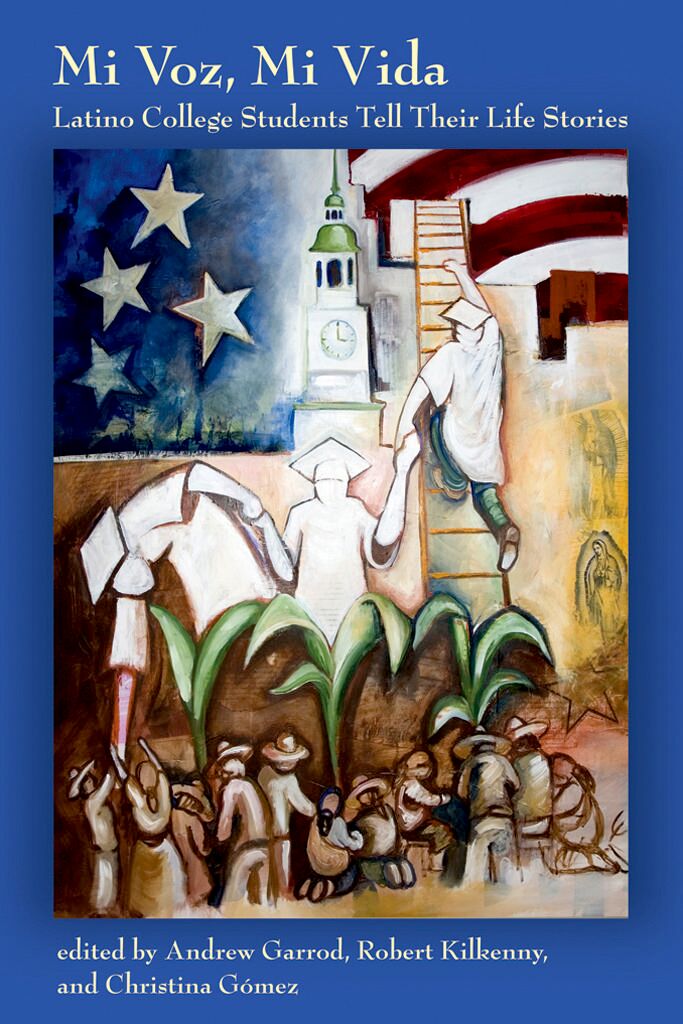
Amid the flurry of debates about immigration, poverty, and education in the United States, the stories inMi Voz, Mi Vidaallow us to reflect on how young people who might be most affected by the results of these debates actually navigate through American society.
The fifteen Latino college students who tell their stories in this book come from a variety of socioeconomic, regional, and family backgrounds-they are young men and women of Mexican, Puerto Rican, Cuban, Dominican, Central American, and South American descent. Their insights are both balanced and frank, blending personal, anecdotal, political, and cultural viewpoints. Their engaging stories detail the students' personal struggles with issues such as identity and biculturalism, family dynamics, religion, poverty, stereotypes, and the value of education.
Throughout, they provide insights into issues of racial identity in contemporary America among a minority population that is very much in the news. This book gives educators, students, and their families a clear view of the experience of Latino students adapting to a challenging educational environment and a cultural context-Dartmouth College-often very different from their childhood ones.
eBook

Everyday illegal : when policies undermine immigrant families
What does it mean to be an illegal immigrant, or the child of immigrants, in this era of restrictive immigration laws in the United States? As lawmakers and others struggle to respond to the changing landscape of immigration, the effects of policies on people's daily lives are all too often overlooked. In Everyday Illegal, award-winning author Joanna Dreby recounts the stories of children and parents in eighty-one families to show what happens when a restrictive immigration system emphasizes deportation over legalization. Interweaving her own experiences, Dreby illustrates how bitter strains can arise in relationships when spouses have different legal status. She introduces us to \"suddenly single mothers\" who struggle to place food on the table and pay rent after their husbands have been deported. Taking us into the homes and schools of children living in increasingly vulnerable circumstances, she presents families that are divided internally, with some children having legal status while their siblings are undocumented. Even children who are U.S. citizens regularly associate immigration with illegality. With vivid ethnographic details and a striking narrative, Everyday Illegal forces us to confront the devastating impacts of our immigration policies as seen through the eyes of children and their families. As legal status influences identity formation, alters the division of power within families, and affects the opportunities children have outside the home, it becomes a growing source of inequality that ultimately touches us all.
eBook

The Immigrant Advantage in Adolescent Educational Expectations
Previous research has shown uniquely high expectations among children of immigrants. However, existing studies have not focused on why children of immigrants have an expectations advantage over their native-born counterparts or if this has changed over time. This study shows that an immigrant advantage in graduate school expectations persists among adolescent children of immigrants today. Regression analyses reveal that this advantage is largely explained by higher parental expectations, greater interest in school, and foreign language use in early childhood. We argue that these factors can be conceptualized as forms of cultural capital stemming from unique aspects of the immigrant experience that are common across immigrant families.
Journal Article

How the Other Half Works
How the Other Half Works solves the riddle of America's contemporary immigration puzzle: why an increasingly high-tech society has use for so many immigrants who lack the basic skills that today's economy seems to demand. In clear and engaging style, Waldinger and Lichter isolate the key factors that explain the presence of unskilled immigrants in our midst. Focusing on Los Angeles, the capital of today's immigrant America, this hard-hitting book elucidates the other side of the new economy, showing that hiring is finding not so much \"one's own kind\" but rather the \"right kind\" to fit the demeaning, but indispensable, jobs many American workers disdain.
eBook

QUEERING CYC PRAXIS: WHAT I LEARNED FROM LGBTQI+ NEWCOMER, REFUGEE, AND IMMIGRANT STUDENT EXPERIENCES IN CANADA
This exploratory autoethnographic study, undertaken by a White straight cisgender child and youth care practitioner, seeks to understand the experiences of LGBTQI+ newcomer, refugee, and immigrant students in Canada. It highlights the nuances of creating safe spaces for young people who experience harm due to the intersections of systemic racism, xenophobia, transphobia, and homophobia. The overarching finding of this study reveals a culture of silence. Queer newcomer, refugee, and immigrant youth in Canada are often reluctant to disclose or explore their queerness due to their fears of discrimination and violence. This fear exists notwithstanding the pride Canada takes in its efforts to protect LGBTQI+ rights. Inspired by findings from interviews with two women, one who supports LGBTQI+ newcomers, refugees, and immigrants to Canada, and one who researches policy affecting all Canadian refugee experiences, I utilized a self-reflexive deep-dive approach to learn about the events and policies that have shaped LGBTQI+ newcomer, refugee, and immigrant students’ access to postsecondary education in Canada. Central findings in this study point to barriers emerging from homonationalism, colonization, religion, culture, race, White-centred gay–straight alliances in schools, and immigration policies pertaining to sexual orientation and gender identity expression (SOGIE). These findings problematize the White, Westernized, liberal, out-and-proud policies that child and youth care practitioners are accustomed to.
Journal Article
Speaking Yiddish to Chickens
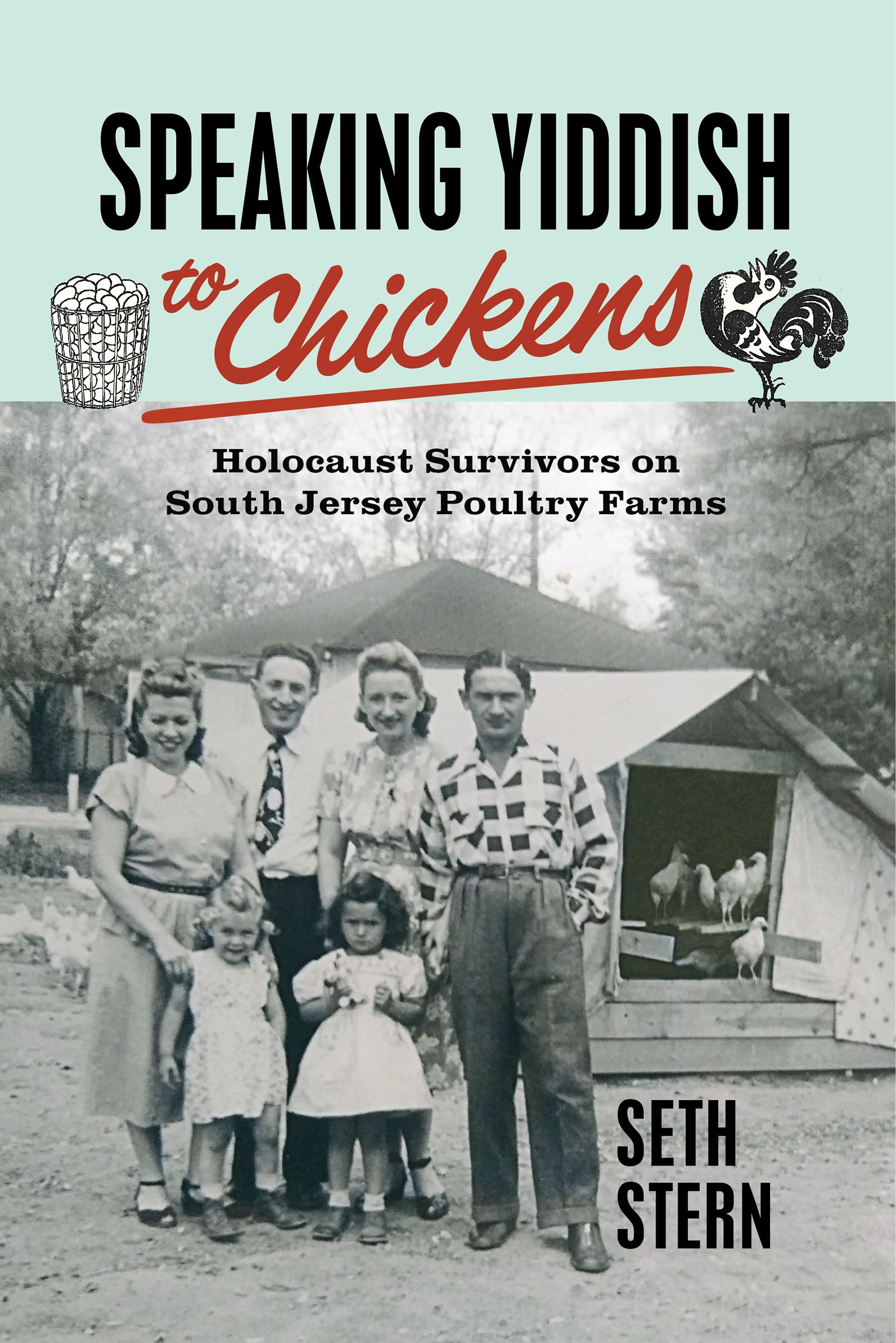
Most of the roughly 140,000 Holocaust survivors who came to the
United States in the first decade after World War II settled in big
cities such as New York. But a few thousand chose an alternative
way of life on American farms. More of these accidental farmers
wound up raising chickens in southern New Jersey than anywhere
else. Speaking Yiddish to Chickens is the first book to
chronicle this little-known chapter in American Jewish history when
these mostly Eastern European refugees - including the author's
grandparents - found an unlikely refuge and gateway to new lives in
the US on poultry farms. They gravitated to a section of south
Jersey anchored by Vineland, a small rural city where previous
waves of Jewish immigrants had built a rich network of cultural and
religious institutions. This book relies on interviews with dozens
of these refugee farmers and their children, as well as oral
histories and archival records to tell how they learned to farm
while coping with unimaginable grief. They built small synagogues
within walking distance of their farms and hosted Yiddish cultural
events more frequently found on the Lower East Side than perhaps
anywhere else in rural America at the time. Like refugees today,
they embraced their new American identities and enriched the
community where they settled, working hard in unfamiliar jobs for
often meager returns. Within a decade, falling egg prices and the
rise of industrial-scale agriculture in the South would drive
almost all of these novice poultry farmers out of business, many
into bankruptcy. Some hated every minute here; others would
remember their time on south Jersey farms as their best years in
America. They enjoyed a quieter way of life and more space for
themselves and their children than in the crowded New York City
apartments where so many displaced persons settled. This is their
remarkable story of loss, renewal, and perseverance in the most
unexpected of settings. Author Facebook page
(https://www.facebook.com/YiddishtoChickens)
eBook
“My Nine-Digit American-Dream”: Undocumentedness and Unwelcomeness in Do You Know Who I Am?
The community-based performance Do You Know Who I Am? (2013; Motus Theater, Boulder; dir. Kirsten Wilson) relates the lived experience in the U.S. under the DACA (Deferred Action for Child Arrivals) programme, told by an undocumented Mexican cast. By reclaiming the label ‘undocumented migrants’ whose residency on American land without legal authorisation implies a dehumanising dimension of the ‘illegal alien,’ the cast defines the state of undocumentedness as the lived conditions of vulnerability, exploitation, displacement and perpetual fear determined by living under ‘illegality’ and non-citizenship. My purpose is to analyse the stylistic and thematic oratorical components of the dramatic performance in line with the ontological construction of its performers as undocumented – undocumentedness itself becomes a “space of legal nonexistence” in Susan Coutin’s understanding –, unwelcome (by virtue of Derrida’s theorisation of the standards of hostipitality), as well as subjects/objects of racial hatred. Immigrants become collective projections of criminality, a threat to the nation within a “we” against “them” horizontal conflict (Ahmed 51). Within this framework, the performance consolidates an ontology of the Mexican migrant rooted in social stigma and the constructedness of labels, and undocumentedness becomes the locus of a collective imaginarium with repercussions on the immigrant’s survival in society.
Journal Article

This Land Is Our Land
For those opposed to immigration, Miami is a nightmare. Miami is the de facto capital of Latin America; it is a city where immigrants dominate, Spanish is ubiquitous, and Denny's is an ethnic restaurant. Are Miami's immigrants representative of a trend that is undermining American culture and identity? Drawing from in-depth fieldwork in the city and looking closely at recent events such as the Elián González case, This Land Is Our Land examines interactions between immigrants and established Americans in Miami to address fundamental questions of American identity and multiculturalism. Rather than focusing on questions of assimilation, as many other studies have, this book concentrates on interethnic relations to provide an entirely new perspective on the changes wrought by immigration in the United States. A balanced analysis of Miami's evolution over the last forty years, This Land Is Our Land is also a powerful demonstration that immigration in America is not simply an \"us versus them\" phenomenon.
eBook

The wherewithal of life
The Wherewithal of Life engages with current developments in the anthropology of ethics and migration studies to explore in empirical depth and detail the life experiences of three young men – a Ugandan migrant in Copenhagen, a Burkina Faso migrant in Amsterdam, and a Mexican migrant in Boston – in ways that significantly broaden our understanding of the existential situations and ethical dilemmas of those migrating from the global south. Michael Jackson offers the first biographically based phenomenological account of migration and mobility, providing new insights into the various motives, tactics, dilemmas, dreams, and disappointments that characterize contemporary migration. It is argued that the quandaries of African or Mexican migrants are not unique to people moving between ‘traditional’ and ‘modern’ worlds. While more intensely felt by the young, seeking to find a way out of a world of limited opportunity and circumscribed values, the experiences of transition are familiar to us all, whatever our age, gender, ethnicity or social status – namely, the impossibility of calculating what one may lose in leaving a settled life or home place; what one may gain by risking oneself in an alien environment; the difficulty of striking a balance between personal fulfillment and the moral claims of kinship; and the struggle to know the difference between ‘concrete’ and ‘abstract’ utopias (the first reasonable and worth pursuing; the second hopelessly unattainable).
eBook

When women come first
With a subtle yet penetrating understanding of the intricate interplay of gender, race, and class, Sheba George examines an unusual immigration pattern to analyze what happens when women who migrate before men become the breadwinners in the family. Focusing on a group of female nurses who moved from India to the United States before their husbands, she shows that this story of economic mobility and professional achievement conceals underlying conditions of upheaval not only in the families and immigrant community but also in the sending community in India. This richly textured and impeccably researched study deftly illustrates the complex reconfigurations of gender and class relations concealed behind a quintessential American success story.
eBook