
Catalogue Search | MBRL


Are you sure you want to remove the book from the shelf?

{{itemTitle}}
72
result(s) for
"immigration misconceptions"
Sort by:
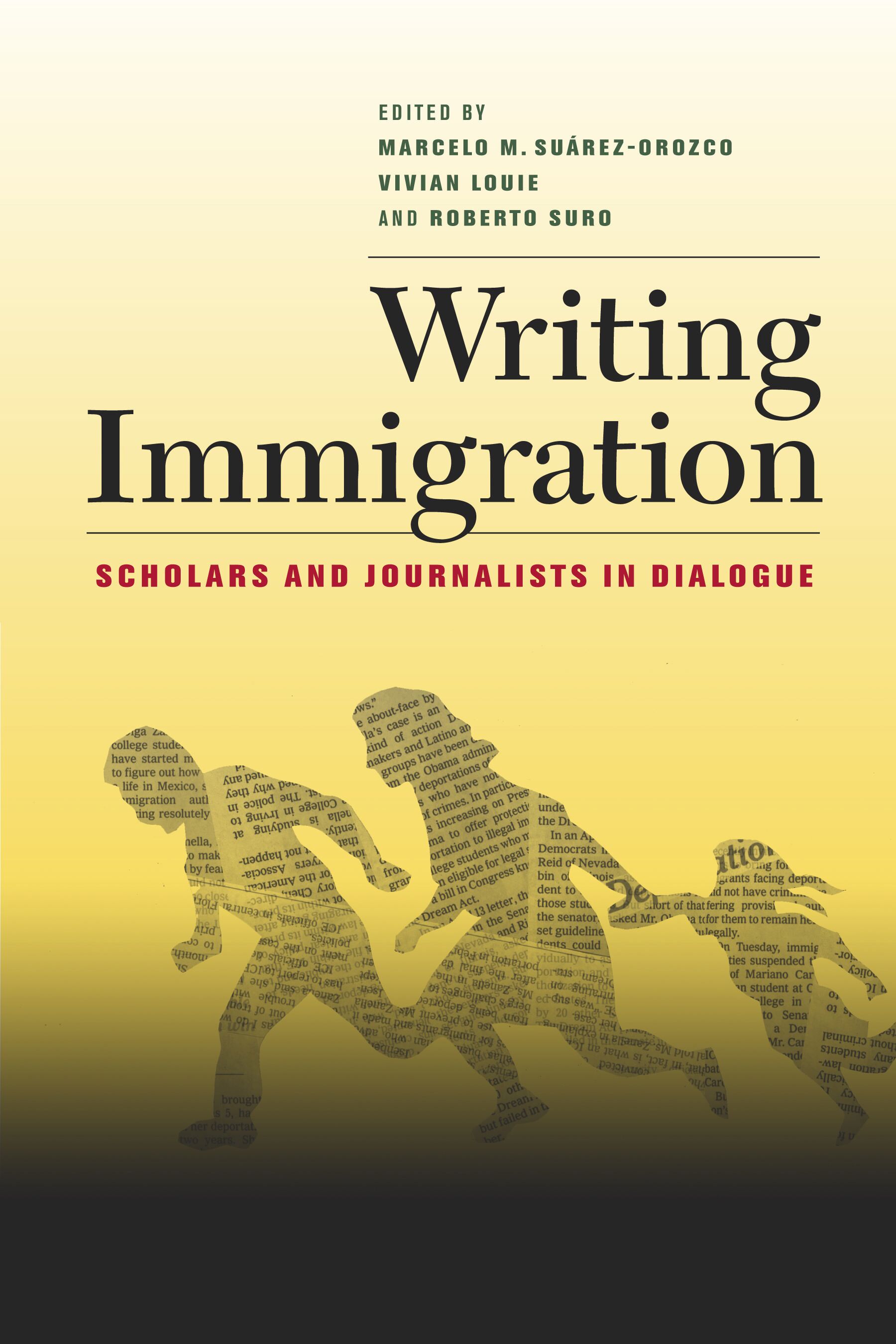
Writing Immigration
Bringing nuance, complexity, and clarity to a subject often seen in black and white, Writing Immigration presents a unique interplay of leading scholars and journalists working on the contentious topic of immigration. In a series of powerful essays, the contributors reflect on how they struggle to write about one of the defining issues of our time—one that is at once local and global, familiar and uncanny, concrete and abstract. Highlighting and framing central questions surrounding immigration, their essays explore topics including illegal immigration, state and federal mechanisms for immigration regulation, enduring myths and fallacies regarding immigration, immigration and the economy, immigration and education, the adaptations of the second generation, and more. Together, these writings give a clear sense of the ways in which scholars and journalists enter, shape, and sometimes transform this essential yet unfinished national conversation.
eBook

Writing immigration
Bringing nuance, complexity, and clarity to a subject often seen in black and white, Writing Immigration presents a unique interplay of leading scholars and journalists working on the contentious topic of immigration. In a series of powerful essays, the contributors reflect on how they struggle to write about one of the defining issues of our time—one that is at once local and global, familiar and uncanny, concrete and abstract. Highlighting and framing central questions surrounding immigration, their essays explore topics including illegal immigration, state and federal mechanisms for immigration regulation, enduring myths and fallacies regarding immigration, immigration and the economy, immigration and education, the adaptations of the second generation, and more. Together, these writings give a clear sense of the ways in which scholars and journalists enter, shape, and sometimes transform this essential yet unfinished national conversation.
eBook

Fears of disclosure and misconceptions regarding domestic violence reporting amongst patients in two US emergency departments
Patients often do not disclose domestic violence (DV) to healthcare providers in emergency departments and other healthcare settings. Barriers to disclosure may include fears and misconceptions about whether, and under what circumstances, healthcare providers report DV to law enforcement and immigration authorities. We sought to assess undocumented Latino immigrants (UDLI), Latino legal residents/citizens (LLRC) and non-Latino legal residents/citizens (NLRC) beliefs about disclosure of DV victimization to healthcare providers and healthcare provider reporting of DV to law enforcement and immigration authorities. From 10/2018-2/2020, we conducted this survey study at two urban emergency departments (EDs) in California. Participants, enrolled by convenience sampling, responded to survey questions adapted from a previously published survey instrument that was developed to assess undocumented immigrant fears of accessing ED care. Our primary outcomes were the proportions of UDLI, LLRC and NLRC who knew of someone who had experienced DV in the past year, whether these DV victims were afraid to access ED care, reasons DV victims were afraid to access ED care, and rates of misconceptions (defined according to current California law) about the consequences of disclosing DV to healthcare providers. Of 667 patients approached, 531 (80%) agreed to participate: 32% UDLI, 33% LLRC, and 35% NLRC. Of the 27.5% of respondents who knew someone who experienced DV in the past year, 46% stated that the DV victim was afraid to seek ED care; there was no significant difference in this rate between groups. The most common fears reported as barriers to disclosure were fear the doctor would report DV to police (31%) and fear that the person perpetrating DV would find out about the disclosure (30.3%). Contrary to our hypothesis, UDLI had lower rates of misconceptions about healthcare provider and law enforcement responses to DV disclosure than LLRC and NLRC. Fear of disclosing DV and misconceptions about the consequences of disclosure of DV to healthcare providers were common, indicating a need for provider, patient, and community education and changes that lower barriers to help-seeking.
Journal Article

Preparing for SARSCoV- 2 Vaccines in US Immigrant Communities: Strategies for Allocation, Distribution, and Communication
Widely administered efficacious severe acute respiratory syndrome coronavirus 2 (SARS-CoV-2) vaccines are the safest and most efficient way to achieve individual- and population-level immunity, making SARS-CoV-2 vaccination the most viable strategy for controlling the coronavirus disease 2019 (COVID-19) pandemic in the United States. To this end, the US government has invested more than $10 billion in \"Operation Warp Speed,\" a public-private partnership including the Centers for Disease Control and Prevention (CDC), the US Food and Drug Administration (FDA), and the US Department of Defense. Operation Warp Speed funded the development of several SARS-CoV-2 vaccines and aimed to deliver 300 million doses of a vaccine by the ambitious date of January 2021. Broad vaccine uptake (i.e., an estimated 55% to 82% of the population) is necessary to achieve population-level immunity.1 However, the advent of safe and efficacious vaccines alone will not guarantee their acceptability or uptake within US communities. Surveys of the US population indicate that a large proportion of Americans may choose not to undergo SARS-CoV-2 vaccination; 20% of Americans do not plan to get the SARS-CoV-2 vaccine, and another 31% are unsure if they will get it, according to an Associated Press poll conducted in May 2020. Another survey published in August 2020 found that 67% of those surveyed would accept a SARS-CoV-2 vaccine \"if it is recommended for them,\" but results showed significant geographic and demographic differences in vaccine acceptance.2 Such data suggest that SARS-CoV-2 vaccine hesitancy among the general public is largely a result of concerns about possible vaccine side effects, misconceptions about contracting SARS-CoV-2 from the vaccine, and indifference to SARS-CoV-2 infection risk. It is essential to confront the barriers to vaccination now-before SARS-CoV-2 vaccines are distributed-to achieve broad vaccine acceptance.
Journal Article

What is Wrong with Methodological Nationalism? An Argument About Discrimination
Methodological nationalism is a cognitive bias that construes states as the natural and necessary form of contemporary social organisation. This gives rise to a state-centred view which naturalises national communities, exaggerates the differences between citizens and migrants, and exceptionalises international migration. In this paper, I argue that methodological nationalism is not only empirically inaccurate, but also normatively problematic, because its assumptions prevent migration ethicists from properly theorising about discrimination. I begin by briefly presenting methodological nationalism and clarifying some misconceptions. I also identify some features that would make a policy discriminatory and show that many contemporary migration policies are discriminatory. Looking at three variants of methodological nationalism (naturalisation, territorialisation, and ignorance), I argue that methodological nationalism marginalises concerns about discrimination in migration ethics and prevents migration ethicists from developing accounts that would be able to counter xenophobic arguments. Last, I consider the implications of my argument for migration ethics.
Journal Article

Abortion Attitudes and the Underlying Mechanisms: Emotions and Political Views
Introduction
Stigmatizing attitudes and beliefs, misconceptions, and stereotypes related to abortion and women who terminate their pregnancies are still relatively common. The current study investigated a series of factors that seem to shape these attitudes.
Methods
Data was collected in late 2020. The convenience sample consisted of 359 Romanian participants aged 18 to 60. We investigated pathogen, sexual, and moral disgust as potential predictors of abortion attitudes and the mediating role of Right-Wing Authoritarianism (RWA) in this relationship.
Results
The results suggested that RWA fully mediated the relationship between the three domains of disgust and attitudes toward abortion. Also, RWA fully mediated the relationship between sexual and moral disgust and the participants’ self-reported stigmatizing tendencies toward abortion. The only exception to this pattern was the relationship between pathogenic disgust and stigmatizing tendencies toward abortion, which RWA only partially mediated.
Conclusions
Abortion attitudes are a complex concept, and political influence might play a crucial role in their development. RWA’s role as a potential mediator between disgust sensitivity and abortion attitudes is in need of further research, in order to better understand the factors that shape individuals’ opinions about abortion.
Policy Implications
This research is also relevant to public policies and political debates regarding abortion rights and safety for women, given that conservative initiatives aiming to restrict or ban abortion are happening in a growing number of countries, usually grounded in prejudice, misinformation, and vilification of those who have an abortion.
Journal Article

American myths of linguistic assimilation: A sociolinguistic rebuttal
This study examines the behavior of 331 Spanish speakers, 269 immigrants to the United States and sixty-two native-born individuals, through questionnaires and sociolinguistic interviews. Results show that increased US life experience correlates with expanded use of English in both private and public domains of life. Additionally, greater use of English co-exists with maintenance of fine-grained patterns of structured linguistic variation in Spanish, such that US-born speakers demonstrate remarkable similarity to the immigrant generation in their usage of three variables: (i) subject pronoun presence vs. absence, (ii) grammatical subject position, and (iii) syllable-final /s/. The co-occurence of increased use of English, on one hand, and intergenerational structural continuity in variable linguistic behavior in Spanish, on the other, challenges two misconceptions about Spanish in the United States: that (a) Spanish-speaking immigrants and their US-born children are unwilling or unable to learn English, and (b) regular use of English entails attrition and/or failed acquisition of Spanish. Neither of these views finds empirical support in our data. (Spanish in the United States, comparative variationist linguistics, subject personal pronouns, grammatical subject position, syllable final /s/, bilingualism)
Journal Article

Beyond medical xenophobia: Congolese and Somali refugees’ struggles, perceptions and responses to the COVID-19 pandemic in South Africa
The COVID-19 pandemic was an unprecedented crisis characterised by widespread disruption and significant loss of life. Governments worldwide responded with a myriad of containment measures aimed at curbing the spread of this deadly virus. In South Africa, a nation accommodating migrants from diverse backgrounds, COVID-19 mitigation protocols were authorised but met with criticism not limited to local citizens. Cross-border migrants decried these measures as manifestations of medical xenophobia and 'migrantcide', engendering reluctance among many, particularly migrants, to seek medical treatment from public healthcare facilities.This article delves into the perspectives and beliefs of Congolese and Somali asylum seekers and refugees living in South Africa, with a particular emphasis on their perceptions of COVID-19 within an immigration landscape often fraught with hostility. The central argument posits that animosity and state negligence in a time of socioeconomic difficulty exacerbated migrants' misconceptions regarding COVID-19, contributing to their hesitancy in using South African public healthcare facilities during the pandemic. The profound deficit in trust between refugees and healthcare practitioners, stemming from inadequate communication channels, further exacerbates existing tensions and mistrust.Based on extensive fieldwork conducted in 2021 among Congolese and Somali communities in Yeoville and Mayfair—two suburbs of Johannesburg, South Africa populated by migrants—this paper explores the various meanings, perceptions and beliefs surrounding the COVID-19 pandemic. It examines how these factors contributed to rising anxiety and fear, as well as the diverse responses adopted to address the deadly disease. The hesitancy of migrant groups to seek medical assistance from public healthcare facilities led them to explore alternative means of managing COVID-19 symptoms. While some of these approaches occasionally yielded positive outcomes, they often fell short of achieving the desired results, potentially resulting in an increased number of infections and fatalities that remained untested and unreported.
Journal Article

Social Studies Teachers’ Attitudes and Beliefs About Immigration and the Formal Curriculum in the United States South: A Multi-Methods Study
Teachers’ beliefs and awareness regarding immigration policy is an area of research that has been largely unexplored in the broader discussion of socio-political consciousness and critical social studies education. This study is based on a multi-methods methodology, particularly a partially mixed sequential equal status design (Leech and Onwuegbuzie in Qual Quant 43(2):265–275, 2009). The quantitative portion of this study is based on a survey conducted in 2017 among K-12 teachers nationwide (n = 5190) and a nested sample of 200 Southern Social Studies teachers. (McCorkle in The awareness and attitudes of teachers towards educational restrictions for immigrant students. Doctoral dissertation, Clemson University, 2018a). The qualitative sample is a content analysis from an examination of South Carolina social studies textbooks (n = 8). The quantitative analysis revealed a concerning pattern of unawareness of immigration policy among many teachers as well as a strong relationship between embrace of false immigration narratives and exclusionary attitudes towards immigrant students. The analysis of the textbooks showed little in the formal curriculum that would problematize false immigration narratives and instead demonstrated a tendency to bolster these narratives. The results reveal a need of teacher education programs and additional professional development to help critique these “common-sense” (mis)understandings about immigration that are factually incorrect and help contribute to the larger patterns of xenophobia in the society.
Journal Article

HIV Testing and Mistaken Beliefs about Immigration Laws
Evidence suggests that migrants may underutilize USA health care because of misconceptions about immigration-related consequences of health care use. This study aimed to explore whether common misconceptions about the immigration consequences of seeking health care, receiving an HIV test, and being diagnosed with HIV were associated with participant self-report of never having received an HIV test. The study sample comprised 297 adult, sexually active, documented and undocumented Spanish-speaking Latino migrants. Participants completed a cross-sectional survey via ACASI. In multiple logistic regression analyses controlling for sociodemographic variables and HIV stigma, misconceptions about laws emerged as a strong predictor of never having received an HIV test (p < .001). Associations between participants’ endorsement of misconceptions and their HIV testing history suggest that incorrect perceptions of laws do deter some subgroups of USA Latino migrants from HIV testing. Identifying misconceptions about negative immigration consequences of engaging in important health behaviors should be a community health research priority.
Journal Article