
Catalogue Search | MBRL


Are you sure you want to remove the book from the shelf?

{{itemTitle}}
13,246
result(s) for
"inspection engineering"
Sort by:

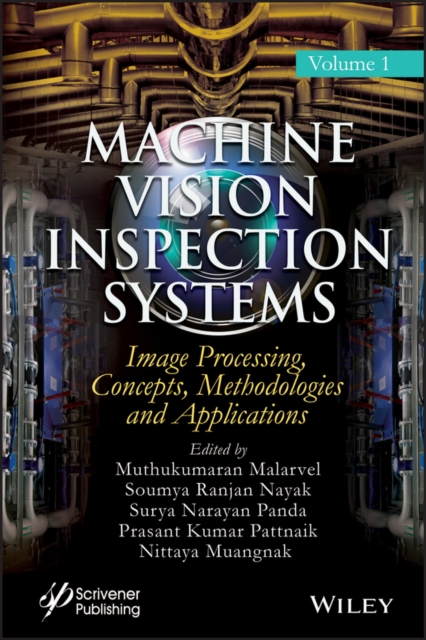
Machine Vision Inspection Systems
This edited book brings together leading researchers, academic scientists and research scholars to put forward and share their experiences and research results on all aspects of an inspection system for detection analysis for various machine vision applications. It also provides a premier interdisciplinary platform to present and discuss the most recent innovations, trends, methodology, applications, and concerns as well as practical challenges encountered and solutions adopted in the inspection system in terms of image processing and analytics of machine vision for real and industrial application. Machine vision inspection systems (MVIS) utilized all industrial and non-industrial applications where the execution of their utilities based on the acquisition and processing of images. MVIS can be applicable in industry, governmental, defense, aerospace, remote sensing, medical, and academic/education applications but constraints are different. MVIS entails acceptable accuracy, high reliability, high robustness, and low cost. Image processing is a well-defined transformation between human vision and image digitization, and their techniques are the foremost way to experiment in the MVIS. The digital image technique furnishes improved pictorial information by processing the image data through machine vision perception. Digital image pro-cessing has widely been used in MVIS applications and it can be employed to a wide diversity of problems particularly in Non-Destructive testing (NDT), presence/absence detection, defect/fault detection (weld, textile, tiles, wood, etc.,), automated vision test measurement, pattern matching, optical character recognition verification (OCR/OCV), barcode reading and traceability, medical diagnosis, weather forecasting, face recognition, defence and space research, etc. This edited book is designed to address various aspects of recent methodologies, concepts and research plan out to the readers for giving more depth insights for perusing research on machine vision using image processing techniques.
eBook

Information visualization : perception for design
Information Visualization is the major revision of a classic work on information visualization.This book explores the art and science of why we see objects the way we do.Based on the science of perception and vision, the author presents the key principles at work for a wide range of applications - resulting in visualization of improved clarity.
eBook

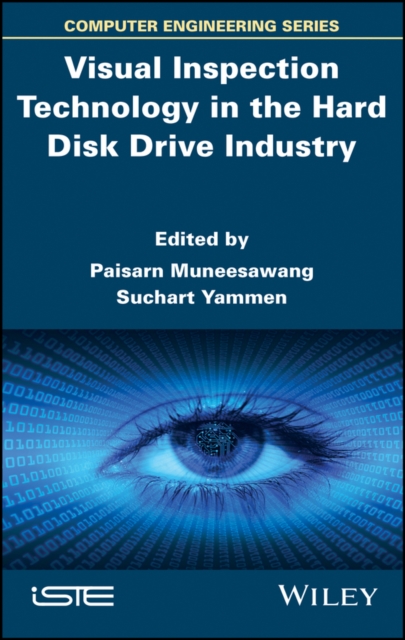
Visual inspection technology in the hard disc drive industry
A presentation of the use of computer vision systems to control manufacturing processes and product quality in the hard disk drive industry. Visual Inspection Technology in the Hard Disk Drive Industry is an application-oriented book borne out of collaborative research with the world’s leading hard disk drive companies. It covers the latest developments and important topics in computer vision technology in hard disk drive manufacturing, as well as offering a glimpse of future technologies.
eBook


HACCP : a food industry briefing
\"Readers of this accessible book - now in a revised and updated new edition - are taken on a conceptual journey which passes every milestone and important feature of the HACCP landscape at a pace which is comfortable and productive. The information and ideas contained in the book will enable food industry managers and executives to take their new-found knowledge into the workplace for use in the development and implementation of HACCP systems appropriate for their products and manufacturing processes.The material is structured so that the reader can quickly assimilate the essentials of the topic. Clearly presented, this HACCP briefing includes checklists, bullet points, flow charts, schematic diagrams for quick reference, and at the start of each section the authors have provided useful key points summary boxes. HACCP: a Food Industry Briefing is an introductory-level text for readers who are unfamiliar with the subject either because they have never come across it or because they need to be reminded. The book will also make a valuable addition to material used in staff training and is an excellent core text for HACCP courses\"-- Provided by publisher.
BOOK

Massive Point Cloud Processing for Efficient Construction Quality Inspection and Control
The construction of large-scale civil infrastructures requires massive spatiotemporal data to support the management and control of scheduling, quality control, and safety monitoring. Existing artificial-intelligence-based data processing algorithms rely heavily on experienced engineers to adjust the parameters of data processing, which is inefficient and time-consuming when dealing with huge datasets. Limited studies have compared the performance of different algorithms on a unified dataset. This study proposes a framework and evaluation system for comparing different data processing policies for processing huge spatiotemporal data in construction quality control. The proposed method compares the combination of multiple types of algorithms involved in the processing of massive point cloud data. The performance of data processing strategies is evaluated through this framework, and the optimal point cloud processing strategies are explored based on registration accuracy and data fidelity. Results show that a reasonable choice of combinations of point cloud sampling, filtering, and registration algorithms can significantly improve the efficiency of point cloud data processing and satisfy engineering demands for data accuracy and completeness. The proposed method can be applied to the civil engineering problem of processing a large amount of point cloud data and selecting the optimal processing method.
Journal Article