
Catalogue Search | MBRL


Are you sure you want to remove the book from the shelf?

{{itemTitle}}
9,688
result(s) for
"intergenerational relationship"
Sort by:

The girl who fell from the sky : a novel
After a family tragedy orphans her, Rachel, the daughter of a Danish mother and a black G.I., moves into her paternal grandmother's mostly black community in the 1980s, where she must swallow her grief and confront her identity as a biracial woman in a world that wants to see her as either black or white.
Book

Effectiveness of reverse mentoring in creating intergenerational relationships
PurposeDemographic changes and consequent diversification of teams of employees in organisations require us to change one’s approach to managing human resources and to search for new methods adjusted to contemporary challenges. One of such methods is reverse mentoring. It is a new form of mentoring where the younger employee is the mentor sharing expertise with the older employee. The purpose of this article is to identify advantages that reverse mentoring offers individuals who participate in the mentoring relationship – the younger mentor and the older mentee, and the entire organisation, as well as to identify conditions conducive to revealing desired advantages.Design/methodology/approachThe article presents results of empirical research conducted based on the qualitative method and semi-structured individual interviews. The research focussed on five pairs from five different organisations operating in Poland who applied reverse mentoring as well as managers or human resources managers of these enterprises.FindingsResearch results show that reverse mentoring may offer numerous advantages to both individuals engaged in the relation (the mentor and the mentee) and the entire organisation. Thus, reverse mentoring seems to be an efficient tool for sharing knowledge, creating engagement, developing leadership and, first and foremost, building intergenerational relations based on mutual acceptance. Conclusions drawn from the research show that efficacy of reverse mentoring depends on the level of engagement in the mentor/mentee relation and the level of organisational support – engagement of the officers, supportive organisational culture and atmosphere conductive to cooperation.Research limitations/implicationsOne of the limitations of the research is the fact that reverse mentoring is not common in Polish organisations, thus the number of the interviews is limited. Furthermore, the data were collected from companies operating in Poland and they refer to one cultural circle. Another limitation is closely connected with the nature of qualitative research, as the research findings may be influenced by the personal perspective of participants.Practical implicationsThe paper helps managers to build intergenerational relations. It encourages the use of reverse mentoring by emphasising its various benefits. It also specifies the conditions which need to be taken into consideration in order to increase the chances of enjoying the benefits, especially the necessity to prepare individual development plans adjusted to the needs and expectations of participants, proper selection of pairs for the mentoring relation and sufficient preparation of each party to the relation. This knowledge may be used by practitioners of managing human resources to develop organisational support for mentoring programmes.Social implicationsThe paper presents reverse mentoring as an opportunity for intergenerational knowledge sharing and developing intergenerational cooperation.Originality/valueThe results of the research extend the knowledge in the area of applying reverse mentoring to create intergenerational relationships. So far, this subject has received limited attention in the literature. Since reverse mentoring is not a widespread method, and research in this area is relatively rare, the value of the paper is to fill the gaps in this subject.
Journal Article

Ruby lost and found
\"It's the summer after seventh grade, and Ruby Chu is feeling more lost than ever. Her best friends aren't speaking to her. She ended the year in detention. Her sister's about to leave for college. Ruby's still grieving her grandfather Ye-Ye when it seems like no one else is. And without Ye-Ye and his annual scavenger hunts across San Francisco, their hometown doesn't really feel like home anymore. Things get worse when Ruby's forced to spend the summer with her distant grandmother Nai-Nai in Chinatown. Then the looming shutdown of a beloved former scavenger hunt stop, May's Bakery, and a secret about Nai-Nai threaten to change everything. Even though Ruby feels out of place, maybe this summer of forming unexpected friendships and fighting to save the bakery will help Ruby reconnect with the world -- and discover what it means to find home again.\" -- Jacket flap.
Book

Marriage for the Sake of Parents? Adult Children's Marriage Formation and Parental Psychological Distress in China
ObjectiveDrawing on the stress process from a life course perspective, this study examines the association between children's overage singlehood and parental psychological distress. BackgroundChildren's unfulfilled roles may have a consequence on parental well‐being. Parents may suffer from stress due to children's overage singlehood indicated by unmarried status beyond socially expected ages in some areas of the world. Parents may see it as their own failure to fulfill their parental role and children's failure to establish a family life. MethodDrawing on data from the China Health and Retirement Longitudinal Study, this study firstly uses Inverse Probability of Treatment Weighting to handle the pretreatment bias, and it is then further advanced by testing the potential mechanisms underlying the relationship between children's marriage formation and parental well‐being. ResultsThe results reveal that sons' overage singlehood is associated with a higher level of parental depression. Moreover, parental satisfaction with intergenerational relationships serves as a mediation factor between a son's overage singlehood and parents' depression. Although economic support for parents shows no significant effect on parental depression, it shows a similar pattern in reducing the effect of son's overage singlehood on parental depression. ConclusionThese findings not only demonstrate the reluctance for cultural change in marriage formation timing and gender‐specific role expectations on children by parents, but also reveal the interplay effects of cultural continuity and the modernization process from an intergenerational perspective.
Journal Article

Pathways to homeownership among young professionals in urban China
Studies on China’s new housing regime primarily focus on state and market as major provision mechanisms and the role of family assistance is largely ignored. This paper explores how family resources help Chinese young professionals in their pathways to homeownership by drawing on qualitative interviews done in Beijing. It was found that young professionals who managed to secure parental help usually came from middle-class families, with parents who were public-sector professionals and managers benefiting from the state’s generous housing reforms in the 1990s. As a result of these intergenerational transfers, housing advantages of these middle-class parents were reproduced among their younger generation, making it easier for them to become homeowners. They might also exacerbate the pre-existing housing inequality. These transfers were made possible in the unique family context with frequent reciprocal exchanges of help and care, which was strengthened by the country’s one-child policy. The new housing regime, characterised by the neoliberal shift of the state’s role and the house price inflation, also enhanced the necessity of relying on family resources.
对于中国新住房体制的研究,基本上以政府及市场作为主要的供给机制,家庭援助的角色很大程度上被忽略。本文透过在北京进行的质性访谈,探讨家庭资源如何帮助中国年轻的专业人士成为业主。研究发现,获得援助的年轻专业人士通常来自中产阶级家庭,其父母通常是公营部门的专业人士及管理阶层,并且受益于九十年代优厚的房屋改革。透过代际间的转移,这些中产阶级父母在住房上的优势,在年轻的一代中得以复制,这不单令他们更容易成为业主,并且加剧一直以来住房上的不平等。这些代际转移能够出现,有赖于中国独特的家庭环境,尤其是两代间频繁的互相照顾及帮助,这些互动因着国家的一孩政策得以巩固下来。在中国新的住房体制里,政府的角色转向新自由主义,房屋价格亦不断攀升,这两个特点亦增加年轻一代对家庭资源的依赖。
Journal Article
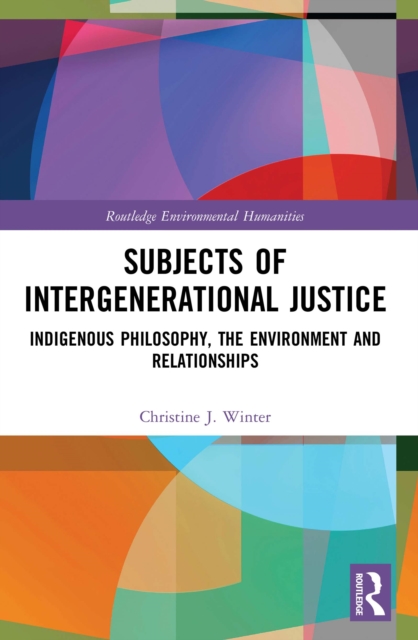
Subjects of Intergenerational Justice
This book challenges mainstream Western IEJ (intergenerational environmental justice) in a manner that privileges indigenous philosophies and highlights the value these philosophies have for solving global environmental problems.
Divided into three parts, the book begins by examining the framing of Western liberal environmental, intergenerational and indigenous justice theory and reviews decolonial theory. Using contemporary case studies drawn from the courts, film, biography and protests actions, the second part explores contemporary Māori and Aboriginal experiences of values-conflict in encounters with politics and law. It demonstrates the deep ontological rifts between the philosophies that inform Māori and Aboriginal intergenerational justice (IJ) and those of the West that underpin the politics and law of these two settler states. Existing Western IEJ theories, across distributional, communitarian, human rights based and the capabilities approach to IJ, are tested against obligations and duties of specific Māori and Aboriginal iwi and clans. Finally, in the third part, it explores the ways we relate to time and across generations to create a regenerative IJ. Challenging the previous understanding of the conceptualization of time, it posits that it is in how we relate-human to human, human to nonhuman, nonhuman to human-that robust conceptualization of IEJ emerges. This volume presents an imagining of IEJ which accounts for indigenous norms on indigenous terms and explores how this might be applied in national and international responses to climate change and environmental degradation.
Demonstrating how assumptions in mainstream justice theory continue to colonise indigenous people and render indigenous knowledge invisible, this book will be of great interest to students and scholars of environmental and intergenerational philosophy, political theory, indigenous studies and decolonial studies, and environmental humanities more broadly.
eBook

A Typology of Intergenerational Relationships Between Taiwanese Gay and Bisexual Men And Their Parents: Negotiating Outness and Co-residence in Chinese Families
IntroductionPrevious research has utilized a typological approach to characterizing intergenerational relationships and exploring their associations with children’s socioemotional outcomes. This study applied this method to Taiwanese gay and bisexual men via a tentative typology constituted by two conditions: co-residence with, and outness to, parent(s). Aside from describing the prevalence of different types of living arrangement, we further examined their links with the internal drivers, filial piety and internalized homophobia, and life satisfaction. Age group difference and the moderation effect of typology on the association between internal drivers and life satisfaction were also investigated.MethodsA cross-sectional survey was completed by a sample of Taiwanese gay and bisexual men recruited via Facebook. Besides reporting their co-residence and outness status, respondents also completed the Contemporary Filial Piety Scale, Chinese Internalized Homophobia Scale, and Satisfaction with Life Scale. Descriptive statistics, ANCOVA, and moderation analysis were performed for young adults and early middle-aged adults separately.ResultsWhile half of the total sample lived with parents, more than half (65.5%) were not out to them. Comparison of categories shows that closeted young adults reported significantly stronger internalized homophobia. Among early middle-aged men, those who were not out to and living with parent(s) reported the highest filial obligations and lowest life satisfaction compared with other groups.ConclusionsThis study contributes to existing knowledge about various forms of family environments and the ways they are involved in Taiwanese gay and bisexual men’s lives. Implications for the use of this typology in social policy and practice are discussed
Journal Article

Item response analysis with partial credit model, psychometric properties and measurement invariance of the multilanguage versions of intergenerational relationship quality scale in Iran
This research aims to assess multilanguage versions of the IRQS-2018 to determine Intergenerational relationship quality in the older persons. In a psychometric investigation, the instrument was completed by 707 persons whose age is older than 60; those people were from 6 populated ethnic groups in Iran. It is noteworthy that the Rasch partial credit model (PCM) and the classic method were employed.The PCM showed that items 3 and 7 were misfitting in all versions of IRQS. Furthermore, consecutive response groupings for all items were situated in the predictable order, and the version of IRQS with 11-items had further interior consistency. Although Rasch analysis specified to pertinent of IRQS 11-Items, it should be assessed in additional investigations and deviating settings such as public residence grown-up adults.
Journal Article

Exploring the Interaction Between Self-rated Health, Intergenerational Relationship, and Subjective Well-being in Older Adults: An Empirical Analysis
The health and happiness of older adults affect social stability and are issues that governments around the world must address. The purpose of this study is to identify the mutual impact of self-rated health, intergenerational relationship, and subjective well-being among older adults. The data of China Family Panel Studies (CFPS) was used, and the study constructed OLS and mediation effect models. The study found that self-rated health and intergenerational relationship had significant positive impacts on the subjective well-being, self-rated health had an indirect impact on the subjective well-being through the intergenerational relationship, and the subjective well-being also had significant positive impacts on self-rated health and intergenerational relationship. The study also found that self-rated health had positive impacts on the subjective well-being of male, agricultural, non-singled, and young older adults. Intergenerational relationship had stronger positive impacts on the subjective well-being of female, non-agricultural, singled, and aged 70 and above older adults. These results suggest that policy makers should formulate differentiated strategies, pay attention to the mental and physical health of older adults, and play the basic role of family and establish harmonious intergenerational relationship.
Journal Article

Leaning to the disadvantaged or pursuing maximum utility? The allocation of intergenerational relationship resources in Chinese families with multiple children
Objective This study examines the general patterns of intergenerational relationships in Chinese extended families and tests two competing viewpoints that explain how intergenerational relationship resources are coordinated within the family: pursuing maximum economic utility versus leaning toward the disadvantaged family members. Methods By using a national representative survey of older population, we constructed four intergenerational relationship types and conducted hierarchical multinomial logistic analyses to test the hypotheses. Results The results showed that tightknit and loose relationship types shared 72% of the four types, reflecting a strong intergenerational solidarity among Chinese families. Parents with higher socioeconomic and health status tend to form closer relationships with their less accomplished children. However, when parents have poorer status in either socioeconomic or health factors, they would have a tighter relationship with their more accomplished children. Conclusions These results support the second viewpoint that Chinese families primarily respond to the immediate needs of vulnerable members with a possible sacrifice of economic efficiency. The finding further suggests that Chinese extended families still serve as safety nets to guarantee the basic needs of its members and provide important resources to manage external social risks. Implications The study contributes to the theoretical literature by adopting a collective family perspective and advances the understanding of how Chinese extended families are organized. It also has important implications that policies aiming to strengthen family solidarity should be adopted to support long‐term development of families, which is crucial for Chinese society to cope with the challenges of rapid population aging.
Journal Article