
Catalogue Search | MBRL


Are you sure you want to remove the book from the shelf?

{{itemTitle}}
531
result(s) for
"iris van herpen"
Sort by:
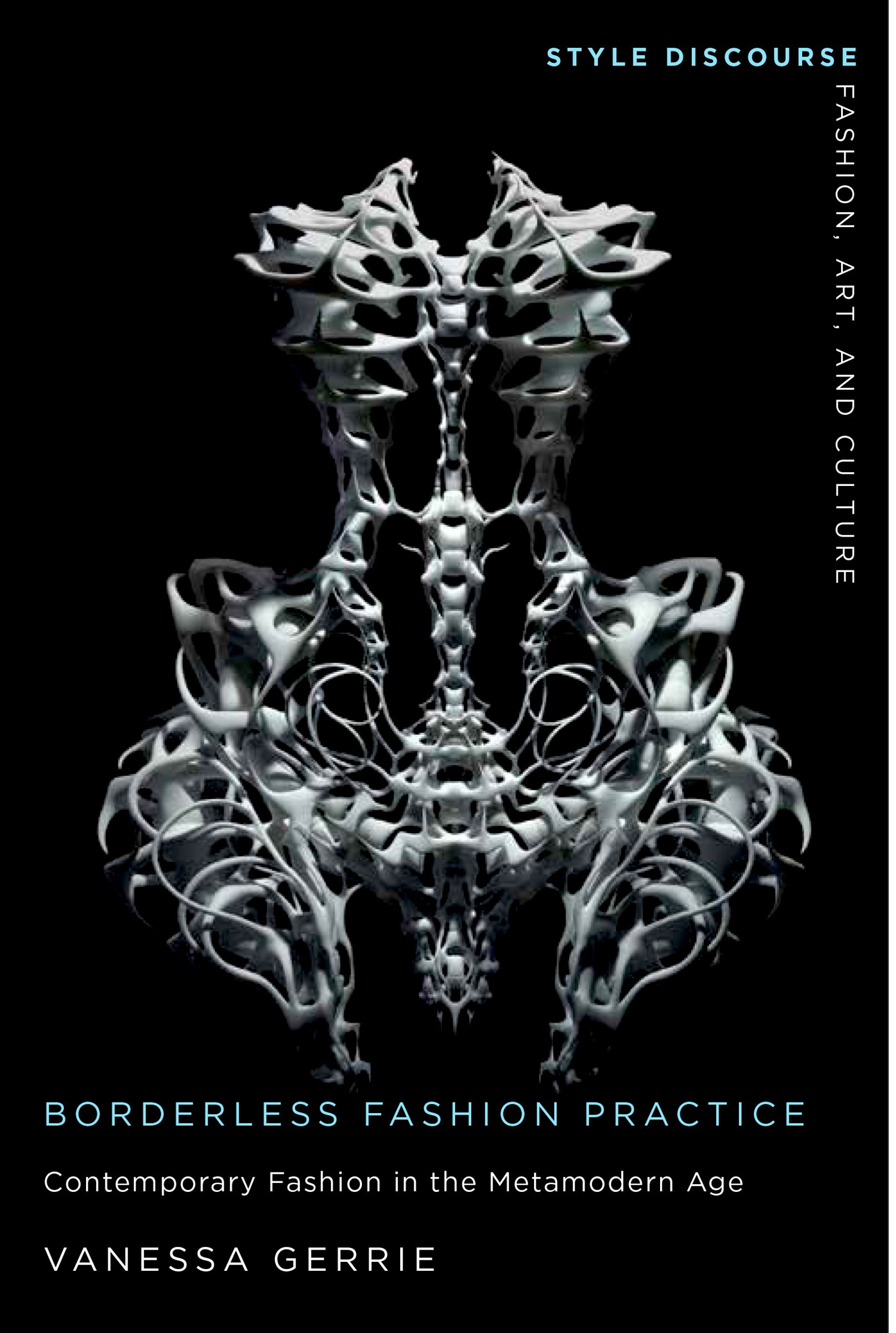
Borderless Fashion Practice
Twenty-first century fashion practice has become increasingly borderless and diverse in the digital era, calling into question the very boundaries that define fashion in the Western cultural context. Borderless Fashion Practice: Contemporary Fashion in the Metamodern Age principally engages the work of four fashion designers -- Virgil Abloh, Aitor Throup, Iris Van Herpen, and Eckhaus Latta -- whose work intersects with other creative disciplines such as art, technology, science, architecture, and graphic design. They do their work in what Vanessa Gerrie calls the metamodern age -- the time and place where the polarization between the modern and the postmodern collapses. Used as a framework to understand the current Western cultural zeitgeist, Gerrie's exploration of the work of contemporary practitioners and theorists finds blurred borders and seeks to blur them further, to the point of erasure.
eBook

Testing of 3D printing on textile fabrics for garments application within circular design
PurposeTo explore the influence of various factors on the adhesion strength of 3D printing materials and chiffon fabrics, and to develop an original design clothing prototype with an extended functionality that would be compatible with the specifics of the circular design.Design/methodology/approachFour different chiffon fabrics and four 3D printed materials were chosen as the research subjects to determine the influence of various factors on the adhesion strength and ductility. The uniaxial tensile test was used to determine pull-out force and the pull-out elongation from the interlayer.Findings3D printed TPU elements can be used to join clothing parts made from low-elasticity chiffon fabrics to improve wearing comfort. In order to comply with the circular economy concept, it is important to select such adhesion parameters of the 3D printed elements and the material system that would ensure wear comfort and withstand wear-level loads; and at the end of the life cycle of a garment, the 3D printed elements could be separated from the product and recycled.Originality/valueThe systems developed can be used to renew and repair products, adding originality, individual touch or additional decorative features, while extending the functional possibilities of clothing items in accordance with circular design principles.
Journal Article

A new era: 3D printing as an aesthetic language and creative tool in fashion and textile design
PurposeThis study aims to produce textile-like surfaces using fused deposition modelling (FDM) 3D printers and create a garment collection.Design/methodology/approachExperiments were conducted using different types of materials in FDM 3D printers until the sufficient flexibility was achieved to create textile-like structures. During the research, properties of polylactic acid (PLA), acrylonitrile butadiene styrene (ABS) and thermoplastic polyurethane (TPU) were observed. Geometrical patterns were printed and each of them gave a different result depending on the pattern. Based on the information obtained from the experiments, a garment collection with four total looks was designed inspired by Vivaldi’s “Four Seasons”.FindingsAmong the materials used, TPU, a flexible filament, yielded the best results. Because of the rigid properties of PLA and ABS, chain-like structures were printed to create relatively flexible surfaces, but the results were still not successful enough to create a clothing material. Therefore, TPU was preferred for the garment material selection.Originality/valueIn this study, combinations of 3D printed flexible structures and different types of fabrics were used to create a garment collection. It was concluded that, with the right material selection, 3D printing can be used as an alternative method to create a new aesthetic language in fashion design.
Journal Article

3D print additive technology as a form of textile material substitute in clothing design – interdisciplinary approach in designing corsets and fashion accessories
This research paper enquires into the application of 3D print additive technology in fashion design. The research aims to find the design options for garments by substituting the textile material with new technological solutions. The focus of the paper is the interdisciplinary research of innovative corset and fashion accessories designs made using 3D print additive technologies. The main focus of the work is the interdisciplinary process of creating clothes ranging from preliminary sketches to prototypes within three different areas: contemporary art, fashion design and additive technology.
Journal Article

Avril Lavigne Does Couture: Behind the Scenes in Paris at the Tamara Ralph Show
Trade Publication Article