
Catalogue Search | MBRL


Are you sure you want to remove the book from the shelf?

{{itemTitle}}
369,540
result(s) for
"islam"
Sort by:


The Islamic challenge : politics and religion in Western Europe
The voices in this book belong to parliamentarians, city councillors, doctors and engineers, a few professors, lawyers and social workers, owners of small businesses, translators, and community activists. They are also all Muslims, who have decided to become engaged in political and civic organisations. And for that reason, they constantly have to explain themselves, mostly in order to say who they are not. They are not fundamentalists, not terrorists, and most do not support the introduction of Islamic religious law in Europe—especially not its application to Christians. This book is about who these people are, and what they want. This book is based on three hundred interviews with European Muslim leaders from six European countries: Sweden, Denmark, the Netherlands, Great Britain, France, and Germany. The question of Islam in Europe is not a matter of global war and peace but raises difficult questions about the positions of Christianity and Islam in public life, and about European identities. Europe's Muslim political leaders are not aiming to overthrow liberal democracy and to replace secular law with Islamic religious law. Those are the positions of a minority. There is not one Muslim position on how Islam should develop in Europe but many views, and most Muslims are rather looking for ways to build institutions that will allow European Muslims to practice their religion in a way that is compatible with social integration.
eBook


Civil Islam
Civil Islamtells the story of Islam and democratization in Indonesia, the world's largest Muslim nation. Challenging stereotypes of Islam as antagonistic to democracy, this study of courage and reformation in the face of state terror suggests possibilities for democracy in the Muslim world and beyond.
Democratic in the early 1950s and with rich precedents for tolerance and civility, Indonesia succumbed to violence. In 1965, Muslim parties were drawn into the slaughter of half a million communists. In the aftermath of this bloodshed, a \"New Order\" regime came to power, suppressing democratic forces and instituting dictatorial controls that held for decades. Yet from this maelstrom of violence, repressed by the state and denounced by conservative Muslims, an Islamic democracy movement emerged, strengthened, and played a central role in the 1998 overthrow of the Soeharto regime. In 1999, Muslim leader Abdurrahman Wahid was elected President of a reformist, civilian government.
In explaining how this achievement was possible, Robert Hefner emphasizes the importance of civil institutions and public civility, but argues that neither democracy nor civil society is possible without a civilized state. Against portrayals of Islam as inherently antipluralist and undemocratic, he shows that Indonesia's Islamic reform movement repudiated the goal of an Islamic state, mobilized religiously ecumenical support, promoted women's rights, and championed democratic ideals. This broadly interdisciplinary and timely work heightens our awareness of democracy's necessary pluralism, and places Indonesia at the center of our efforts to understand what makes democracy work.
eBook
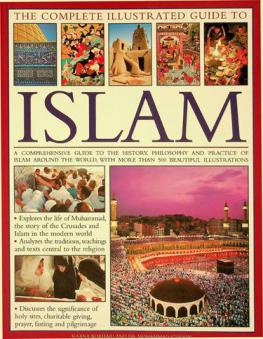
The complete illustrated guide to Islam : a comprehensive guide to the history, philosophy and practice of Islam around the world, with more than 500 beautiful illustrations
Features the traditions, teachings and texts central to the religion and discusses the significance of holy sites, prayer and pilgrimage.
Book

Why the French Don't Like Headscarves
The French government's 2004 decision to ban Islamic headscarves and other religious signs from public schools puzzled many observers, both because it seemed to infringe needlessly on religious freedom, and because it was hailed by many in France as an answer to a surprisingly wide range of social ills, from violence against females in poor suburbs to anti-Semitism.Why the French Don't Like Headscarvesexplains why headscarves on schoolgirls caused such a furor, and why the furor yielded this law. Making sense of the dramatic debate from his perspective as an American anthropologist in France at the time, John Bowen writes about everyday life and public events while also presenting interviews with officials and intellectuals, and analyzing French television programs and other media.
Bowen argues that the focus on headscarves came from a century-old sensitivity to the public presence of religion in schools, feared links between public expressions of Islamic identity and radical Islam, and a media-driven frenzy that built support for a headscarf ban during 2003-2004. Although the defense oflaïcité(secularity) was cited as the law's major justification, politicians, intellectuals, and the media linked the scarves to more concrete social anxieties--about \"communalism,\" political Islam, and violence toward women.
Written in engaging, jargon-free prose,Why the French Don't Like Headscarvesis the first comprehensive and objective analysis of this subject, in any language, and it speaks to tensions between assimilation and diversity that extend well beyond France's borders.
eBook

Can Islam Be French?
Can Islam Be French? is an anthropological examination of how Muslims are responding to the conditions of life in France. Following up on his book Why the French Don't Like Headscarves, John Bowen turns his attention away from the perspectives of French non-Muslims to focus on those of the country's Muslims themselves. Bowen asks not the usual question--how well are Muslims integrating in France?--but, rather, how do French Muslims think about Islam? In particular, Bowen examines how French Muslims are fashioning new Islamic institutions and developing new ways of reasoning and teaching. He looks at some of the quite distinct ways in which mosques have connected with broader social and political forces, how Islamic educational entrepreneurs have fashioned niches for new forms of schooling, and how major Islamic public actors have set out a specifically French approach to religious norms. All of these efforts have provoked sharp responses in France and from overseas centers of Islamic scholarship, so Bowen also looks closely at debates over how--and how far--Muslims should adapt their religious traditions to these new social conditions. He argues that the particular ways in which Muslims have settled in France, and in which France governs religions, have created incentives for Muslims to develop new, pragmatic ways of thinking about religious issues in French society.
eBook
The Story of Prophet Abraham (Ibrahim) In Islam
Prophet Ibrahim (Abraham in the Hebrew Bible), is a prophet and messenger in Islam of Allah. He plays a prominent role as an example of faith in Judaism, Christianity, and Islam.
eBook