
Catalogue Search | MBRL


Are you sure you want to remove the book from the shelf?

{{itemTitle}}
9
result(s) for
"judenrat"
Sort by:
Beyond the Conceivable
The major essays of Dan Diner, who is widely read and quoted in Germany and Israel, are finally collected in an English edition. They reflect the author’s belief that the Holocaust transcends traditional patterns of historical understanding and requires an epistemologically distinct approach. One can no longer assume that actors as well as historians are operating in the same conceptual universe, sharing the same criteria of rational discourse. This is particularly true of victims and perpetrators, whose memories shape the distortions of historical narrative in ways often diametrically opposed.
The essays are divided into three groups. The first group talks about anti-Semitism in the context of the 1930s and the ideologies that drove the Nazi regime. The second group concentrates on the almost unbelievably different perceptions of the \"Final Solution,\" with particularly illuminating discussions of the Judenrat, or Jewish council. The third group considers the Holocaust as the subject of narrative and historical memory. Diner focuses above all on perspectives: the very notions of rationality and irrationality are seen to be changeable, depending on who is applying them. And because neither rational nor irrational motives can be universally assigned to participants in the Holocaust, Diner proposes, from the perspective of the victims, the idea of the counterrational. His work is directed toward developing a theory of Holocaust historiography and offers, clearly and coherently, the highest level of reflection on these problems.
eBook

Show that you are really alive
Sara-Zofia Syrkin-Binsztejnowa (1891–1943) war eine herausragende Ärztin und Aktivistin im Warschauer Ghetto. Das Archiv des American Jewish Joint Distribution Committee weist ihr einen Platz in der ersten Reihe im Kampf gegen das Fleckfieber und bei der Gründung eines öffentlichen jüdischen Gesundheitssystems in der Entstehungszeit der Zweiten Republik Polens zu. In diesem Aufsatz wird die Entwicklung ihrer Pionierarbeit vor dem Hintergrund von Epidemien, der Staatenbildung im Nachkriegspolen und dem Aufkeimen einer internationalen öffentlichen Gesundheitswissenschaft nachgezeichnet. Die Analyse dieser vernachlässigten frühen Jahre der medizinischen Karriere Syrkin-Binsztejnowas wirft ein neues Licht auf ihr soziales Engagement im Warschauer Ghetto, das bisher nur am Rande der Holocaust Historiographie behandelt wurde. Die Autorin kontrastiert Syrkin-Binsztejnowas Arbeit in der Zwischenkriegszeit mit den Versuchen der Medizinerin, ein öffentliches Gesundheitsprogramms auch während der Nazi Besetzung zu koordinieren, Bemühungen, die von Rassenverfolgung und Massenmord untergraben wurden.
The archives of the American Jewish Joint Distribution Committee place Sara-Zofia Syrkin-Binsztejnowa (1891–1943), a prominent physician and activist in the Warsaw Ghetto, on the frontlines in the battle against typhus and the launch of the Jewish public healthcare system in the nascency of Poland’s Second Republic. The evolution of her pioneering efforts is traced against a backdrop of epidemics, post-war nation-building and the emergence of an international public health episteme. The recovery of these neglected early years of Syrkin-Binsztejnowa’s medical career sheds new light on her social activism in the Warsaw Ghetto long marginalized in Holocaust historiography. The author contrasts Syrkin-Binsztejnowa’s interwar work to her efforts coordinating public health programs and the fight against epidemics under Nazi occupation, which were largely undermined by policies of racial persecution and mass murder.
Journal Article
Show that you are really alive
Sara-Zofia Syrkin-Binsztejnowa (1891–1943) war eine herausragende Ärztin und Aktivistin im Warschauer Ghetto. Das Archiv des American Jewish Joint Distribution Committee weist ihr einen Platz in der ersten Reihe im Kampf gegen das Fleckfieber und bei der Gründung eines öffentlichen jüdischen Gesundheitssystems in der Entstehungszeit der Zweiten Republik Polens zu. In diesem Aufsatz wird die Entwicklung ihrer Pionierarbeit vor dem Hintergrund von Epidemien, der Staatenbildung im Nachkriegspolen und dem Aufkeimen einer internationalen öffentlichen Gesundheitswissenschaft nachgezeichnet. Die Analyse dieser vernachlässigten frühen Jahre der medizinischen Karriere Syrkin-Binsztejnowas wirft ein neues Licht auf ihr soziales Engagement im Warschauer Ghetto, das bisher nur am Rande der Holocaust Historiographie behandelt wurde. Die Autorin kontrastiert Syrkin-Binsztejnowas Arbeit in der Zwischenkriegszeit mit den Versuchen der Medizinerin, ein öffentliches Gesundheitsprogramms auch während der Nazi Besetzung zu koordinieren, Bemühungen, die von Rassenverfolgung und Massenmord untergraben wurden.
The archives of the American Jewish Joint Distribution Committee place Sara-Zofia Syrkin-Binsztejnowa (1891–1943), a prominent physician and activist in the Warsaw Ghetto, on the frontlines in the battle against typhus and the launch of the Jewish public healthcare system in the nascency of Poland’s Second Republic. The evolution of her pioneering efforts is traced against a backdrop of epidemics, post-war nation-building and the emergence of an international public health episteme. The recovery of these neglected early years of Syrkin-Binsztejnowa’s medical career sheds new light on her social activism in the Warsaw Ghetto long marginalized in Holocaust historiography. The author contrasts Syrkin-Binsztejnowa’s interwar work to her efforts coordinating public health programs and the fight against epidemics under Nazi occupation, which were largely undermined by policies of racial persecution and mass murder.
Journal Article
Show that you are really alive
Sara-Zofia Syrkin-Binsztejnowa (1891–1943) war eine herausragende Ärztin und Aktivistin im Warschauer Ghetto. Das Archiv des American Jewish Joint Distribution Committee weist ihr einen Platz in der ersten Reihe im Kampf gegen das Fleckfieber und bei der Gründung eines öffentlichen jüdischen Gesundheitssystems in der Entstehungszeit der Zweiten Republik Polens zu. In diesem Aufsatz wird die Entwicklung ihrer Pionierarbeit vor dem Hintergrund von Epidemien, der Staatenbildung im Nachkriegspolen und dem Aufkeimen einer internationalen öffentlichen Gesundheitswissenschaft nachgezeichnet. Die Analyse dieser vernachlässigten frühen Jahre der medizinischen Karriere Syrkin-Binsztejnowas wirft ein neues Licht auf ihr soziales Engagement im Warschauer Ghetto, das bisher nur am Rande der Holocaust Historiographie behandelt wurde. Die Autorin kontrastiert Syrkin-Binsztejnowas Arbeit in der Zwischenkriegszeit mit den Versuchen der Medizinerin, ein öffentliches Gesundheitsprogramms auch während der Nazi Besetzung zu koordinieren, Bemühungen, die von Rassenverfolgung und Massenmord untergraben wurden.
The archives of the American Jewish Joint Distribution Committee place Sara-Zofia Syrkin-Binsztejnowa (1891–1943), a prominent physician and activist in the Warsaw Ghetto, on the frontlines in the battle against typhus and the launch of the Jewish public healthcare system in the nascency of Poland’s Second Republic. The evolution of her pioneering efforts is traced against a backdrop of epidemics, post-war nation-building and the emergence of an international public health episteme. The recovery of these neglected early years of Syrkin-Binsztejnowa’s medical career sheds new light on her social activism in the Warsaw Ghetto long marginalized in Holocaust historiography. The author contrasts Syrkin-Binsztejnowa’s interwar work to her efforts coordinating public health programs and the fight against epidemics under Nazi occupation, which were largely undermined by policies of racial persecution and mass murder.
Journal Article

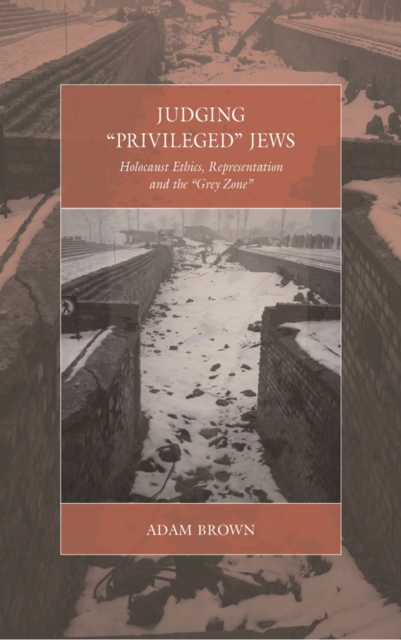
Judging 'Privileged' Jews : Holocaust Ethics, Representation, and the 'Grey Zone'
The Nazis’ persecution of the Jews during the Holocaust included the creation of prisoner hierarchies that forced victims to cooperate with their persecutors. Many in the camps and ghettos came to hold so-called “privileged” positions, and their behavior has often been judged as self-serving and harmful to fellow inmates. Such controversial figures constitute an intrinsically important, frequently misunderstood, and often taboo aspect of the Holocaust. Drawing on Primo Levi’s concept of the “grey zone,” this study analyzes the passing of moral judgment on “privileged” Jews as represented by writers, such as Raul Hilberg, and in films, including Claude Lanzmann’s Shoah and Steven Spielberg’s Schindler’s List. Negotiating the problems and potentialities of “representing the unrepresentable,” this book engages with issues that are fundamental to present-day attempts to understand the Holocaust and deeply relevant to reflections on human nature.
eBook
Judging “privileged” Jews
The Nazis’ persecution of the Jews during the Holocaust included the creation of prisoner hierarchies that forced victims to cooperate with their persecutors. Many in the camps and ghettos came to hold so-called “privileged” positions, and their behavior has often been judged as self-serving and harmful to fellow inmates. Such controversial figures constitute an intrinsically important, frequently misunderstood, and often taboo aspect of the Holocaust. Drawing on Primo Levi’s concept of the “grey zone,” this study analyzes the passing of moral judgment on “privileged” Jews as represented by writers, such as Raul Hilberg, and in films, including Claude Lanzmann’s Shoah and Steven Spielberg’s Schindler’s List. Negotiating the problems and potentialities of “representing the unrepresentable,” this book engages with issues that are fundamental to present-day attempts to understand the Holocaust and deeply relevant to reflections on human nature.
eBook
Judging 'Privileged' Jews
The Nazis’ persecution of the Jews during the Holocaust included the creation of prisoner hierarchies that forced victims to cooperate with their persecutors. Many in the camps and ghettos came to hold so-called “privileged” positions, and their behavior has often been judged as self-serving and harmful to fellow inmates. Such controversial figures constitute an intrinsically important, frequently misunderstood, and often taboo aspect of the Holocaust. Drawing on Primo Levi’s concept of the “grey zone,” this study analyzes the passing of moral judgment on “privileged” Jews as represented by writers, such as Raul Hilberg, and in films, including Claude Lanzmann’s Shoah and Steven Spielberg’s Schindler’s List. Negotiating the problems and potentialities of “representing the unrepresentable,” this book engages with issues that are fundamental to present-day attempts to understand the Holocaust and deeply relevant to reflections on human nature.
eBook

Defeating Typhus in the Warsaw Ghetto
This chapter analyzes the origins and curtailment of the typhus epidemic in the Warsaw ghetto. It begins by reassessing the number of individuals who were infected over the course of the typhus epidemic and the number of those who died. The chapter does this by making use of a detailed study of the often-contradictory literature, combined with mathematical principles commonly used in epidemiological modeling. It then looks at explanations for the end of the epidemic at the beginning of winter 1941–42, an occurrence considered completely surprising and inexplicable at the time. The chapter considers the public health actions that were successful in stemming the epidemic and preserving the lives of the tens of thousands infected. Ultimately, the findings highlight the commitment and actions of the Judenrat and the devotion and success of the ghetto's professional medical practitioners.
Book Chapter

The Jews of France
In the first English-language edition of a general, synthetic history of French Jewry from antiquity to the present, Esther Benbassa tells the intriguing tale of the social, economic, and cultural vicissitudes of a people in diaspora. With verve and insight, she reveals the diversity of Jewish life throughout France's regions, while showing how Jewish identity has constantly redefined itself in a country known for both the Rights of Man and the Dreyfus affair. Beginning with late antiquity, she charts the migrations of Jews into France and traces their fortunes through the making of the French kingdom, the Revolution, the rise of modern anti-Semitism, and the current renewal of interest in Judaism.
As early as the fourth century, Jews inhabited Roman Gaul, and by the reign of Charlemagne, some figured prominently at court. The perception of Jewish influence on France's rulers contributed to a clash between church and monarchy that would culminate in the mass expulsion of Jews in the fourteenth century. The book examines the re-entry of small numbers of Jews as New Christians in the Southwest and the emergence of a new French Jewish population with the country's acquisition of Alsace and Lorraine.
The saga of modernity comes next, beginning with the French Revolution and the granting of citizenship to French Jews. Detailed yet quick-paced discussions of key episodes follow: progress made toward social and political integration, the shifting social and demographic profiles of Jews in the 1800s, Jewish participation in the economy and the arts, the mass migrations from Eastern Europe at the turn of the twentieth century, the Dreyfus affair, persecution under Vichy, the Holocaust, and the postwar arrival of North African Jews.
Reinterpreting such themes as assimilation, acculturation, and pluralism, Benbassa finds that French Jews have integrated successfully without always risking loss of identity. Published to great acclaim in France, this book brings important current issues to bear on the study of Judaism in general, while making for dramatic reading.
eBook