
Catalogue Search | MBRL


Are you sure you want to remove the book from the shelf?

{{itemTitle}}
7,634
result(s) for
"korean culture"
Sort by:


Multicultural adults, microaggressions and embitterment: effects of heightened vigilance and culture acceptance
This study examined the moderated mediation effect of heightened vigilance and Korean culture acceptance attitude on the relationship between microaggressions and embitterment in multicultural young adults aged 25 to 34 in South Korea. A total of 329 multicultural young adults aged 25 to 34 living in South Korea were surveyed. All participants had acquired Korean nationality, even if one of their parents was a non-Korean. First, a significant correlation was found between microaggressions and heightened vigilance, embitterment, and Korean culture acceptance attitude. Second, heightened vigilance partially mediated the relationship between microaggressions and embitterment. Third, Korean culture acceptance attitude moderated the relationship between heightened vigilance and embitterment. Fourth, heightened vigilance and Korean culture acceptance attitude had a moderated mediation effect on the relationship between microaggressions and embitterment. The present study is meaningful in that it examined the mechanisms of discrimination and psychological maladjustment among multicultural young adults and explored the factors that can be overcome in the context of the increasing immigrant population in Korea.
Journal Article

Flawless : lessons in looks and culture from the K-beauty capital
From 2014 to 2018, South Korean cosmetics exports quadrupled from £1.6 billion to £6.3 billion. With the help of YouTube and Instagram influencers, Korean beauty's multi-step skincare regimens, snail-slime facials, and selfie-ready face masks have catapulted into global consciousness and raked in billions. The K-wave captures imaginations worldwide by promising a kind of mesmerizing perfection, aspirational middle class lifestyles, and a sense of fun. These cultural exports, like face creams packaged to look like milkshakes or penguins or cacti, work together to fascinate us, champion consumerism and invite us to indulge. And yet, there is a dark side to this story. In South Korea, not meeting the aesthetic norm will cost you. Women are frowned upon, at best, or openly harassed by strangers if they so much as duck downstairs to the convenience store without makeup on.
BOOK

Hwa-byung: Recommendations for Culturally Sensitive Diagnosis and Care
Hwa-byung refers to a suppressed anger syndrome that is specific to Korean culture and is found predominantly in middle-aged and older women. Because hwa-byung involves a complex mechanism of long-standing subjective anger that forms differently in Western cultures, an understanding of cultural dynamics and etiology is warranted for health care providers to diagnose and treat this condition accurately. The cultural formulation interview developed by the American Psychiatric Association is an excellent tool to discover and discuss this culturally sensitive health condition. This study examines hwa-byung’s disease etiology, characteristics, assessment, differential diagnosis, treatment options, and prognosis.
•Hwa-byung is a Korean culture-related syndrome associated with suppressed anger.•Somatic and behavioral symptoms are common in patients with hwa-byung.•Excessive and persistent anger is expressed in culturally acceptable ways.•Hwa-byung treatment options include pharmacotherapy with or without psychotherapy.
Journal Article


Medicinal food understanding in Korean gastronomic culture
Korean food has countless health benefits and has been used for centuries to keep the body in balance. Food and medicine are usually considered as one and the same thing. The idea that health starts with food means that medical treatment should be tried if any effect is not seen after trying to treat all diseases first with food. In order to help balance the body energies, there are five elements in these foods, namely fire, wood, water, metal, and earth. The dishes of the Korean people are synonymous with being healthy and delicious. Over the years, they have evolved from the culture, country’s geography, and traditions of the people of the Korean peninsula under various effects. To keep the body warm and healthy, the Koreans have developed fermented foods that improve metabolism. Korean gastronomy has been established on healthy food. The Koreans do not eat food to become full. Foods are prepared and consumed to be healthy, healthy food is consumed in order to prevent diseases, and individuals who get sick aim to heal with foods and refer to using medications in case these methods are insufficient.
Journal Article

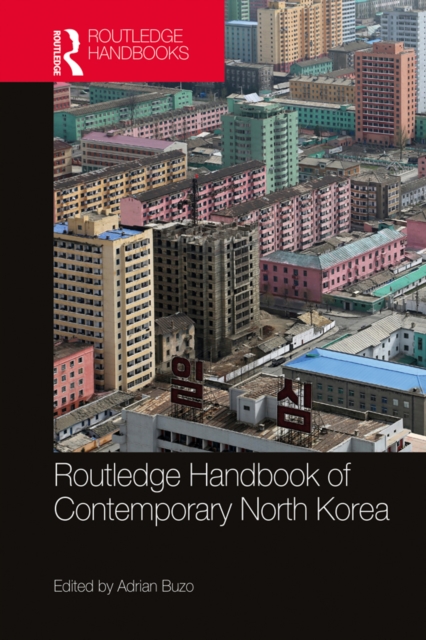
Routledge Handbook Of Contemporary North Korea
The Routledge Handbook of Contemporary North Korea presents a comprehensive picture of contemporary North Korea, placed in historical context and set against the overlapping fields of politics, economy, culture, society and foreign relations. Spanning a period of significant transition for North Korea, this volume provides accurate analysis and applications of both historical and institutional perspectives.
The volume's chapters are representative of the growth in North Korean studies that has occurred since the 1990s, in parallel with the growing maturity of the field in South Korea, as well as with far greater levels of access to North Korean sources. The volume is divided into five Parts, each reflecting an emergent area of debate and research:
The political perspective
The North Korean economy
Foreign relations
Society
Culture
This is the first anthology of North Korean studies to demonstrate a clear understanding of North Korea as North Korea, as opposed to a dimly perceived and threatening rogue state. It features both Korean and non-Korean contributors, many working from primary source material. As such, this handbook will prove a valuable resource to students and scholars of Northeast Asian studies, modern Korean history and politics, and comparative politics more broadly.
eBook