
Catalogue Search | MBRL


Are you sure you want to remove the book from the shelf?

{{itemTitle}}
4,666
result(s) for
"laity"
Sort by:

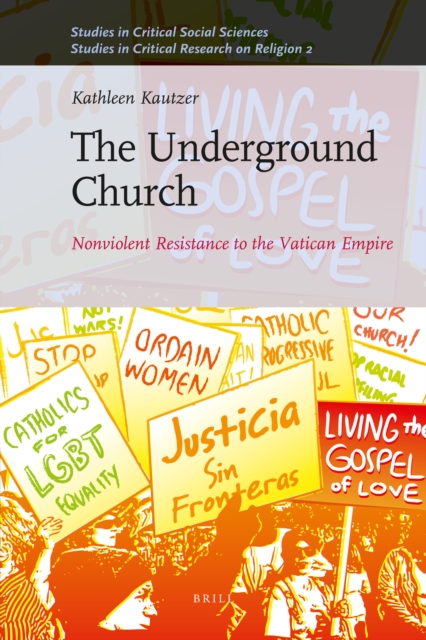
The Underground Church
Drawing on theories of religious movements and nonviolent resistance strategies, this book analyzes the Reform Movement of liberal American Catholics who for over four decades have sustained a movement to expand on the reforms and visions of Vatican II. In the face of backlash from church officials, reformers have moved in a sectarian direction.
eBook


Power Sharing and Authoritarian Stability: How Rebel Regimes Solve the Guardianship Dilemma
Regimes founded in rebellion are, typically, extremely durable. We propose that this stability is founded upon peaceful power sharing between the rebel regime leader and military elites. Amid long and intense fighting, rebel leaders must delegate control to top military commanders because doing so helps them to win battles. After seizing power, power-sharing deals between former combatants are highly credible due to their history of interactions, which mitigates the guardianship dilemma. Elsewhere, a persistent internal security dilemma often undermines power-sharing deals. Using originally collected data on African regimes from 1960 to 2017, we establish that rebel regimes break down seldomly compared with other authoritarian regimes and they experience fewer coups. Regarding the mechanism, rebel regimes more frequently share power with military elites by appointing a Minister of Defense. These Ministers are typically high-ranking members of the rebellion, which reflects the regime’s replacement of the state military with their own.
Journal Article

Some Doubts About \Democratizing\ Criminal Justice
The American criminal justice system's ills are by now so familiar as scarcely to bear repeating: unprecedented levels of incarceration, doled out disproportionately across racial groups, and police that seem to antagonize and hurt the now-distrustful communities they are tasked to serve and protect. Systemic social ailments like these seldom permit straightforward diagnoses, let alone simple cures. In this case, however, a large, diverse, and influential group of experts—the legal academy's \"democratizers\"—all identify the same disease: the retreat of local democratic control in favor of a bureaucratic \"machinery\" disconnected from public values and the people themselves. Neighborhood juries, for example, internalize the costs of punishing their own; neighborhood police, \"of\" and answerable to the community, think twice before drawing their weapons or stopping a local boy on a hunch. The experts and detached professionals who populate our dominant bureaucratic institutions, in contrast, are motivated by different, less salubrious, incentives. Across the gamut of criminal justice decision-making, the democratizers maintain, the influence of the local laity is a moderating, equalizing, and ultimately legitimating one. A generous dose of participatory democracy won't solve all our problems, but it's our best shot to get the criminal justice system back on its feet.
This Article's warning is plain: don't take the medicine. \"Democratization\" wields undeniable rhetorical appeal but will not really fix what ails us—and may just make it worse. The democratization movement, this Article argues, rests on conceptually problematic and empirically dubious premises about the makeup, preferences, and independence of local \"communities.\" It relies on the proudly counterintuitive claim that laypeople are largely lenient and egalitarian, contrary to a wealth of social scientific evidence. And ultimately, democratization's dual commitments are on a collision course. The democratizers simultaneously devote themselves to particular ends—amelioration of the biased and outsized carceral state—and to particular means—participatory democracy. What happens if, as this Article predicts, the means do not produce the ends? Which commitment prevails? Worse yet, venerating lay opinion distracts from alternative visions of \"democratic\" criminal justice that more credibly tackle the critical question of how best to blend public accountability with evidence and expertise.
Journal Article

Lay Activism and the High Church Movement of the Late Eighteenth Century
In Lay Activism and the High Church Movement of the Late Eighteenth Century, Robert M. Andrews presents a biography of the late eighteenth-century High Church layman, William Stevens (1732-1807), elucidating his influence within the High Church movement of his day.
eBook

General Synod of the Hong Kong Sheng Kung Hui
The Eighth General Synod of Hong Kong Sheng Kung Hui (‘Holy Catholic Church of Hong Kong’) met from 23 to 25 June 2019 at St James's Church in the Wan Chai district of Hong Kong. The Synod had been scheduled to meet from 23 to 27 June but concluded its business two days early. It normally meets every three years.
Journal Article

Religious Protection from Populist Violence
Populists often demonize outgroups while undermining institutions that protect citizens against the abuse of state power. Under these conditions, how can vulnerable communities protect themselves? We argue that actors coupling a normative commitment to human rights with the local organizational capacity to intervene can systematically reduce victimization. Focusing on the Philippine Catholic Church in the country’s ongoing “drug war,” we identify five potential mechanisms producing protection. Directly, these actors can raise attention, offer sanctuary, or disrupt enforcement, while indirectly they can shrink vulnerable populations and build local solidarity. We evaluate this argument with a mixed-method research design. A new dataset of over 2,000 drug war killings throughout Metro Manila shows that neighborhoods with a Catholic parish experience approximately 30% fewer killings than those without. Original interviews with clergy and laity in these parishes support both direct and indirect mechanisms, with strongest evidence for attention raising and building community solidarity.
Journal Article

The Lay Saint
In The Lay Saint, Mary Harvey Doyno investigates the phenomenon of saintly cults that formed around pious merchants, artisans, midwives, domestic servants, and others in the medieval communes of northern and central Italy. Drawing on a wide array of sources-vitae documenting their saintly lives and legends, miracle books, religious art, and communal records-Doyno uses the rise of and tensions surrounding these civic cults to explore medieval notions of lay religiosity, charismatic power, civic identity, and the church's authority in this period.
Although claims about laymen's and laywomen's miraculous abilities challenged the church's expanding political and spiritual dominion, both papal and civic authorities, Doyno finds, vigorously promoted their cults. She shows that this support was neither a simple reflection of the extraordinary lay religious zeal that marked late medieval urban life nor of the Church's recognition of that enthusiasm. Rather, the history of lay saints' cults powerfully illustrates the extent to which lay Christians embraced thevita apostolic-the ideal way of life as modeled by the Apostles-and of the church's efforts to restrain and manage such claims.
eBook
