
Catalogue Search | MBRL


Are you sure you want to remove the book from the shelf?

{{itemTitle}}
16
result(s) for
"learn French"
Sort by:
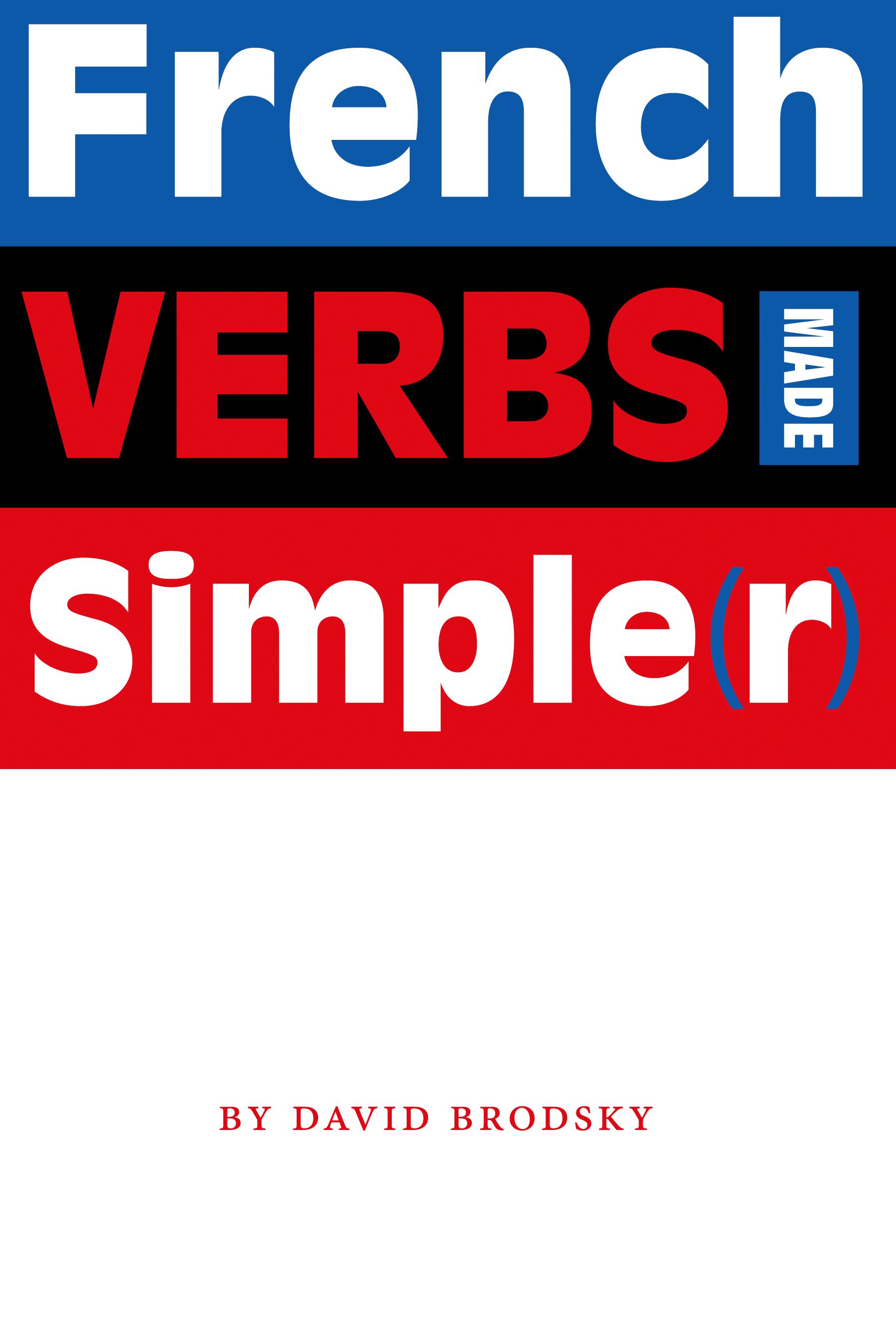
French Verbs Made Simple(r)
It's time for a new approach to learning French verbs. Unlike popular verb guides that require the rote memorization of hundreds of verb forms, this book clearly explains the rules that govern the conjugation of all classes of French verbs—especially the irregular ones that give second-language learners the most trouble. These straightforward, easy-to-understand rules for conjugating French verbs are effective learning tools for both beginning students and more advanced speakers who want to perfect their usage of French verb forms. French Verbs Made Simple(r) has many helpful features that you won't find in any other verb guide: Clear explanations of all verb tenses and forms.The simple patterns and rules that govern the conjugation of all verbs—including those verbs whose irregularities follow patterns that can be easily learned.A detailed discussion of how each verb form is used, with numerous examples.A full explanation of whether a verb should be conjugated with avoir or être, and the conditions under which the past participle is variable—two of the thorniest problems for students of French.An extended treatment of the subjunctive that will help you understand why it is used in some situations but not others.Complete conjugations for 57 basic model verbs (along with 27 \"variants\") and a comprehensive listing of some 6,200 verbs that indicates which of the models each verb follows. Going well beyond any other guide in the clarity and detail of its explanations—as well as the innovative manner in which individual verbs are linked to model conjugations—French Verbs Made Simple(r) is the only guide to French verbs a learner needs.
eBook

The Kingdom by Emmanuel Carrère: Believing or Learning as a Theological Virtue
Le Royaume [English Translation: The Kingdom] is one of the French author Emmanuel Carrère’s most successful works. The main question posed by this book is this: how can normal, intelligent people believe in something as absurd as the Christian religion? One of the believers with whom the author enters into dialogue is Carrère, who for some years was a devout Catholic himself. He then links this questioning to a form of historical research into the sources of Christianity. If Carrère’s historical research is not always up to date, the part devoted to introspection is a convincing testimony, showing how a renowned author grapples with his own past and that of the church in a postmodern, secular world. The interesting aspect of his research is that he finds that, although he is not a believer, he wants to be a disciple.
Journal Article

Learning Foreign Languages Using Mobile Applications
Aim/Purpose: This study examines how the use of a Mobile Assisted Language Learning (MALL) application influences the learners’ attitudes towards the process of learning, and more specifically in voluntary and mandatory environments. Background: Mobile devices and applications, which have become an integral part of our lives, are used for different purposes, including educational objectives. Among others, they are used in the process of foreign language acquisition. The use of a MALL application to learn foreign languages has advantages and drawbacks, which are important to understand, in order to achieve better learning results, while improving the enjoyment of the process. Methodology : The study population included people who participated in a foreign language course and used Duolingo application on a mobile device in parallel. One group consisted of high school pupils, who were obliged to use the application and filled in before and after questionnaires. The other group consisted of people who took face-to-face courses, and chose to use the same Duolingo application voluntarily, in order to assist their studies. The second group answered another questionnaire tailored to more experienced users. The findings were analyzed using IBM SPSS version 22, and a model was examined with Partial Least Squares Structural Equation Modeling. Contribution: This paper helps to understand the perceived advantages and drawbacks of using a MALL application by students both in mandatory and voluntary environments. Findings: Most of the participants found the MALL Duolingo application enhanced the learning process. The gamification characteristics, ease of use, ubiquity and self-learning facilities had a stimulating effect on the process of learning, and contributed to the willingness to continue using the application and to recommend it to others. However, some statistically significant differences were found between the groups, referring to the characteristics of the application, among them ubiquity, lack of human feedback and simplicity of use. Recommendations for Practitioners: The research findings can contribute to both teachers and students who conduct and participate in foreign language courses, by helping them examine the possibility of combining mobile learning with a traditional face-to-face course. Moreover, the findings can assist developers of mobile learning applications, in order to include gamification options in the process of learning. Recommendation for Researchers: Researchers in the fields of mobile applications and m-learning need to understand the factors enhancing the learning process, in order to develop the next generations of m-learning applications. Impact on Society: Mobile devices have become an accessory that almost every person in the world uses. Its ubiquitous characteristics allow using it everywhere and anytime. This is an opportunity to facilitate education to people all around the world. Gamification of m-learning applications can promote and encourage the use of these applications. Future Research Further examination is needed in different cultures, in order to understand if the findings are universal.
Journal Article
The Effect of Multilingual Facilitation on Active Participation in MOOCs
A new approach for overcoming the language and culture barriers to participation in Massive Open Online Courses (MOOCs) is reported. It is hypothesised that the juxtaposition of English as the language of instruction, used for interacting with course materials, and one's preferred language as the language of participation, used for interaction with peers and facilitators, is preferable to \"English only\" for participation in a MOOC. The Hands-On ICT (HANDSON) MOOC included seven teams of facilitators, each catering for a different language community. Facilitators were responsible for promoting active participation and peer tutoring. Comparing language groups revealed a series of predictors of intention to learn, some of which became apparent in the first days of the MOOC already. The comparison also uncovered four critical factors that influence participation: facilitation, language of participation, group size, and a pre-existing sense of community. Especially crucial was reaching a sufficient number of active participants during the first week. We conclude that multilingual facilitation activates participation in MOOCs in various ways, and that synergy between the four aforementioned factors is critical for the formation of the learning network that supports a social dynamic of active participation. Our approach suggests future targets for the development of the multilingual and community potential of MOOCs.
Journal Article

L'auto-évaluation : un outil d'autonomie dans l'apprentissage des apprenants de français des filières scientifiques et techniques au Ghana
La présente étude analyse le rôle de l'autoévaluation dans le processus d'apprentissage du français des apprenants des filières scientifiques et techniques de l'University of Energy and Natural Resources. Il s'agissait dans cette étude de comprendre comment se pratique l'autoévaluation chez les apprenants ciblés et son impact dans leur apprentissage. Notre étude se fonde sur la théorie constructiviste et celle de l'évaluation et révèle que la grande majorité des apprenants du niveau choisi utilisent l'autoévaluation comme outil d'autonomie dans leur apprentissage du français. L'étude a été menée auprès de 200 apprenants sélectionnés de façon aléatoire répartis dans quatre filières différentes pour répondre à un questionnaire focalisé sur la pratique et le rôle de l'autoévaluation dans l'enseignement-apprentissage du français.
Journal Article

Pour un enseignement pragmatique du français dans un cours magistral : la lecture interactive
La construction du sens d'un texte passe automatiquement par la lecture. C'est le moyen le plus pratique pour appréhender le contenu d'un texte. Il s'agit d'une méthode pragmatique pour l'acquisition de différentes compétences linguistiques. C'est avec la pratique de la lecture qu'on développe nos capacités cognitives et qu'on arrive, par conséquent, à percevoir les significations d'une manière fluide et rapide. Il s'agit alors de montrer que la lecture est un facteur d'interactivité, de non-passivité et d'enseignement pragmatique dans un cours magistral, en s'inspirant notamment de travaux théoriques effectués sur le rôle de la pragmatique via l'enseignement du français et en analysant les résultats d'une expérience et d'une enquête menées sur le terrain d'un cours magistral universitaire en sciences humaines et sociales.
Journal Article
Le manuel scolaire du français langue étrangère en Algérie et les nouveaux besoins des apprenants
Dans cet article, nous essayons de mettre l'accent sur le contenu du manuel scolaire de français destiné aux apprenants de première année secondaire en Algérie. Nous cherchons à travers cette contribution à vérifier si cet outil pédagogique répond dans sa conception et ses propositions aux différents besoins des apprenants algériens en classe de français langue étrangère. En effet, nous analysons les activités d'apprentissage ainsi que les textes contenus dans ce document officiel pour voir s'ils aident vraiment à installer chez ces apprenants des compétences linguistique, communicative et culturelle comme on le recommande dans les nouvelles approches d'enseignement/apprentissage du français fondées sur une mouvance communicative et actionnelle. Nous insistons sur les points de langue qui doivent être contextualisés et au service de la communication, sur les activités de nature communicative et sur les textes supports à traits culturels qui peuvent permettre de faire une comparaison interculturelle.
Journal Article

La production écrite par mail en didactique du français langue étrangère : cas de l'Institut français de Goma
Grâce a l'analyse du contenu, cet article scrute la portée des mails dans la performance en production écrite des apprenants du niveau A2 de l'Institut français de Goma. La classe évaluée a suivi le cours de FLE de septembre a novembre 2017. Le corpus est constitué des mails qui ont été analysés au crible de la consigne de l'activité d'une leçon du manuel Alter Ego + A2 et du CECR. Moyen opportun de communication didactique, le mail a facilité des interactions et a suscité l'engouement des apprenants qui, par la suite et hors leçon, ont pu rédiger des mails dans des contextes divers.
Journal Article

Autonomie de l'apprenant en français : quel rôle pour les techniques théâtrales ?
Autonomy, a much used term, is still very relevant today. How can drama techniques help create autonomy in a French as a foreign language class? While studying this question, this article leans on research conducted in an undergraduate French language class in India. The sessions based on drama activities are studied and student reaction and attitudes are analysed. These sessions that are focussed on a fun approach through drama, were beneficial on several fronts: increasing motivation, encouraging initiative, promoting collaborative learning and helping learners to reflect on their learning process.
Journal Article
Le récit de fiction comme passerelle pour une compétence interculturelle
Cette recherche a pour mission d'étudier l'intéret du récit de fiction dans ['installation de la compétence interculturelle chez les apprenants du français langue étrangere. En effet, elle mettra en lumiere les aspects interculturels introduits dans le premier projet pédagogique du manuel scolaire de la 2e année moyenne. Cette étude s'inscrit dans une approche didactique visant essentiellement la didactisation des données interculturelles a travers le texte littéraire, en classe de français.
Journal Article