
Catalogue Search | MBRL


Are you sure you want to remove the book from the shelf?

{{itemTitle}}
445
result(s) for
"liberty of conscience"
Sort by:

Conscientious objection and human rights : a systematic analysis
To which extent is it legitimate, in view of freedom of conscience and religion, to sanction individuals for refusing to take part in an activity they claim to be incompatible with their moral or religious convictions? To answer this question, this study first clarifies some of the concepts of conscientious objection. Then it examines the case law of international bodies and draws distinctions in order to differentiate several types of objections, hence identifying the evaluation criteria applicable to the respect that each one deserves. Finally, this study proposes indications as to the rights and obligations of the State in front of those different types of objections. -- Source other than Library of Congress.
Book

THE PRINCIPLE AND POLITICS OF LIBERTY OF CONSCIENCE
\"[W]hat should replace Smith?\" That was Justice Barrett's main question in 'Fulton v. City of Philadelphia'. She expressed serious misgivings about the governing free exercise rule, set out in 'Employment Division v. Smith', according to which laws that are neutral and generally applicable do not draw a presumption of invalidity simply because they burden religion. How should Justice Barrett’s question be answered? The way that judges, lawyers, and academics respond could be consequential. Conditions for an overhaul of free exercise doctrine are surprisingly favorable, despite the polarized state of constitutional politics. A notable number of Justices are open to replacing the rule of Smith with a rule that requires at least some exemptions from general laws that substantially burden observance. This Comment offered one possibility, the framework of liberty of conscience, that maintains overall consistency with the commitment to egalitarian democracy. Yet it has also warned that any such rule would likely be applied in
a manner that reflected the particular politics of religious freedom already being implemented by the Roberts Court. Rather than protecting free and equal democratic membership in matters of conscience, this Court is more likely to use any additional leeway to extend its power of judicial review in the direction of religious preferentialism and a laissez-faire political economy. To whatever degree constitutional doctrine drives results, implementing a new rule today might adversely affect the liberty of those who need protection most.
Journal Article

The Significance of Conscience in Community: Rethinking the ‘Hands Off Religion’ Doctrine
When evaluating religious accommodation claims, courts refrain from examining the relationship between the specific claim and the common religious practice of the relevant religion. This paper rethinks this doctrine. I argue that it stems from understanding religious accommodation as a protection of conscience. This idea itself suffers from conceptual and practical challenges, which can be mitigated if we understand religion as a communal function of conscientious actions. The communal aspect bears practical and moral significance, and I explore three dimensions of it: the epistemic implications; its effect on constituting moral obligations toward others; and its importance as part of one’s culture. A communal-conscientious approach to religion can mitigate many challenges that confront conscience accommodation. This suggests that the relationship between the individual’s claim and their communal practice is crucial and should be evaluated by courts. I conclude by outlining the main considerations for creating a new, nuanced doctrine.
Journal Article

“Want of Zeal for It”: Pierre Bayle on Religious Radicalization
This article argues that Pierre Bayle (1647–1706) is not merely a theorist of religious toleration but also a theorist of religious radicalization. By exploring how religious dissenters experienced religious conformity as a kind of mental and spiritual torture akin to conventional forms of corporeal punishment, I demonstrate that Bayle’s influential defense of toleration and liberty of conscience hinges on his account of the psychological mechanism of religious radicalization. Demands for religious conformity do not convince dissenters of their error but of their lack of zeal for their faith. Bayle’s plea for toleration, more broadly, urges us to reflect on the ways that we invite those who are different from us into dialogue or risk alienating them even further, an urgent concern today as extremist religious and nationalist views are on the rise across the globe.
Journal Article

“Liberty of Conscience is Every Man’s Natural Right”: Historical Background of the First Amendment
Liberty of conscience, encompassing free speech, a free press, and freedom of religion, has a rich history in Anglo-American political thought, long predating the drafting of the First Amendment to the United States Constitution in 1789. The debate over licensing acts in seventeenth-century England; the advancement of principles of toleration by John Milton, Algernon Sidney, and John Locke in the same period; the renowned, impassioned, and highly influential essays of John Trenchard and Thomas Gordon in Cato’s Letters; the flourishing of a relatively free press and free church in eighteenth-century colonial America; and the liberty-championing assertions in the several declarations of rights in the newly independent states of America all played a critical role in shaping and inspiring the popular views in America that made the First Amendment possible.
Journal Article

Buried Together
Buried Together is a historical novel based on the true story of Silas Beasley Jr., a conscientious objector, who protected his family following the Civil War. The family was forced to quarantine and Silas had to face the consequences of his decisions.
eBook
The Role of Black Christian Beliefs in the Civil Rights Movement: A Paradigm for a Better Understanding of Religious Freedom
This paper builds upon and extends Christian and legal scholarship on the civil rights movement by illuminating a climate of religious freedom that served as a catalyst for and was integral to the success of the spirited activism of the civil rights movement. To date, scholars have not extensively considered how the expansion of religious freedom in church and state jurisprudence both directly and indirectly created a climate that contributed to the success of the CRM, and how advancements in civil rights impacted the broader revolution occurring in constitutional rights. The climate of religious freedom included court support for evangelizing in residentially exclusive areas, exemptions for conscientious opposers from participating in oath swearing and other ceremonies, and exemptions from other general laws that unduly inhibited the free exercise of religious rights.
Journal Article

(Non)Religious Freedom: A Critical Perspective on the Contemporary Understanding of Freedom of Conscience and Religion
Nowadays, liberty of conscience as an inalienable right is a standard of demoliberal constitutionalism. It is an obvious component of a well-organized society and state. However, at the very beginning of its presence in the political discourse, it was more a product of Christian theology (the free conscience perceived as a gift of God) than a legal category; more an endowment of divinity than an intrinsic human value. In the contemporary, secularized world, our understanding of freedom of religion includes not only free exercise of religion but also freedom from religion. An increasing number of non-believers changes our expectations of the state that is obliged to protect the freedom of conscience of all citizens regardless of their beliefs. The goal of the article is to consider the difficulties faced by people with a theistic worldview in the reality of a state founded on the principle of ideological neutrality.
Journal Article

The Trouble with Corporate Conscience
Accomplished corporate law scholars claim that modern businesses need an infusion of morality. Disappointed by conventional regulatory responses to recurring corporate scandal, these scholars argue that corporate conscience provides a more fruitful path to systemic economic reform. In Burwell v. Hobby Lobby, which held that for-profit businesses can claim religious exemptions from general laws, the Supreme Court gave this notion of corporate conscience added momentum. Emboldened by the Court's embrace of business goals extending beyond shareholder profit, proponents of a moralized marketplace now celebrate corporate conscience as an idea whose time has come.
Journal Article
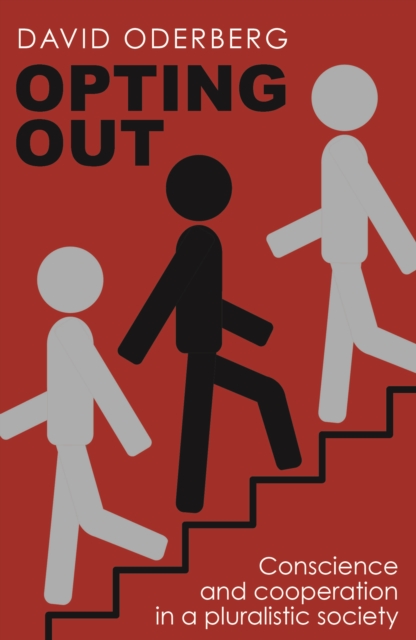
Opting out
Should people with deeply held objections to certain practices be allowed to opt out of involvement with them?Should a Christian baker who objects to homosexuality be allowed to deny service to a customer seeking a cake for a gay wedding?Should a Catholic nurse be able to refuse to contribute to the provision of abortions without losing her job?The law increasingly answers no to such questions. But David Oderberg argues that this is a mistake. He contends that in such cases, opting out should be understood as part of a right of dissociation - and that this right needs better legal protection than it now enjoys.
eBook