
Catalogue Search | MBRL


Are you sure you want to remove the book from the shelf?

{{itemTitle}}
29,971
result(s) for
"life spans"
Sort by:
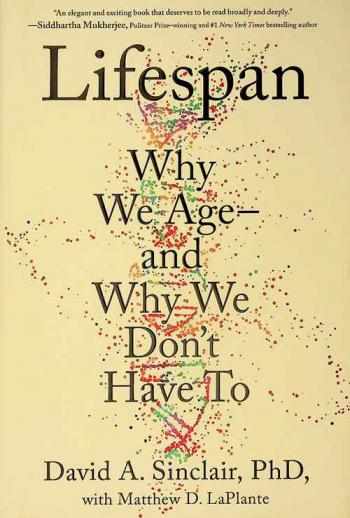
Lifespan : why we age--and why we don't have to
\"From an acclaimed Harvard professor and one of Time's most influential people, this paradigm-shifting book shows how almost everything we think we know about aging is wrong, offers a front-row seat to the amazing global effort to slow, stop, and reverse aging, and calls readers to consider a future where aging can be treated. For decades, experts have believed that we are at the mercy of our genes, and that natural damage to our genes--the kind that inevitably happens as we get older--makes us become sick and grow old. But what if everything you think you know about aging is wrong? What if aging is a disease--and that disease is treatable? In Lifespan, one of the world's foremost experts on aging and genetics reveals a groundbreaking new theory that will forever change the way we think about why we age and what we can do about it. Aging isn't immutable; we can have far more control over it than we realize. This eye-opening and provocative work takes us to the frontlines of research that is pushing the boundaries on our perceived scientific limitations, revealing incredible breakthroughs--many from Dr. David Sinclair's own lab--that demonstrate how we can slow down, or even reverse, the genetic clock. The key is activating newly discovered vitality genes--the decedents of an ancient survival circuit that is both the cause of aging and the key to reversing it. Dr. Sinclair shares the emerging technologies and simple lifestyle changes--such as intermittent fasting, cold exposure, and exercising with the right intensity--that have been shown to help lead to longer lives. Lifespan provides a roadmap for taking charge of our own health destiny and a bold new vision for the future when humankind is able to live to be 100 years young\"-- Provided by publisher.

Demographic perspectives on the rise of longevity
This article reviews some key strands of demographic research on past trends in human longevity and explores possible future trends in life expectancy at birth. Demographic data on age-specific mortality are used to estimate life expectancy, and validated data on exceptional life spans are used to study the maximum length of life. In the countries doing best each year, life expectancy started to increase around 1840 at a pace of almost 2.5 y per decade. This trend has continued until the present. Contrary to classical evolutionary theories of senescence and contrary to the predictions of many experts, the frontier of survival is advancing to higher ages. Furthermore, individual life spans are becoming more equal, reducing inequalities, with octogenarians and nonagenarians accounting for most deaths in countries with the highest life expectancy. If the current pace of progress in life expectancy continues, most children born this millennium will celebrate their 100th birthday. Considerable uncertainty, however, clouds forecasts: Life expectancy and maximum life span might increase very little if at all, or longevity might rise much faster than in the past. Substantial progress has been made over the past three decades in deepening understanding of how long humans have lived and how long they might live. The social, economic, health, cultural, and political consequences of further increases in longevity are so significant that the development of more powerful methods of forecasting is a priority.
Journal Article


Klotho depletion contributes to increased inflammation in Kidney of the db/db mouse model of diabetes via RelA .sup.536 phosphorylation
OBJECTIVE--Klotho is an anti-aging hormone present in the kidney that extends the lifespan, regulates kidney function, and modulates cellular responses to oxidative stress. We investigated whether Klotho levels and signaling modulate inflammation in diabetic kidneys. RESEARCH DESIGN AND METHODS--Renal Klotho expression was determined by quantitative real-time PCR and immunoblot analysis. Primary mouse tubular epithelial cells were treated with methylglyoxalated albumin, and Klotho expression and inflammatory cytokines were measured. Nuclear factor (NF)-[kappa]B activation was assessed by treating human embryonic kidney (HEK) 293 and HK-2 cells with tumor necrosis factor (TNF)-[alpha] in the presence or absence of Klotho, followed by immunoblot analysis to evaluate inhibitor of [kappa]B (I[kappa]B)[alpha] degradation, I[kappa]B kinase (IKK) and p38 activation, RelA nuclear translocation, and phosphorylation. A chromatin immunoprecipitation assay was performed to analyze the effects of Klotho signaling on interleukin-8 and monocyte chemoattractant protein-1 promoter recruitment of RelA and RelA serine [(Set).sup.536]. RESULTS--Renal Klotho mRNA and protein were significantly decreased in db/db mice, and a similar decline was observed in the primary cultures of mouse tubule epithelial cells treated with methylglyoxal-modified albumin. The exogenous addition of soluble Klotho or overexpression of membranous Klotho in tissue culture suppressed NF-[kappa]B activation and subsequent production of inflammatory cytokines in response to TNF-[alpha] stimulation. Klotho specifically inhibited RelA [Ser.sup.536] phosphorylation as well as promoter DNA binding of this phosphorylated form of RelA without affecting IKK-mediated I[kappa]B[alpha] degradation, total RelA nuclear translocation, and total RelA DNA binding. CONCLUSIONS--These findings suggest that Klotho serves as an anti-inflammatory modulator, negatively regulating the production of NF-[kappa]B-linked inflammatory proteins via a mechanism that involves phosphorylation of [Ser..sup.536] in the transactivation domain of RelA. Diabetes 60:1907-1916, 2011
Journal Article

Healthspan and lifespan extension by fecal microbiota transplantation into progeroid mice
The gut microbiome is emerging as a key regulator of several metabolic, immune and neuroendocrine pathways1,2. Gut microbiome deregulation has been implicated in major conditions such as obesity, type 2 diabetes, cardiovascular disease, non-alcoholic fatty acid liver disease and cancer3–6, but its precise role in aging remains to be elucidated. Here, we find that two different mouse models of progeria are characterized by intestinal dysbiosis with alterations that include an increase in the abundance of Proteobacteria and Cyanobacteria, and a decrease in the abundance of Verrucomicrobia. Consistent with these findings, we found that human progeria patients also display intestinal dysbiosis and that long-lived humans (that is, centenarians) exhibit a substantial increase in Verrucomicrobia and a reduction in Proteobacteria. Fecal microbiota transplantation from wild-type mice enhanced healthspan and lifespan in both progeroid mouse models, and transplantation with the verrucomicrobia Akkermansia muciniphila was sufficient to exert beneficial effects. Moreover, metabolomic analysis of ileal content points to the restoration of secondary bile acids as a possible mechanism for the beneficial effects of reestablishing a healthy microbiome. Our results demonstrate that correction of the accelerated aging-associated intestinal dysbiosis is beneficial, suggesting the existence of a link between aging and the gut microbiota that provides a rationale for microbiome-based interventions against age-related diseases.
Journal Article

White matter abnormalities across the lifespan of schizophrenia: a harmonized multi-site diffusion MRI study
Several prominent theories of schizophrenia suggest that structural white matter pathologies may follow a developmental, maturational, and/or degenerative process. However, a lack of lifespan studies has precluded verification of these theories. Here, we analyze the largest sample of carefully harmonized diffusion MRI data to comprehensively characterize age-related white matter trajectories, as measured by fractional anisotropy (FA), across the course of schizophrenia. Our analysis comprises diffusion scans of 600 schizophrenia patients and 492 healthy controls at different illness stages and ages (14–65 years), which were gathered from 13 sites. We determined the pattern of age-related FA changes by cross-sectionally assessing the timing of the structural neuropathology associated with schizophrenia. Quadratic curves were used to model between-group FA differences across whole-brain white matter and fiber tracts at each age; fiber tracts were then clustered according to both the effect-sizes and pattern of lifespan white matter FA differences. In whole-brain white matter, FA was significantly lower across the lifespan (up to 7%; p < 0.0033) and reached peak maturation younger in patients (27 years) compared to controls (33 years). Additionally, three distinct patterns of neuropathology emerged when investigating white matter fiber tracts in patients: (1) developmental abnormalities in limbic fibers, (2) accelerated aging and abnormal maturation in long-range association fibers, (3) severe developmental abnormalities and accelerated aging in callosal fibers. Our findings strongly suggest that white matter in schizophrenia is affected across entire stages of the disease. Perhaps most strikingly, we show that white matter changes in schizophrenia involve dynamic interactions between neuropathological processes in a tract-specific manner.
Journal Article
Senolytics improve physical function and increase lifespan in old age
Physical function declines in old age, portending disability, increased health expenditures, and mortality. Cellular senescence, leading to tissue dysfunction, may contribute to these consequences of aging, but whether senescence can directly drive age-related pathology and be therapeutically targeted is still unclear. Here we demonstrate that transplanting relatively small numbers of senescent cells into young mice is sufficient to cause persistent physical dysfunction, as well as to spread cellular senescence to host tissues. Transplanting even fewer senescent cells had the same effect in older recipients and was accompanied by reduced survival, indicating the potency of senescent cells in shortening health- and lifespan. The senolytic cocktail, dasatinib plus quercetin, which causes selective elimination of senescent cells, decreased the number of naturally occurring senescent cells and their secretion of frailty-related proinflammatory cytokines in explants of human adipose tissue. Moreover, intermittent oral administration of senolytics to both senescent cell–transplanted young mice and naturally aged mice alleviated physical dysfunction and increased post-treatment survival by 36% while reducing mortality hazard to 65%. Our study provides proof-of-concept evidence that senescent cells can cause physical dysfunction and decreased survival even in young mice, while senolytics can enhance remaining health- and lifespan in old mice.
Transfer of senescent cells into naive, young mice can induce physical dysfunction, and a senolytic can reverse this dysfunction and potently increase lifespan in aged mice.
Journal Article
Dynamics of life expectancy and life span equality
As people live longer, ages at death are becoming more similar. This dual advance over the last two centuries, a central aim of public health policies, is a major achievement of modern civilization. Some recent exceptions to the joint rise of life expectancy and life span equality, however, make it difficult to determine the underlying causes of this relationship. Here, we develop a unifying framework to study life expectancy and life span equality over time, relying on concepts about the pace and shape of aging. We study the dynamic relationship between life expectancy and life span equality with reliable data from the Human Mortality Database for 49 countries and regions with emphasis on the long time series from Sweden. Our results demonstrate that both changes in life expectancy and life span equality are weighted totals of rates of progress in reducing mortality. This finding holds for three different measures of the variability of life spans. The weights evolve over time and indicate the ages at which reductions in mortality increase life expectancy and life span equality: the more progress at the youngest ages, the tighter the relationship. The link between life expectancy and life span equality is especially strong when life expectancy is less than 70 y. In recent decades, life expectancy and life span equality have occasionally moved in opposite directions due to larger improvements in mortality at older ages or a slowdown in declines in midlife mortality. Saving lives at ages below life expectancy is the key to increasing both life expectancy and life span equality.
Journal Article
Step-by-step desolvation enables high-rate and ultra-stable sodium storage in hard carbon anodes
Hard carbon is regarded as the most promising anode material for sodium-ion (Na-ion) batteries, owing to its advantages of high abundance, low cost, and low operating potential. However, the rate capability and cycle life span of hard carbon anodes are far from satisfactory, severely hindering its industrial applications. Here, we demonstrate that the desolvation process defines the Na-ion diffusion kinetics and the formation of a solid electrolyte interface (SEI). The 3A zeolite molecular sieve film on the hard carbon is proposed to develop a step-by-step desolvation pathway that effectively reduces the high activation energy of the direct desolvation process. Moreover, step-by-step desolvation yields a thin and inorganic-dominated SEI with a lower activation energy for Na⁺ transport. As a result, it contributes to greatly improved power density and cycling stability for both ester and ether electrolytes. When the above insights are applied, the hard carbon anode achieves the longest life span and minimum capacity fading rate at all evaluated current densities. Moreover, with the increase in current densities, an improved plateau capacity ratio is observed. This step-by-step desolvation strategy comprehensively enhances various properties of hard carbon anodes, which provides the possibility of building practical Na-ion batteries with high power density, high energy density, and durability.
Journal Article