
Catalogue Search | MBRL


Are you sure you want to remove the book from the shelf?

{{itemTitle}}
11,254
result(s) for
"linkage mapping"
Sort by:
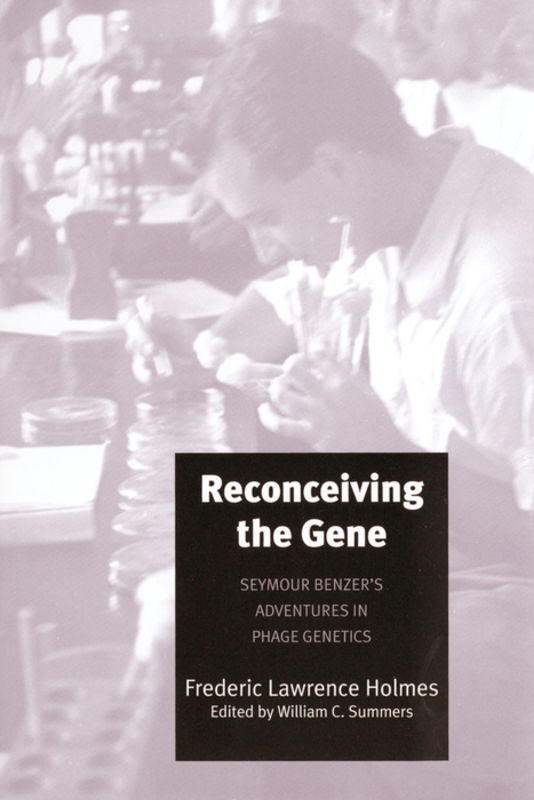
Reconceiving the Gene
This book relates how, between 1954 and 1961, the biologist Seymour Benzer mapped the fine structure of the rII region of the genome of the bacterial virus known as phage T4. Benzer's accomplishments are widely recognized as a tipping point in mid-twentieth-century molecular biology when the nature of the gene was recast in molecular terms. More often than any other individual, he is considered to have led geneticists from the classical gene into the molecular age.Drawing on Benzer's remarkably complete record of his experiments, his correspondence, and published sources, this book reconstructs how the former physicist initiated his work in phage biology and achieved his landmark investigation. The account of Benzer's creativity as a researcher is a fascinating story that also reveals intriguing aspects common to the scientific enterprise.
eBook


The Peach v2.0 release: high-resolution linkage mapping and deep resequencing improve chromosome-scale assembly and contiguity
Background
The availability of the peach genome sequence has fostered relevant research in peach and related
Prunus
species enabling the identification of genes underlying important horticultural traits as well as the development of advanced tools for genetic and genomic analyses. The first release of the peach genome (Peach v1.0) represented a high-quality WGS (Whole Genome Shotgun) chromosome-scale assembly with high contiguity (contig L50 214.2 kb), large portions of mapped sequences (96%) and high base accuracy (99.96%). The aim of this work was to improve the quality of the first assembly by increasing the portion of mapped and oriented sequences, correcting misassemblies and improving the contiguity and base accuracy using high-throughput linkage mapping and deep resequencing approaches.
Results
Four linkage maps with 3,576 molecular markers were used to improve the portion of mapped and oriented sequences (from 96.0% and 85.6% of Peach v1.0 to 99.2% and 98.2% of v2.0, respectively) and enabled a more detailed identification of discernible misassemblies (10.4 Mb in total). The deep resequencing approach fixed 859 homozygous SNPs (Single Nucleotide Polymorphisms) and 1347 homozygous indels. Moreover, the assembled NGS contigs enabled the closing of 212 gaps with an improvement in the contig L50 of 19.2%.
Conclusions
The improved high quality peach genome assembly (Peach v2.0) represents a valuable tool for the analysis of the genetic diversity, domestication, and as a vehicle for genetic improvement of peach and related
Prunus
species. Moreover, the important phylogenetic position of peach and the absence of recent whole genome duplication (WGD) events make peach a pivotal species for comparative genomics studies aiming at elucidating plant speciation and diversification processes.
Journal Article

Nested‐association mapping (NAM)‐based genetic dissection uncovers candidate genes for seed and pod weights in peanut ( Arachis hypogaea )
Multiparental genetic mapping populations such as nested-association mapping (NAM) havegreat potential for investigating quantitative traits and associated genomic regions leading torapid discovery of candidate genes and markers. To demonstrate the utility and power of thisapproach, two NAM populations, NAM_Tifrunner and NAM_Florida-07, were used for dissectinggenetic control of 100-pod weight (PW) and 100-seed weight (SW) in peanut. Two high-densitySNP-based genetic maps were constructed with 3341 loci and 2668 loci for NAM_Tifrunner andNAM_Florida-07, respectively. The quantitative trait locus (QTL) analysis identified 12 and 8major effect QTLs for PW and SW, respectively, in NAM_Tifrunner, and 13 and 11 major effectQTLs for PW and SW, respectively, in NAM_Florida-07. Most of the QTLs associated with PW andSW were mapped on the chromosomes A05, A06, B05 and B06. A genomewide associationstudy (GWAS) analysis identified 19 and 28 highly significant SNP–trait associations (STAs) inNAM_Tifrunner and 11 and 17 STAs in NAM_Florida-07 for PW and SW, respectively. Thesesignificant STAs were co-localized, suggesting that PW and SW are co-regulated by severalcandidate genes identified on chromosomes A05, A06, B05, and B06. This study demonstratesthe utility of NAM population for genetic dissection of complex traits and performing high-resolution trait mapping in peanut.
Journal Article

Increased Power To Dissect Adaptive Traits in Global Sorghum Diversity Using a Nested Association Mapping Population
In crop species, adaptation to different agroclimatic regions creates useful variation but also leads to unwanted genetic correlations. Bouchet... Adaptation of domesticated species to diverse agroclimatic regions has led to abundant trait diversity. However, the resulting population structure and genetic heterogeneity confounds association mapping of adaptive traits. To address this challenge in sorghum [Sorghum bicolor (L.) Moench]—a widely adapted cereal crop—we developed a nested association mapping (NAM) population using 10 diverse global lines crossed with an elite reference line RTx430. We characterized the population of 2214 recombinant inbred lines at 90,000 SNPs using genotyping-by-sequencing. The population captures ∼70% of known global SNP variation in sorghum, and 57,411 recombination events. Notably, recombination events were four- to fivefold enriched in coding sequences and 5′ untranslated regions of genes. To test the power of the NAM population for trait dissection, we conducted joint linkage mapping for two major adaptive traits, flowering time and plant height. We precisely mapped several known genes for these two traits, and identified several additional QTL. Considering all SNPs simultaneously, genetic variation accounted for 65% of flowering time variance and 75% of plant height variance. Further, we directly compared NAM to genome-wide association mapping (using panels of the same size) and found that flowering time and plant height QTL were more consistently identified with the NAM population. Finally, for simulated QTL under strong selection in diversity panels, the power of QTL detection was up to three times greater for NAM vs. association mapping with a diverse panel. These findings validate the NAM resource for trait mapping in sorghum, and demonstrate the value of NAM for dissection of adaptive traits.
Journal Article

QTL Mapping and Candidate Gene Analysis for Alkali Tolerance in Japonica Rice at the bud Stage Based on Linkage Mapping and Genome-Wide Association Study
BackgroundSalinity-alkalinity stress is one of the major factors limiting rice production. Damage caused by alkaline salt stress is more severe than that caused by neutral salt stress. Alkali tolerance at the bud stage in rice directly affects seedling survival and final yield when using the direct seeding cultivation model. However, genetic resources (QTLs and genes) for rice breeders to improve alkali tolerance are limited. In this study, we combined linkage mapping and a genome-wide association study (GWAS) to analyze the genetic structure of this trait in japonica rice at the bud stage.ResultsA population of 184 recombinant inbred lines (RILs) was utilized to map quantitative trait loci (QTLs) for the root length under control condition (RL), alkaline stress (ARL) and relative root length (RRL) at the bud stage. A major QTL related to alkali tolerance at the rice bud stage, qAT11, was detected on chromosome 11. Interestingly, a GWAS identified a lead SNP (Chr_21,999,659) in qAT11 that was significantly associated with alkaline tolerance. After filtering by linkage disequilibrium (LD), haplotype analysis, quantitative real-time PCR, we obtained three candidate genes (LOC_Os11g37300, LOC_Os11g37320 and LOC_Os11g37390). In addition, we performed phenotype verification on the CRISPR/Cas9 mutant of LOC_Os11g37390.ConclusionBased on these results, LOC_Os11g37300, LOC_Os11g37320 and LOC_Os11g37390 were the candidate genes contributing to alkaline tolerance in japonica rice. This study provides resources for breeding aimed at improving rice responses to alkalinity stress.
Journal Article

A combined linkage and regional association mapping validation and fine mapping of two major pleiotropic QTLs for seed weight and silique length in rapeseed (Brassica napus L.)
Background
Seed weight (SW) and silique length (SL) are important determinants of the yield potential in rapeseed (
Brassica napus
L.). However, the genetic basis of both traits is poorly understood. The main objectives of this study were to dissect the genetic basis of SW and SL in rapeseed through the preliminary mapping of quantitative trait locus (QTL) by linkage analysis and fine mapping of the target major QTL by regional association analysis.
Results
Preliminary linkage mapping identified thirteen and nine consensus QTLs for SW and SL, respectively. These QTLs explained 0.7-67.1% and 2.1-54.4% of the phenotypic variance for SW and SL, respectively. Of these QTLs, three pairs of SW and SL QTLs were co-localized and integrated into three unique QTLs. In addition, the significance level and genetic effect of the three co-localized QTLs for both SW and SL showed great variation before and after the conditional analysis. Moreover, the allelic effects of the three QTLs for SW were highly consistent with those for SL. Two of the three co-localized QTLs,
uq.A09
-
1
(mean
R
2
= 20.1% and 19.0% for SW and SL, respectively) and
uq.A09
-
3
(mean
R
2
= 13.5% and 13.2% for SW and SL, respectively), were detected in all four environments and showed the opposite additive-effect direction. These QTLs were validated and fine mapped (their confidence intervals were narrowed down from 5.3 cM to 1 cM for
uq.A09
-
1
and 13.2 cM to 2.5 cM for
uq.A09
-
3
) by regional association analysis with a panel of 576 inbred lines, which has a relatively rapid linkage disequilibrium decay (0.3 Mb) in the target QTL region.
Conclusions
A few QTLs with major effects and several QTLs with moderate effects might contribute to the natural variation of SW and SL in rapeseed. The meta-, conditional and allelic effect analyses suggested that pleiotropy, rather than tight linkage, was the genetic basis of the three pairs of co-localized of SW and SL QTLs. Regional association analysis was an effective and highly efficient strategy for the direct fine mapping of target major QTL identified by preliminary linkage mapping.
Journal Article
Principles of genome analysis and genomics
With the first draft of the human genome project in the public domain and full analyses of model genomes now available, the subject matter of 'Principles of Genome Analysis and Genomics' is even 'hotter' now than when the first two editions were published in 1995 and 1998. In the new edition of this very practical guide to the different techniques and theory behind genomes and genome analysis, Sandy Primrose and new author Richard Twyman provide a fresh look at this topic. In the light of recent exciting advancements in the field, the authors have completely revised and rewritten many parts of the new edition with the addition of five new chapters. Aimed at upper level students, it is essential that in this extremely fast moving topic area the text is up to date and relevant.
* Completely revised new edition of an established textbook.
* Features new chapters and examples from exciting new research in genomics, including the human genome project.
* Excellent new co-author in Richard Twyman, also co-author of the new edition of hugely popular Principles of Gene Manipulation.
* Accompanying web-page to help students deal with this difficult topic at www.blackwellpublishing.com/primrose
eBook

Identification of Sex-determining Loci in Pacific White Shrimp Litopeneaus vannamei Using Linkage and Association Analysis
The Pacific white shrimp
Litopenaeus vannamei
is a predominant aquaculture shrimp species in the world. Like other animals, the
L. vannamei
exhibited sexual dimorphism in growth trait. Mapping of the sex-determining locus will be very helpful to clarify the sex determination system and further benefit the shrimp aquaculture industry towards the production of mono-sex stocks. Based on the data used for high-density linkage map construction, linkage-mapping analysis was conducted. The sex determination region was mapped in linkage group (LG) 18. A large region from 0 to 21.205 cM in LG18 showed significant association with sex. However, none of the markers in this region showed complete association with sex in the other populations. So an association analysis was designed using the female parent, pool of female progenies, male parent, and pool of male progenies. Markers were de novo developed and those showing significant differences between female and male pools were identified. Among them, three sex-associated markers including one fully associated marker were identified. Integration of linkage and association analysis showed that the sex determination region was fine-mapped in a small region along LG18. The identified sex-associated marker can be used for the sex detection of this species at genetic level. The fine-mapped sex-determining region will contribute to the mapping of sex-determining gene and help to clarify sex determination system for
L. vannamei
.
Journal Article