
Catalogue Search | MBRL


Are you sure you want to remove the book from the shelf?

{{itemTitle}}
45
result(s) for
"lit students"
Sort by:

Immanent Visitor
Immanent Visitor is the first English-language translation of the work of Bolivia's greatest and most visionary twentieth-century poet. A poète maudit, Jaime Saenz rejected the conventions of polite society and became a monk in service of his own imagination. Apocalyptic and occult in his politics, a denizen of slum taverns, unashamedly bisexual, insistently nocturnal in his artistic affairs, and secretive in his leadership of a select group of writers, Saenz mixed the mystical and baroque with the fantastic, the psychological, and the symbolic. In masterly translations by two poet-translators, Kent Johnson and Forrest Gander, Saenz's strange, innovative, and wildly lyrical poems reveal a literary legacy of fierce compassion and solidarity with indigenous Bolivian cultures and with the destitute, the desperate, and the disenfranchised of that unreal city, La Paz.In long lines, in odes that name desire, with Whitmanesque anaphora, in exclamations and repetitions, Saenz addresses the reader, the beloved, and death in one extended lyrical gesture. The poems are brazenly affecting. Their semantic innovation is notable in the odd heterogeneity of formal and tonal structures that careen unabashedly between modes and moods; now archly lyrical, now arcanely symbolic, now colloquial, now trancelike. As Saenz's reputation continues to grow throughout the world, these inspired translations and the accompanying Spanish texts faithfully convey the poet's unique vision and voice to English-speaking readers.
eBook
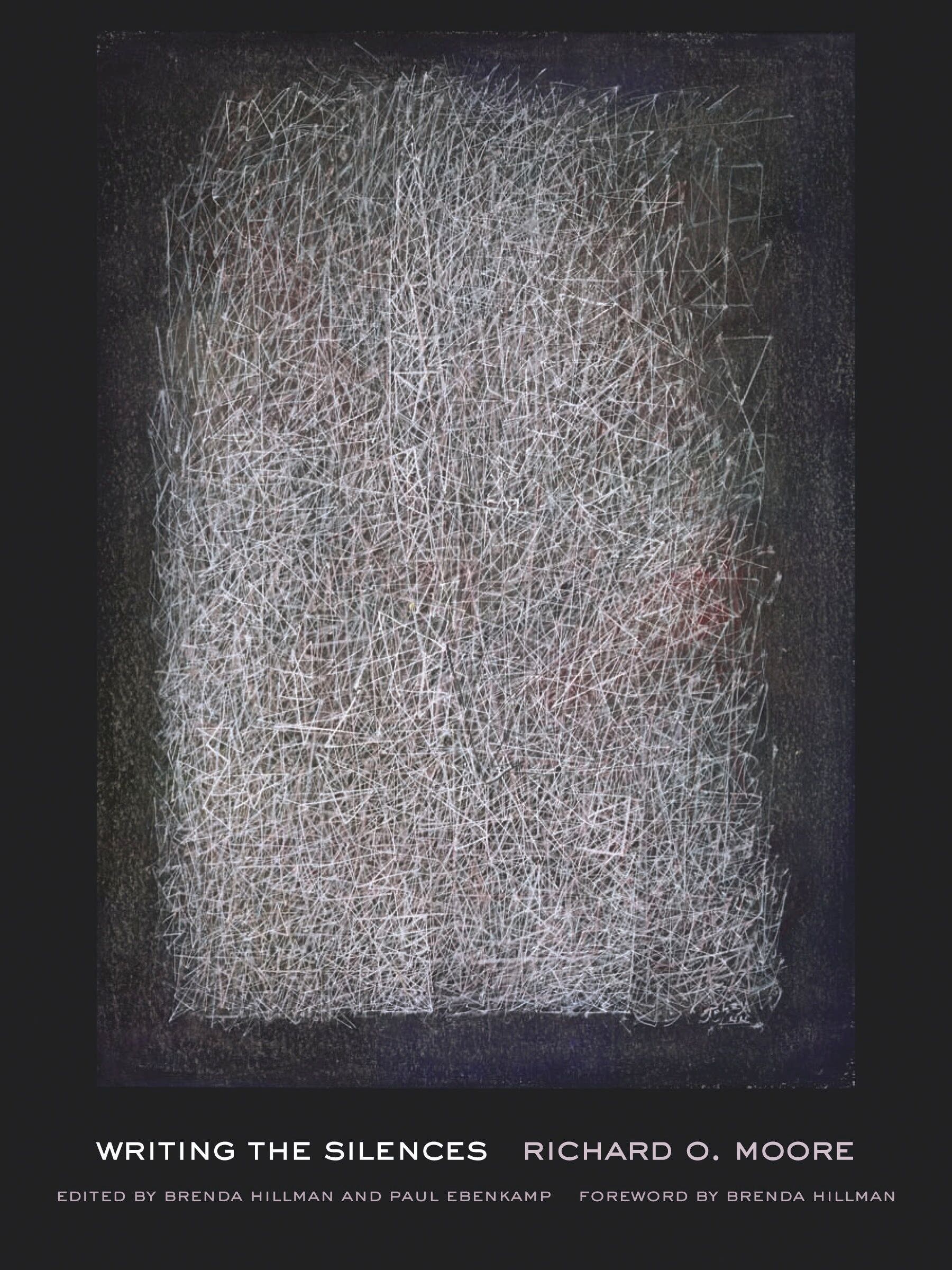
Writing the Silences
The poems in Writing the Silences represent more than 60 years of Richard O. Moore’s work as a poet. Selected from seven full-length manuscripts written between 1946 and 2008, these poems reflect not only Moore’s place in literary history—he is the last of his generation of the legendary group of San Francisco Renaissance poets—but also his reemergence into today’s literary world after an important career as a filmmaker and producer in public radio and television. Writing the Silences reflects Moore’s commitment to freedom of form, his interest in language itself, and his dedication to issues of social justice and ecology.
eBook
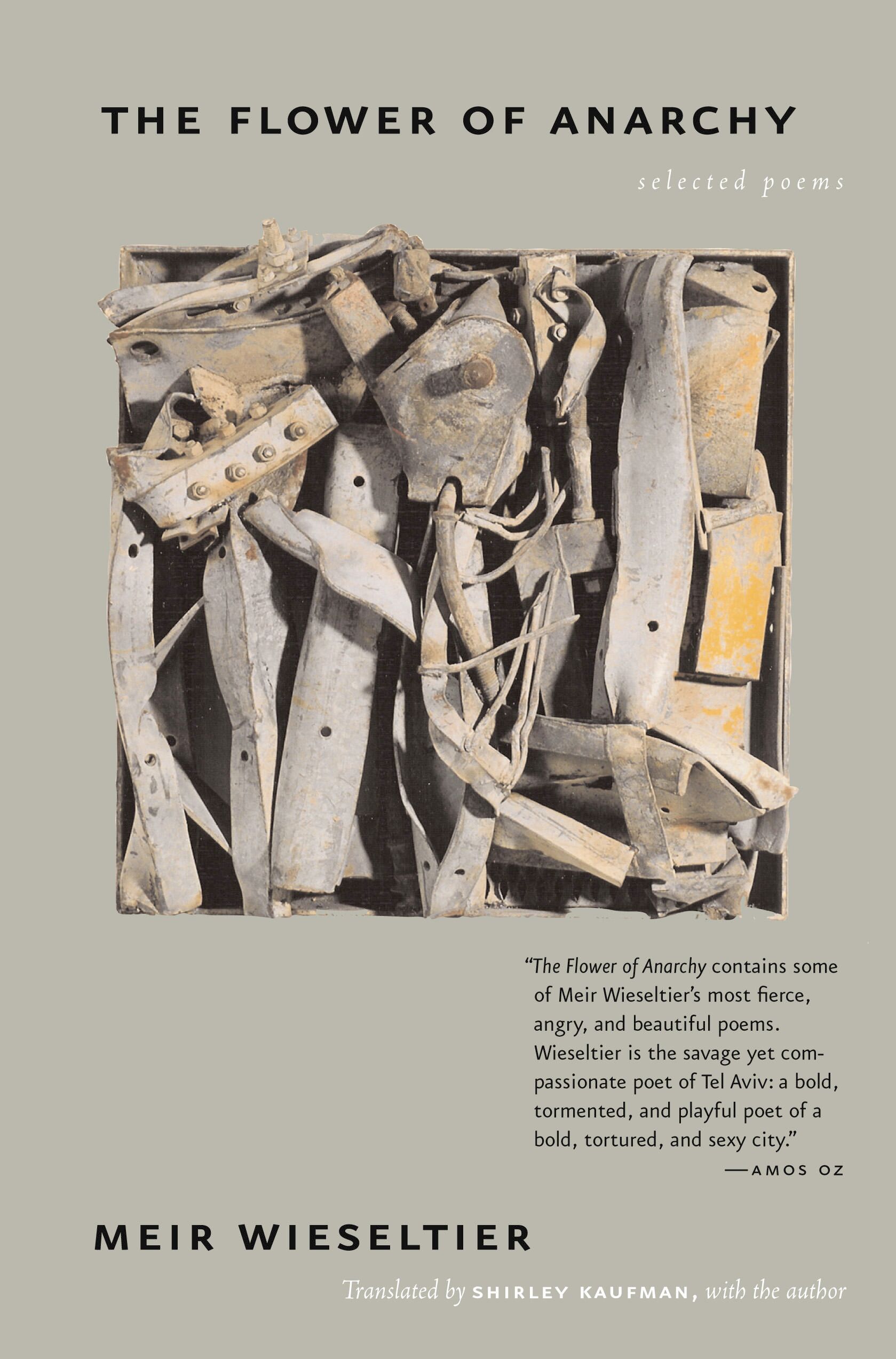
The Flower of Anarchy
Meir Wieseltier's verbal power, historical awareness, and passionate engagement have placed him in the first rank of contemporary Hebrew poetry. The Flower of Anarchy, a selection of Wieseltier's poems spanning almost forty years, collects in one volume, for the first time, English translations of some of his finest work. Superbly translated by the award-winning American-Israeli poet-translator Shirley Kaufman—who has worked with the poet on these translations for close to thirty years—this book brings together some of the most praised and admired early poems published in several small books during the 1960s, along with poems from six subsequent collections, including Wieseltier's most recent, Slow Poems, published in 2000. Born in Moscow in 1941, Wieseltier spent the first years of his life, during the war, as a refugee in Siberia, then again in Europe. He settled in Tel-Aviv a few years after coming to Israel in 1949 and has lived there ever since. A master of both comedy and irony, Wieseltier has written powerful poems of social and political protest in Israel, poems that are painfully timeless. His voice is alternately anarchic and involved, angry and caring, trenchant and lyric.
eBook
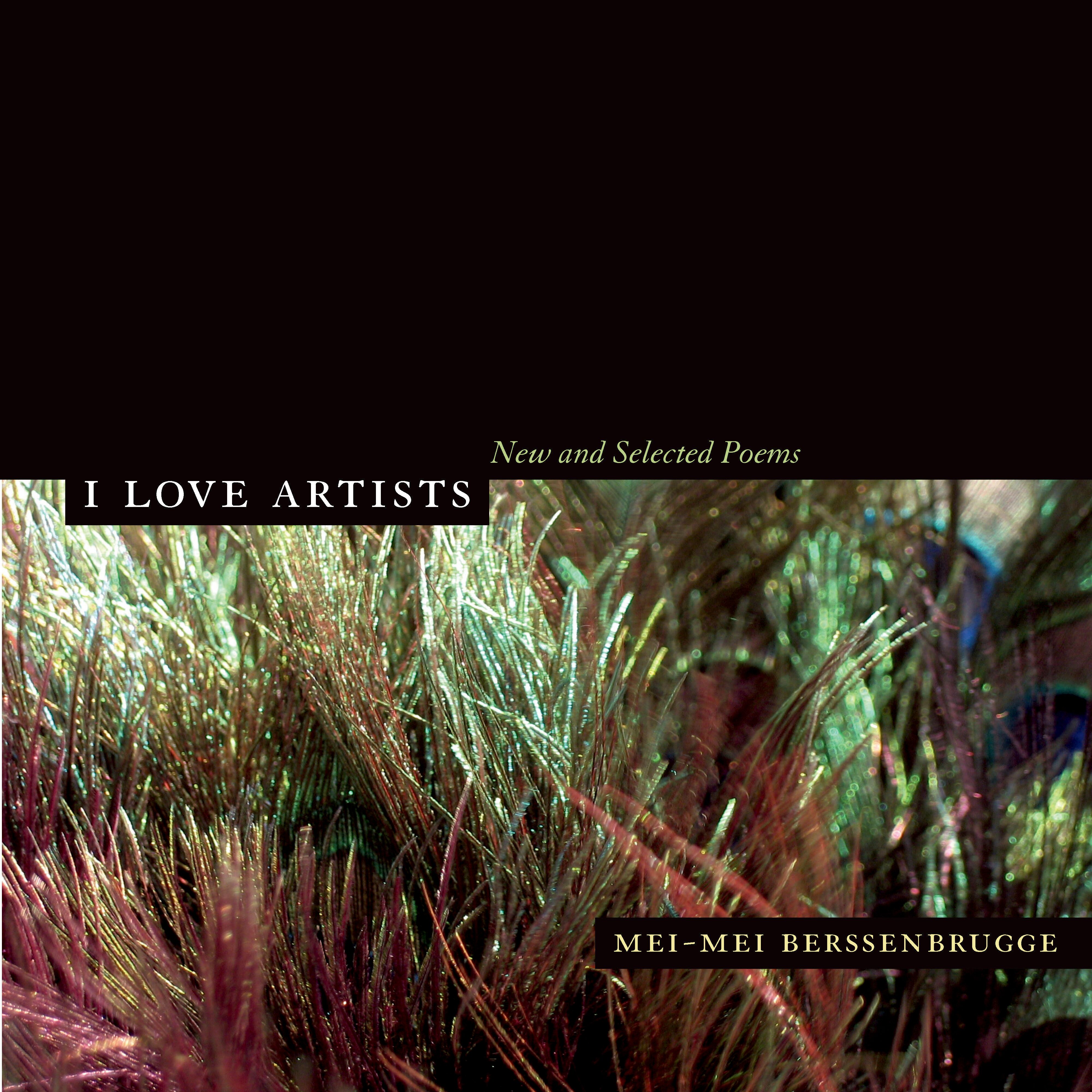
I Love Artists
Drawing on four decades of work and including new poems published here for the first time, this selection of Mei-mei Berssenbrugge’s poetry displays the extraordinary luminosity characteristic of her style—its delicate, meticulous observation, great scenic imagination, and unusual degree of comfort with states of indetermination, contingency, and flux.
eBook

The Totality for Kids
The Totality for Kids is the second collection of poems by Joshua Clover, whose debut, Madonna anno domini, won the Walt Whitman award from the Academy of American Poets. This volume takes as its subject the troubled sleep of late modernity, from the grandeur and failure of megacities to the retreats and displacements of the suburbs. The power of crowds and architecture commingles with the alienation and idleness of the observer, caught between \"the brutal red dream/Of the collective\" and \"the parade/Of the ideal citizen.\" The book’s action takes place in these gaps, \"dead spaces beside the endlessly grieving stream.\" The frozen tableau of the spectacle meets its double in the sense that something is always about to happen. Political furies and erotic imaginings coalesce and escape within a welter of unmoored allusions, encounters, citations, and histories, the dreams possible within the modern’s excess of signification—as if to return revolutionary possibility to the regime of information by singing it its own song.
eBook

The Seventy Prepositions
Carol Snow's award-winning poetry has been admired and celebrated as \"work of difficult beauty\" (Robert Hass), \"ever restless, ever re-framing the frame of reference\" (Boston Review), teaching us \"how brutally self-transforming a verbal action can be when undertaken in good faith\" (Jorie Graham). In this, her third volume, Snow continues to mine the language to its most mysterious depths and to explore the possibilities its meanings and mechanics hold for definition, transformation, and emotional truth. These poems place us before, and in, language--as we stand before, and in, the world. The Seventy Prepositions comprises three suites of poems. The first, \"Vocabulary Sentences,\" reflects on words and reality by taking as a formal motif the sort of sentences used to test vocabulary skills in elementary school. The poems of the second suite, \"Vantage,\" gather loosely around questions of perspective and perception. The closing suite finds its inspiration in the Japanese dry-landscape gardens known as karesansui, such as the famous rock garden at Ryoan-ji Temple in Kyoto. Here the poet approaches composition as one faces a \"miniature Zen garden,\" choosing and positioning words rather than stones, formally, precisely, evocatively.
eBook

Weather Eye Open
The windmill's labor is contingent upon the weather, upon what air masses, at any given time, overlie its landscape. Anticipatory in mood, Weather Eye Open adopts the emblem of the windmill, seeking what Merleau-Ponty calls the \"inspiration and expiration of Being.\" The windmill serves as analogue to the perceiving subject, to the poet, whose consciousness, though rooted and partial, is yet always receptive to being energized, turned. Like open sails, the perceiver ushers the weather indoors, converting one motion, the wind, to another, the grinding burrstones. The poems in this collection pursue a similar transmutation through language, a staying open to its various weather (and whether) systems. For Sarah Gridley, language strikes at the \"X\" of experience: part presence and part absence, part spirit and part matter, part home and part homesickness, part harnessed and part wild. In the face of such weather, the stance of the poet is both rapacious and passive, searching and struck still.
eBook
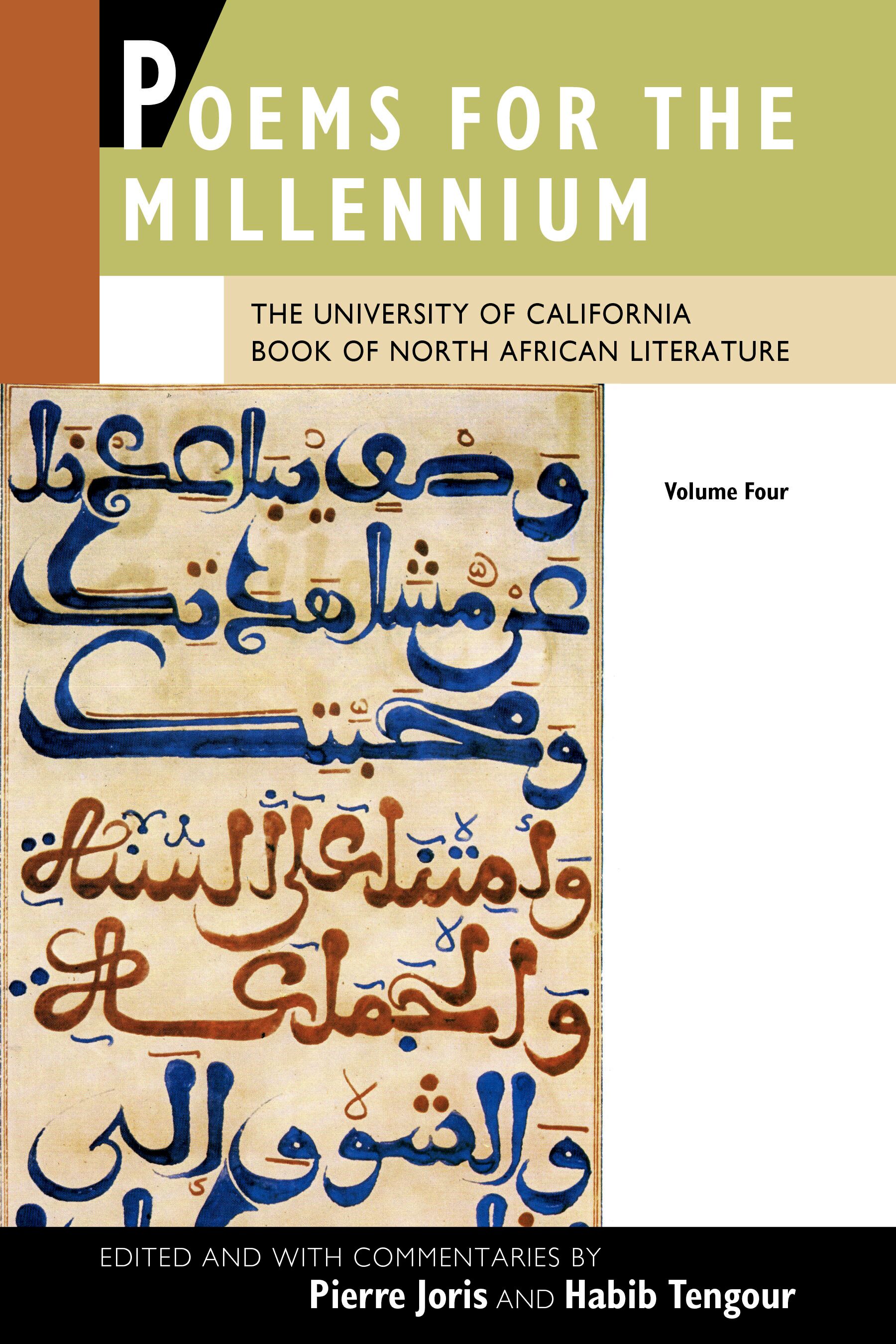
Poems for the Millennium, Volume Four
In this fourth volume of the landmark Poems for the Millennium series, Pierre Joris and Habib Tengour present a comprehensive anthology of the written and oral literatures of the Maghreb, the region of North Africa that spans the modern nation states of Libya, Tunisia, Algeria, Morocco, and Mauritania, and including a section on the influential Arabo-Berber and Jewish literary culture of Al-Andalus, which flourished in Spain between the ninth and fifteenth centuries. Beginning with the earliest pictograms and rock drawings and ending with the work of the current generation of post-independence and diasporic writers, this volume takes in a range of cultures and voices, including Berber, Phoenician, Jewish, Roman, Vandal, Arab, Ottoman, and French. Though concentrating on oral and written poetry and narratives, the book also draws on historical and geographical treatises, philosophical and esoteric traditions, song lyrics, and current prose experiments. These selections are arranged in five chronological \"diwans\" or chapters, which are interrupted by a series of \"books\" that supply extra detail, giving context or covering specific cultural areas in concentrated fashion. The selections are contextualized by a general introduction that situates the importance of this little-known culture area and individual commentaries for nearly each author.
eBook
Poems for the millennium
In this fourth volume of the landmark Poems for the Millennium series, Pierre Joris and Habib Tengour present a comprehensive anthology of the written and oral literatures of the Maghreb, the region of North Africa that spans the modern nation states of Libya, Tunisia, Algeria, Morocco, and Mauritania, and including a section on the influential Arabo-Berber and Jewish literary culture of Al-Andalus, which flourished in Spain between the ninth and fifteenth centuries. Beginning with the earliest pictograms and rock drawings and ending with the work of the current generation of post-independence and diasporic writers, this volume takes in a range of cultures and voices, including Berber, Phoenician, Jewish, Roman, Vandal, Arab, Ottoman, and French. Though concentrating on oral and written poetry and narratives, the book also draws on historical and geographical treatises, philosophical and esoteric traditions, song lyrics, and current prose experiments. These selections are arranged in five chronological \"diwans\" or chapters, which are interrupted by a series of \"books\" that supply extra detail, giving context or covering specific cultural areas in concentrated fashion. The selections are contextualized by a general introduction that situates the importance of this little-known culture area and individual commentaries for nearly each author.
eBook
