
Catalogue Search | MBRL


Are you sure you want to remove the book from the shelf?

{{itemTitle}}
44
result(s) for
"literature (belles lettres) and rhetoric"
Sort by:
Ethics for the Future
Which of the possible futures might be a good future, and how do we know? Stephanie Bender looks at contemporary films and novels to address major ethical challenges of the future: the ecological catastrophe, digitalisation and biotechnology. She proposes that fiction and its modes of aesthetic simulation and emotional engagement offer a different way of knowing and judging possible futures. From a critical posthumanist angle, she discusses works ranging from Don DeLillo's Zero K (2017) and Margaret Atwood's MaddAddam Trilogy (2003-2013) to Kim Stanley Robinson's New York 2140 as well as Avatar (2009), and Blade Runner 2049 (2017) among many others.
eBook
Narrating Experiences of Alzheimer's Through the Arts
While Alzheimer's might be associated with a difficulty to express oneself, Ana Paula Barbosa-Fohrmann addresses this topic by examining experiences with Alzheimer's based on narratives.In this original contribution, she studies the nexus of life stories, subjectivity, fragmentation, and fiction.
eBook
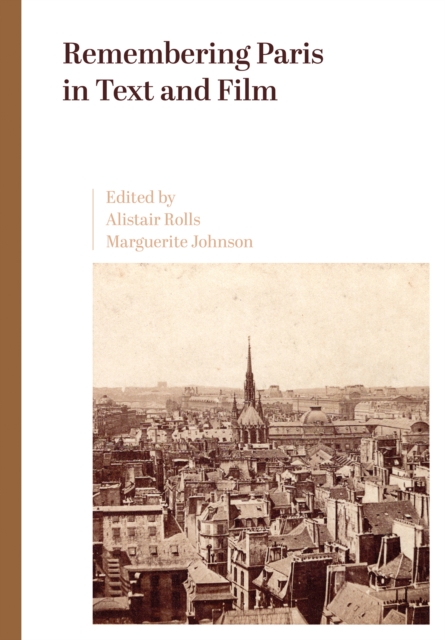
Remembering Paris in Text and Film
For Baudelaire, Paris streets conjured visions of the past even as he contemplated the present. This book investigates this and other cases of double vision, tracing back into antiquity and following Baudelaire forwards as his poetry is translated, received and referenced through text and film to the twentieth century and beyond. 8 b/w illus.
eBook
Gold Fever« and Women
Throughout its history, the American West symbolized a place of hope and new beginnings, where anything was possible, especially for men.However, the history written until the 1970s and 1980s excluded women.Sigrid Schönfelder illustrates how the American West served as a catalytic gold mine for many transformations for women.
eBook
Kritik des reaktionären Denkens
Reaktionäres Denken ist wieder in Mode. Aber was ist das eigentlich? Wodurch unterscheidet es sich von anderen Formen des Denkens? Und welche philosophischen Instrumente können gegen dessen erneutes Erstarken wirken? Robert Hugo Ziegler analysiert beispielhaft Autoren wie Jünger, Heidegger, Schmitt und Rand und schlägt einen systematischen Begriff des reaktionären Denkens vor. Damit entmystifiziert er eine Diskursform, die letztlich nur in der eigenen Mystifizierung besteht, und bezieht auch politisch Stellung gegen das Wiederaufleben der Reaktion.
eBook

Transformative Learning through Creative Life Writing
Arising from a research project conducted over two years, Transformative Learning through Creative Life Writing examines the effects of fictional autobiography on adult learners' sense of self. Starting from a teaching and learning perspective, Hunt draws together ideas from psychodynamic psychotherapy, literary and learning theory, and work in the cognitive and neurosciences of the self and consciousness, to argue that creative life writing undertaken in a supportive learning environment, alongside opportunities for critical reflection, has the power to transform the way people think and learn. It does this by opening them up to a more embodied self-experience, which increases their awareness of the source of their thinking in bodily feeling and enables them to develop a more reflexive approach to learning.
Hunt locates this work within recent developments in the influential field of transformative learning. She also identifies it as a form of therapeutic education arguing, contrary to those who say that this approach leads to a diminished sense of self, that it can help people to develop a stronger sense of agency, whether for writing or learning or relations with others. Topics covered include:
Creative writing as a tool for personal and professional development
The transformative benefits and challenges of creative writing as a therapeutic activity
The relationships between literary structures and the processes of thinking and feeling
The role of cognitive-emotional learning in adult education
Collaborative learning and the role of the group
This book will interest teachers in adult, further and higher education who wish to use creative life writing as a tool for learning, as well as health care professionals seeking art-based techniques for use in their pra
eBook

Sentimental Readers
How could novels likeUncle Tom's Cabinchange the hearts and minds of thousands of mid-nineteenth-century readers, yet make so many modern readers cringe at their over-the-top, tear-filled scenes?Sentimental Readersexplains why sentimental rhetoric was so compelling to readers of that earlier era, why its popularity waned in the latter part of the nineteenth century, and why today it is generally characterized as overly emotional and artificial. But author Faye Halpern also does more: she demonstrates that this now despised rhetoric remains relevant to contemporary writing teachers and literary scholars.
Halpern examines these novels with a fresh eye by positioning sentimentality as a rhetorical strategy on the part of these novels' (mostly) female authors, who used it to answer a question that plagued the male-dominated world of nineteenth-century American rhetoric and oratory: how could listeners be sure an eloquent speaker wasn't unscrupulously persuading them of an untruth? The authors of sentimental novels managed to solve this problem even as the professional male rhetoricians and orators could not, because sentimental rhetoric, filled with tears and other physical cues of earnestness, ensured that an audience could trust the heroes and heroines of these novels. However, as a wider range of authors began wielding sentimental rhetoric later in the nineteenth century, readers found themselves less and less convinced by this strategy.
In her final discussion, Halpern steps beyond a purely historical analysis to interrogate contemporary rhetoric and reading practices among literature professors and their students, particularly first-year students new to the \"close reading\" method advocated and taught in most college English classrooms. Doing so allows her to investigate how sentimental novels are understood today by both groups and how these contemporary reading strategies compare to those of Americans more than a century ago. Clearly, sentimental novels still have something to teach us about how and why we read.
eBook

Selected Writings on Aesthetics
A seminal figure in the philosophy of history, culture, and language, Johann Gottfried Herder (1744-1803) also produced some of the most important and original works in the history of aesthetic theory. A student of Kant, he spent much of his life striving to reconcile the opposing poles of Enlightenment thought represented by his early mentors. His ideas influenced Hegel, Schleiermacher, Nietzsche, Dilthey, J. S. Mill, and Goethe.
This book presents most of Herder's important writings on aesthetics, including the main sections of one of his major untranslated works,Kritische Wälder(Critical Forests). These notes, essays, and treatises, the majority of which appear here in English for the first time, show this idiosyncratic thinker both deeply rooted in the controversies of his day and pointing the way to future developments in aesthetics. Chosen to reflect the extent and diversity of Herder's concerns, the texts cover such topics as the psychology and physiology of aesthetic perception, the classification of the arts, taste, Shakespeare, the classical tradition, and the relationship between art and morality.
Few thinkers have reflected so sensitively and productively on the cultural, historical, anthropological, ethical, and theological dimensions of art and the creative process. With this book, the importance of aesthetics to the evolution and texture of Herder's own thought, as well as his profound contribution to that discipline, comes fully into view.
eBook

Authority Matters
In this wide ranging collection of essays, eleven literary scholars and creative writers examine authorship and authority in relation to the production and reception of cultural texts. Ranging in time from the Renaissance to the era of digital publishing, the essays invite us to reconsider the influential theories of Roland Barthes, Michel Foucault, and Pierre Bourdieu for our understanding of writers such as Philip Sidney, Thomas Hardy, Laura Riding, W.B. Yeats, Gertrude Stein, and J.M. Coetzee. Shedding new light on authority's complex role in the generation of cultural meaning, the essays will be of interest to students and teachers of literary history and critical theory alike.
eBook
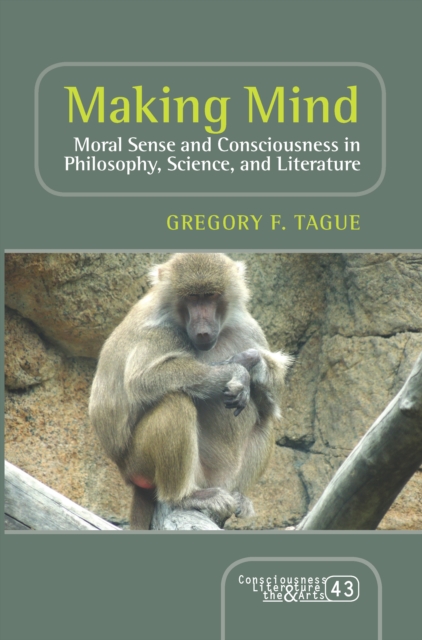
Making Mind
Making Mind: Moral Sense and Consciousness in Philosophy, Science, and Literature posits the genesis of narrative as an adaptive function stemming from consciousness and moral sense. The book is unique with its idea of the individual character evolving narrative in relation to the group. Central to the argument is the claim that prehistorically, consciousness and moral sense intersected to form narrative. More than addressing the origin of story, the book examines and explains the evolution of narrative. The book is an interesting study of how our species-inherited moral sense can differ dramatically from one individual to another. While mores pertain to a group, narrative comes from and is processed by the individual and reaches its high point in the novel. We see how the moral sense works in characters as a monitor, and we feel it operating in us as readers in terms of approval, or not.
eBook