
Catalogue Search | MBRL


Are you sure you want to remove the book from the shelf?

{{itemTitle}}
711
result(s) for
"low‐carbohydrate ketogenic diet"
Sort by:

Keto in an instant : 100 ketogenic recipes for your Instant Potھ
Keto in an Instant features over 100 ketogenic recipes all designed to be made in the Instant Pot. Each recipe includes key nutritional data for keto followers, as well as clear, detailed instructions for using the Instant Pot to create the recipes. In addition to the recipes, readers will gain insight on how the ketogenic diet works, and benefit from practical guidance for following a ketogenic eating plan. Also included is useful information on using and maintaining the Instant Pot, tips and tricks for using the Instant Pot in the kitchen, and much more.-- Amazon.
Book

Ketone bodies: A double‐edged sword for mammalian life span
Accumulating evidence suggests health benefits of ketone bodies, and especially for longevity. However, the precise role of endogenous ketogenesis in mammalian life span, and the safety and efficacy of the long‐term exogenous supplementation of ketone bodies remain unclear. In the present study, we show that a deficiency in endogenous ketogenesis, induced by whole‐body Hmgcs2 deletion, shortens life span in mice, and that this is prevented by daily ketone body supplementation using a diet containing 1,3‐butanediol, a precursor of β‐hydroxybutyrate. Furthermore, feeding the 1,3‐butanediol‐containing diet from early in life increases midlife mortality in normal mice, but in aged mice it extends life span and prevents the high mortality associated with atherosclerosis in ApoE‐deficient mice. By contrast, an ad libitum low‐carbohydrate ketogenic diet markedly increases mortality. In conclusion, endogenous ketogenesis affects mammalian survival, and ketone body supplementation may represent a double‐edged sword with respect to survival, depending on the method of administration and health status. The present study demonstrates that endogenous ketogenesis is essential for long‐term mammalian survival, which was revealed by a study using Hmgcs2−/− mice, and that dietary administration of 1,3‐butanediol (1,3‐BD), a precursor of β‐OHB, increases midlife mortality in normal mice, but extends life span in aged mice or atherosclerotic mice. By contrast, ad libitum low‐carbohydrate ketogenic diet increases mortality in any mouse models. Thus, ketone bodies represent a double‐edged sword for mammalian survival.
Journal Article

Efficacy of Low-Carbohydrate Ketogenic Diet in the Treatment of Type 2 Diabetes
Low-carbohydrate ketogenic diet (LCKD), originally used as a treatment for childhood epilepsy is currently gaining acceptance as a nutritional therapy for obesity and type 2 diabetes. In addition, this diet has a positive effect on body weight, blood glucose level, glycosylated hemoglobin, plasma lipid profile, and neurological disorders. This review focuses on the therapeutic effectiveness, negative effects, and the rationale of using LCKD for the treatment of type 2 diabetes. It is shown that LCKD contributes to the reduction in the intake of insulin and oral antidiabetic drugs in patients with type 2 diabetes. Furthermore, the data presented in this review reveal the efficacy and cost-effectiveness of LCKD in the management of type 2 diabetes.
Journal Article
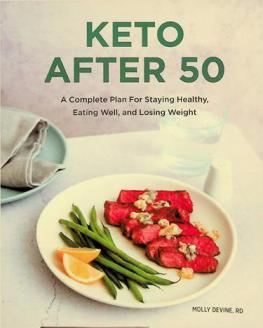
Keto after 50 : a complete plan for staying healthy, eating well, and losing weight
Discover how keto can work for you! No matter your reasons for changing what you're eating, Keto After 50 gives you a detailed overview of what keto is, how it can help you lose weight, and the other unique benefits it offers. Set yourself up for success with a satisfying meal plan, helpful shopping lists, and more.--Amazon
Book

Very Low-Carbohydrate Ketogenic Diet for the Treatment of Severe Obesity and Associated Non-Alcoholic Fatty Liver Disease: The Role of Sex Differences
Very low-carbohydrate ketogenic diets (VLCKDs) are an emerging nutritional treatment for severe obesity and are associated with a significant improvement in non-alcoholic fatty liver disease (NAFLD). Little is known about the effect of sex differences on weight loss induced by following a VLCKD. The aim of this study was to investigate the effects of sex differences on weight loss and NAFLD improvement in patients with severe obesity undergoing a VLCKD. Forty-two females and 28 males with severe obesity underwent a 25-day VLCKD. Anthropometric parameters, bioimpedentiometry, degree of liver steatosis measured by ultrasonography, liver function tests, and glucose homeostasis were measured before and after the VLCKD. Males experienced a significantly larger excess body weight loss (EBWL) and a greater reduction in γ-glutamyl transferase (γGT) than females. Dividing the female group by menopausal status, a significant difference between males and pre-menopausal females was found for both EBWL and γGT. No significant difference between groups was observed for improvement in the Edmonton stage or in the degree of steatosis. We conclude that the efficacy of following a VLCKD in severe obesity is affected by sex differences and, for females, by menopausal status. Males seem to experience larger benefits than females in terms of EBWL and NAFLD improvement. These differences are attenuated after menopause, probably because of changes in hormonal profile and body composition.
Journal Article

Keto cocktails : 75 low-carb libations
\"Find out how you can enjoy all your favorite alcoholic beverages while living the keto lifestyle. Keto Cocktails is a keto diet cookbook featuring easy-to-make, low-carb versions of classic and innovative cocktail recipes?plus a selection of tasty happy hour bites?that you can enjoy while sticking to your diet\"--Amazon.com
Book
Impact of Dietary Patterns on Skeletal Health: A Systematic Review and Meta-Analysis of Bone Mineral Density, Fracture, Bone Turnover Markers, and Nutritional Status
Dietary patterns play a crucial role in musculoskeletal health; however, the effects of different diets on bone mineral density (BMD), fracture risk, and bone metabolism remain inconsistent across studies. This systematic review and meta-analysis aimed to evaluate the impact of Mediterranean, calorie restriction, high-protein, low-carbohydrate, and ketogenic diets on skeletal outcomes in adults.
A comprehensive search of PubMed/MEDLINE, CENTRAL, and Web of Science was conducted for studies published between January 2000 and June 2025. Eligible randomised controlled trials (RCTs) and cohort studies involving adults (≥18 years) and reporting outcomes related to BMD, fractures, bone turnover markers, and vitamin D or calcium status were included. Risk of bias was assessed using the Cochrane's Risk of Bias tool for RCTs and the Joanna Briggs Institute checklist for observational studies. Random-effects meta-analyses were performed for outcomes reported by ≥3 comparable studies, presenting standardised mean differences (SMDs) for BMD and hazard ratios (HRs) for fractures.
Thirty studies met inclusion criteria, comprising 14 RCTs and 16 observational studies with over 500,000 participants. Pooled analyses showed no significant differences in BMD at the femoral neck (SMD = 0.12, 95% CI -0.80 to 1.04), lumbar spine (SMD = 0.04, 95% CI: -1.12 to 1.03), total hip (SMD = -0.07, 95% CI -0.36 to 0.21), or whole body (SMD = 0.03, 95% CI -0.07 to 0.14) across diet categories. However, adherence to a Mediterranean diet was associated with a significantly reduced hazard of hip and overall fractures (pooled HR = 0.95, 95% CI 0.93-0.96). Calorie restriction consistently increased bone resorption markers, whereas Mediterranean and high-protein diets showed neutral or modestly favourable effects. Vitamin D and calcium status were minimally affected across interventions.
While dietary patterns exert diverse effects on skeletal health, consistent evidence supports Mediterranean-style diets as protective against fractures. Calorie restriction may elevate bone turnover, whereas ketogenic and high-protein diets show mixed effects on bone. However, across all analyses, high heterogeneity was observed. Further high-quality RCTs are warranted to clarify these relationships and inform dietary guidance for bone health.
Journal Article


Ketogenic metabolic therapy: low-carbohydrate interventions as novel neuroprotective strategies for cognitive dysfunction in diabetes
Cognitive dysfunction is an increasingly recognized complication of diabetes, contributing substantially to morbidity in the aging population, yet disease-modifying therapies remain scarce. Dietary intervention, a cornerstone of diabetes management, may offer neuroprotective potential. Low-carbohydrate ketogenic diets (LCKDs), typically restricting carbohydrates to < 50 g/day, effectively improve glycemic control and metabolic health. Emerging preclinical and clinical evidence suggests that LCKDs may also confer cognitive benefits through mechanisms including enhanced mitochondrial bioenergetics, reduced neuro-inflammation, and modulation of the gut-brain axis. This narrative review critically evaluates the current evidence regarding the efficacy, mechanisms, and safety of LCKDs for managing diabetes-associated cognitive dysfunction, identifies key limitations in the existing literature, and proposes a framework for future research to enhance translational value.
Journal Article