
Catalogue Search | MBRL


Are you sure you want to remove the book from the shelf?

{{itemTitle}}
4,941
result(s) for
"low vision"
Sort by:

Low-power computer vision : improve the efficiency of artificial intelligence
\"Energy efficiency is critical for running computer vision on battery-powered systems, such as mobile phones or UAVs (unmanned aerial vehicles, or drones). This book collects the methods that have won the annual IEEE Low-Power Computer Vision Challenges since 2015. The winners share their solutions and provide insight on how to improve the efficiency of machine learning systems\"-- Provided by publisher.
Book

Effects of home reading training on reading and quality of life in AMD—a randomized and controlled study
BackgroundAge-related macular degeneration (AMD) causes reading impairment, reduced quality of life (QoL), and secondary depression. We have shown that support with magnifying aids improved reading speed (RS), emotional and cognitive status, and QoL. The present study investigates whether additional reading training (RT) (after adapting to appropriate visual aids) can further improve vision rehabilitation.MethodsPatients with dry AMD were randomly assigned to 2 groups. The primary RT group (P-RTG, n = 25) trained with sequentially presented text (RSVP), and the control group (CG, n = 12) performed placebo training (crossword puzzles) and later crossed over to RT, so that altogether 37 participants performed reading training. Patients trained at home on a PC for 6 weeks. RS was assessed during reading printed paragraphs of text aloud. Using a scanning laser ophthalmoscope, we examined fixation stability and preferred retinal locus (PRL) for fixating a cross, as well as PRL and eye movements during reading single words. We assessed emotional status by Montgomery–Åsberg Depression Rating Scale (MADRS), cognitive status by dementia detection test (DemTect) and QoL by Impact of Vision Impairment (IVI) profile. Visual acuity and magnification requirement were examined by standard procedures. All variables were measured before and after placebo training, before and after RT, and after 6 weeks without training (follow-up).ResultsRS improved significantly in the P-RTG during RT, but not in the CG during placebo training. The effect remained stable at follow-up. Fixation performance and eye movement variables did not change. Emotional status (MADRS) improved in P-RTG during RT and showed a significant difference of the change of scores between the 2 groups.Complete IVI scores improved significantly during RT and remained stable.ConclusionThe results indicate that patients with AMD, who already use magnifying aids, benefit from additional RT and that it can contribute in preventing depression and improve QoL.Trial registrationThe study was registered at the German Clinical Trials Register (DRKS00015609).
Journal Article
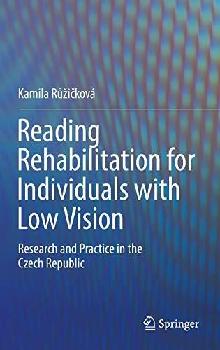
Reading rehabilitation for individuals with low vision : research and practice in the Czech Republic
This book presents an emerging rehabilitation program for improving the reading abilities of individuals with low vision who undergo therapy for visual impairment. Its interdisciplinary framework for visual training through reading skills development aligns its goals with those of special education programs and features anatomical and psychological background chapters, diverse perspectives on rehabilitation, and empirical supporting data. Program details span theoretical bases, strategies and planning, pedagogical considerations, use of assistive technologies, and assessment of client progress and program efficacy. And by locating rehabilitation in the psychosocial experience of visual disability, the program can be used as a means of building confidence and motivation, contributing to improved quality of life.
Book

The Argus II epiretinal prosthesis system allows letter and word reading and long-term function in patients with profound vision loss
Background Retinal prosthesis systems (RPS) are a novel treatment for profound vision loss in outer retinal dystrophies. Ideal prostheses would offer stable, long-term retinal stimulation and reproducible spatial resolution in a portable form appropriate for daily life. Methods We report a prospective, internally controlled, multicentre trial of the Argus II system. Twenty-eight subjects with light perception vision received a retinal implant. Controlled, closed-group, forced-choice letter identification, and, open-choice two-, three- and four-letter word identification tests were carried out. Results The mean±SD percentage correct letter identification for 21 subjects tested were: letters L, T, E, J, F, H, I, U, 72.3±24.6% system on and 17.7±12.9% system off; letters A, Z, Q, V, N, W, O, C, D, M, 55.0±27.4% system on and 11.8%±10.7% system off, and letters K, R, G, X, B, Y, S, P, 51.7±28.9% system on and 15.3±7.4% system off. (p<0.001 for all groups). A subgroup of six subjects was able to consistently read letters of reduced size, the smallest measuring 0.9 cm (1.7°) at 30 cm, and four subjects correctly identify unrehearsed two-, three- and four-letter words. Average implant duration was 19.9 months. Conclusions Multiple blind subjects fitted with the Argus II system consistently identified letters and words using the device, indicating reproducible spatial resolution. This, in combination with stable, long-term function, represents significant progress in the evolution of artificial sight.
Journal Article

Refractive error and visual impairment in Ireland schoolchildren
AimTo report refractive error prevalence and visual impairment in Republic of Ireland (henceforth 'Ireland') schoolchildren.MethodsThe Ireland Eye Study examined 1626 participants (881 boys, 745 girls) in two age groups, 6–7 years (728) and 12–13 years (898), in Ireland between June 2016 and January 2018. Participating schools were selected by stratified random sampling, representing a mix of school type (primary/postprimary), location (urban/rural) and socioeconomic status (disadvantaged/advantaged). Examination included monocular logarithm of the minimum angle of resolution (logMAR) presenting visual acuity (with spectacles if worn) and cycloplegic autorefraction (1% Cyclopentolate Hydrochloride). Parents completed a questionnaire to ascertain participants’ lifestyle.ResultsThe prevalence of myopia (spherical equivalent refraction (SER): ≤−0.50 D), hyperopia (SER: ≥+2.00 D) and astigmatism (≤−1.00 DC) among participants aged 6–7 years old was 3.3%, 25% and 19.2%, respectively, and among participants aged 12–13 years old was 19.9%, 8.9% and 15.9%, respectively. Astigmatic axes were predominately with-the-rule. The prevalence of ‘better eye’ presenting visual impairment (≥0.3 logMAR, with spectacles, if worn) was 3.7% among younger and 3.4% among older participants. Participants in minority groups (Traveller and non-white) were significantly more likely to present with presenting visual impairment in the ‘better eye’.ConclusionsThe Ireland Eye Study is the first population-based study to report on refractive error prevalence and visual impairment in Ireland. Myopia prevalence is similar to comparable studies of white European children, but the levels of presenting visual impairment are markedly higher than those reported for children living in Northern Ireland, suggesting barriers exist in accessing eye care.
Journal Article

The effect of low vision rehabilitation on the quality of life and caregiver burden of low vision patients – a randomized trial
Background
The quality of life for low vision patients is a comprehensive concept that involves multiple aspects, including physical, psychological, and social aspects. Visual impairment is an important factor in the decline of patients' quality of life. The purpose of this study is to investigate the impact and feasibility of carrying out low vision rehabilitation nursing on the quality of life and nursing burden of low vision patients.
Methods
Select 18 low vision patients who received treatment at a tertiary ophthalmic hospital in Shantou City and randomly divide them into an experimental group and a control group. The control group received routine low vision health education, while the experimental group received intervention measures based on low vision rehabilitation nursing plans. A questionnaire survey was conducted on two groups of study subjects and their caregivers using the Low Vision Quality of Life Questionnaire, General Self-Efficacy Scale, and Zarit Burden Interview before intervention, at week 4 after intervention, and at week 8 after intervention. The scores of each scale in the experimental group and the control group were statistically analyzed.
Result
The quality of life and self-efficacy scores of the experimental group patients were higher than those of the control group in the 4th and 8th week after intervention; The caregiver burden of the experimental group patients was lower than that of the control group caregivers in the 4th and 8th weeks after intervention.
Conclusion
Implement a low vision rehabilitation nursing plan, provide rehabilitation intervention and support to low vision patients, help patients find new ways to adapt to low vision conditions, and improve their quality of life. Low vision rehabilitation nursing interventions not only enable patients to regain the ability to independently complete daily activities, but also improve their self-efficacy, help rebuild confidence, and reduce the caregiving burden on their caregivers.
Journal Article
Enhanced low vision rehabilitation for people with age related macular degeneration: a randomised controlled trial
Aim: To compare the effectiveness of three models of low vision rehabilitation for people with age related macular degeneration (AMD) referred for low vision rehabilitation (LVR): (a) an enhanced low vision rehabilitation model (ELVR) including supplementary home based low vision rehabilitation; (b) conventional low vision rehabilitation (CLVR) based in a hospital clinic; (c) CLVR with home visits that did not include rehabilitation (CELVR), intended to act as a control for the additional contact time with ELVR. Method: A single centre parallel group randomised controlled trial in participants’ homes and the low vision clinic, Manchester Royal Eye Hospital. People referred for LVR with a primary diagnosis of AMD and visual acuity worse than 6/18 in both eyes and equal to or better than 1/60 in the better eye. The main outcome measures were vision specific quality of life (QoL) (primary outcome, VCM1) and generic health related QoL (SF-36); psychological adjustment to vision loss; measured task performance; restriction in everyday activities; use of low vision aids (LVAs). Results: 226 participants were recruited (median age 82 years); 194 completed the trial (86%). Except for SF-36 physical and mental component summary scores, arms did not differ significantly for any of the outcomes. Differences for the VCM1 were ELVR v CLVR, 0.06 (95% CI to 0.17 to 0.30, p = 0.60); ELVR v CELVR, 0.12 (95% CI to 0.11 to 0.34, p = 0.31); CELVR v CLVR, –0.05 (95% CI –0.29 to 0.18, p = 0.64). Differences for the SF-36 favoured CLVR compared to ELVR (ELVR v CLVR: physical = –6.05, 95% CI –10.2 to –1.91, p = 0.004; mental = –4.04, 95% CI –7.44 to –0.65, p = 0.02). At 12 months, 94% of participants reported using at least one LVA. Conclusion: ELVR was no more effective than CLVR. Researchers should be wary of proposing new LVR interventions without preliminary evidence of effectiveness, given the manifest lack of effectiveness of the model of enhanced LVR evaluated in the trial.
Journal Article
Global estimates of visual impairment: 2010
AimFrom the most recent data the magnitude of visual impairment and its causes in 2010 have been estimated, globally and by WHO region. The definitions of visual impairment are the current definitions of presenting vision in the International Classification of Diseases version 10.MethodsA systematic review was conducted of published and unpublished surveys from 2000 to the present. For countries without data on visual impairment, estimates were based on newly developed imputation methods that took into account country economic status as proxy.ResultsSurveys from 39 countries satisfied the inclusion criteria for this study. Globally, the number of people of all ages visually impaired is estimated to be 285 million, of whom 39 million are blind, with uncertainties of 10–20%. People 50 years and older represent 65% and 82% of visually impaired and blind, respectively. The major causes of visual impairment are uncorrected refractive errors (43%) followed by cataract (33%); the first cause of blindness is cataract (51%).ConclusionThis study indicates that visual impairment in 2010 is a major health issue that is unequally distributed among the WHO regions; the preventable causes are as high as 80% of the total global burden.
Journal Article

The prevalence of visually significant cataract in the Australian National Eye Health Survey
PurposeTo describe the prevalence of visually significant cataract in Indigenous and non-Indigenous Australians.MethodsA total of 3098 non-Indigenous Australians aged 50 years and over and 1738 Indigenous Australians aged 40 years and over, residing in 30 randomly selected Australian sites, were examined as part of the population-based National Eye Health Survey (NEHS). For those with visual acuity worse than 6/12, photos of the anterior and posterior segment were taken with a nonmydriatic fundus camera and assessed for cataract. Visually significant cataract was assigned in eyes with best-corrected visual acuity worse than 6/12 and cataract that was determined to be the primary cause of vision loss in that eye.ResultsIn total, 99.2% (4797/4836) participants had complete data for visual acuity and cataract assessment. The overall weighted prevalence of visually significant cataract was 2.7% (95% CI: 2.0, 3.5) in non-Indigenous Australians and 4.3% (95% CI: 3.1, 5.9) among Indigenous Australians. After adjusting for age and gender, the odds of visually significant cataract were almost three times higher among Indigenous participants compared to non-Indigenous participants (adjusted odds ratio (OR) 2.95, 95% CI: 2.03, 4.29). Only 54.8% of non-Indigenous Australians and 38.9% of Indigenous Australians with visually significant cataract self-reported a known history of cataract.ConclusionsOur results suggest that continued efforts are required to build sustainable cataract surgery services within Indigenous communities. Furthermore, given the significant ageing of the Australian population, maintaining high cataract surgery rates amongst the non-Indigenous population is critical to reduce cataract-related vision loss.
Journal Article