
Catalogue Search | MBRL


Are you sure you want to remove the book from the shelf?

{{itemTitle}}
1,268
result(s) for
"manila"
Sort by:


Communal Intimacy and the Violence of Politics
Communal Intimacy and the Violence of
Politics explores the notoriously brutal
Philippine war on drugs from below. Steffen Bo Jensen and
Karl Hapal examine how the war on drugs folded itself into communal
and intimate spheres in one Manila neighborhood, Bagong Silang.
Police killings have been regular occurrences since the birth of
Bagong Silang. Communal Intimacy and the Violence of
Politics shows that although the drug war was introduced from
the outside, it fit into and perpetuated already existing gendered
and generational structures. In Bagong Silang, the war on drugs
implicated local structures of authority, including a justice
system that had always been deeply integrated into communal
relations. The ways in which the war on drugs transformed these
intimate relations between the state and its citizens, and between
neighbors, may turn out to be the most lasting impact of Duterte's
infamously violent policies.
eBook


Chinese and Chinese Mestizos of Manila
Taking a micro-historical approach to the study of ethnic identities in the Philippines, this book offers a fascinating portrait of how Chinese merchant families in Manila negotiated the meanings of \"Chinese,\" \"Chinese mestizo,\" \"Catholic,\" and \"Filipino\" from 1860s to 1930s.
eBook


Theatre and music in Manila and the Asia Pacific, 1869-1946 : sounding modernities
This book examines the intersection between sound and modernity in dramatic and musical performance in Manila and the Asia-Pacific between 1869 and 1948. During this period, tolerant political regimes resulted in the globalization of capitalist relations and the improvement of transcontinental travel and worldwide communication. This allowed modern modes of theatre and music consumption to instigate the uniformization of cultural products and processes, while simultaneously fragmenting societies into distinct identities, institutions, and nascent nation-states.Taking the performing bodies of migrant musicians as the locus of sound, this book argues that the global movement of acoustic modernities was replicated and diversified through its multiple subjectivities within empire, nation, and individual agencies. It traces the arrival of European travelling music and theatre companies in Asia which re-casted listening into an act of modern cultural consumption, and follows the migration of Manila musicians as they engaged in the modernization project of the neighboring Asian cities.
Book
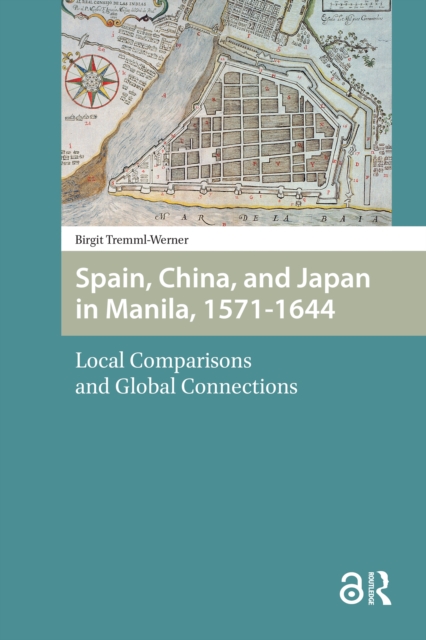
Spain, China, and Japan in Manila, 1571-1644
This book offers a new perspective on the connected histories of Spain, China, and Japan as they emerged and developed following Manila’s foundation as the capital of the Spanish Philippines in 1571. Examining a wealth of multilingual primary sources, Birgit Tremml-Werner shows that crosscultural encounters not only shaped Manila’s development as a “Eurasian” port city, but also had profound political, economic, and social ramifications for the three premodern states. Combining a systematic comparison with a focus on specific actors during this period, this book addresses many long-held misconceptions and offers a more balanced and multifaceted view of these nations’ histories.
eBook
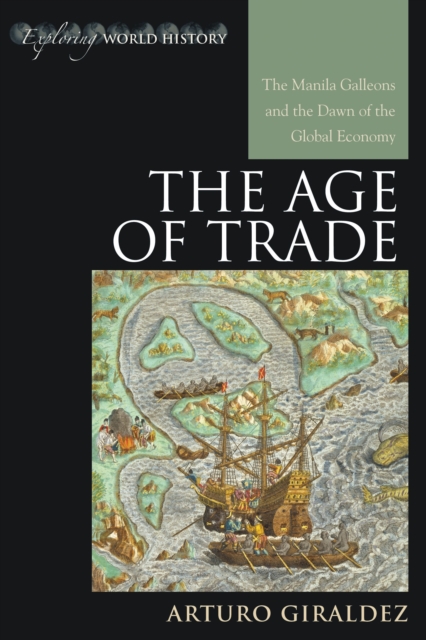
The age of trade
This groundbreaking book presents the first full history of the Manila galleons, which marked the true beginning of a global economy. Arturo Giraldez, the world's leading scholar of the galleons, traces the rise of the maritime route, which began with the founding of the city of Manila in 1571 and ended in 1815 when the last galleon left the port of Acapulco in New Spain (Mexico) for the Philippines, establishing a permanent connection between the Spanish empire in America with Asian countries, most importantly China, the main supplier of commodities during that era. Throughout the two-and-a-half-century history of the Manila galleons, the strategic commodity fuelling global networks was always silver. Giraldez shows how this most important of precious metals shaped world history, with influences that stretch to the present.
eBook
Collective Action and Urban Poverty Alleviation
An estimated 600 million people now live in informal or 'squatter' settlements in the rapidly growing cities of the developing world. With such settlements often lacking basic necessities, there is an urgent need to address this urban crisis. Recently, innovative approaches have focused on the role of community-based organizations (CBOs) in setting up self-help and participatory programmes. This incisive book questions whether communities have the ability to organize, engage government and undertake major redevelopment. It also examines when and how mobilization of communities occurs and if such organizations possess any influence in the intensely political decision-making arena of urban land development. It is illustrated by a detailed analysis of the experience of CBOs in Manila, as the Philippine government has undertaken what is perhaps the most radical experiment in decentralized, participatory approaches to urban governance in the world. The book emphasizes the external conditions that influence patterns of collective action within communities and addresses issues such as the local political economy and the communities' place within the global economy.
eBook