
Catalogue Search | MBRL


Are you sure you want to remove the book from the shelf?

{{itemTitle}}
52,058
result(s) for
"masculinity"
Sort by:

Global masculinities and manhood
\" Bringing together an array of interdisciplinary voices, Global Masculinities and Manhood examines the concept of masculinity from the perspectives of cultures around the world. In the era of globalization, masculinity continues to be studied in a Western-centric context. Contributors to this volume, however, deconstruct the history and politics of masculinities within the contexts of the cultures from which they have been developed, examining what makes a man who he is within his own culture. Highlighting manifestations of masculinity in countries including Jamaica, Turkey, Peru, Kenya, Australia, and China, scholars from a variety of disciplines grapple with the complex politics of identity and the question of how gender is interpreted and practiced through discourse. Topics include how masculinity is affected by war and conflict, defined in relation to race, ethnicity, and sexuality, and expressed in cultural activities such as sports or the cinema. Contributors are Bryant Keith Alexander, Molefi K. Asante, Murali Balaji, Radhika Chopra, Maurice Hall, Ronald L. Jackson II, Shino Konishi, Nil Mutluer, Mich Nyawalo, Kathleen Glenister Roberts, Margarita Saona, and Kath Woodward\"--Provided by publisher.
Book

SOCIAL DOMINANCE ORIENTATION, MORAL DISENGAGEMENT, AND MASCULINITY AS PREDICTORS OF STREET HARASSMENT PREVALENCE
Street harassment targeting women has persisted as an ongoing societal issue. This study examined masculinity, Social Dominance Orientation, and moral disengagement as predictors of street harassment behavior among men. Using convenience sampling, male participants (N = 211) completed questionnaires measuring these variables. Multiple regression analysis was used to assess predictive relationships, and internal consistency was examined. Results demonstrated that masculinity, Social Dominance Orientation, and moral disengagement significantly predicted street harassment frequency, with masculinity emerging as the strongest predictor. The study provides empirical support for understanding psychological factors underlying street harassment perpetration, offering insights for intervention strategies and further research implications discussed within the paper. This study presents a predictive model for street harassment frequency, shedding light on the motivations of male perpetrators and contributing to research on gender and behavior. However, these findings are only a starting point. Greater awareness, further research, and practical solutions are required to fully address and eradicate street harassment.
Journal Article
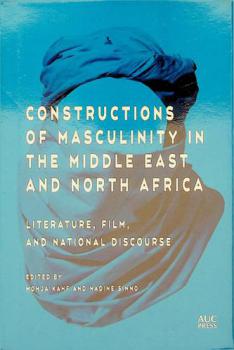
Constructions of masculinity in the Middle East and North Africa : literature, film, and national discourse
Constructions of masculinity are constantly evolving and being resisted in the Middle East and North Africa. This book examines constructions of both hegemonic and marginalized masculinities in the MENA region, through literary criticism, film studies, discourse analysis, anthropological accounts, and studies of military culture. This book spans the colonial and postcolonial eras with emphasis on the late twentieth century to the present day.
Book


Manliness in Britain, 1760–1900
This book offers an innovative account of manliness in Britain between 1760 and 1900. Using diverse textual, visual and material culture sources, it shows that masculinities were produced and disseminated through men’s bodies –often working-class ones – and the emotions and material culture associated with them. The book analyses idealised men who stimulated desire and admiration, including virile boxers, soldiers, sailors and blacksmiths, brave firemen and noble industrial workers. It also investigates unmanly men, such as drunkards, wife-beaters and masturbators, who elicited disgust and aversion. Unusually, Manliness in Britain runs from the eras of feeling, revolution and reform to those of militarism, imperialism, representative democracy and mass media, periods often dealt with separately by historians of masculinities.
eBook


