
Catalogue Search | MBRL


Are you sure you want to remove the book from the shelf?

{{itemTitle}}
91
result(s) for
"matters of faith"
Sort by:
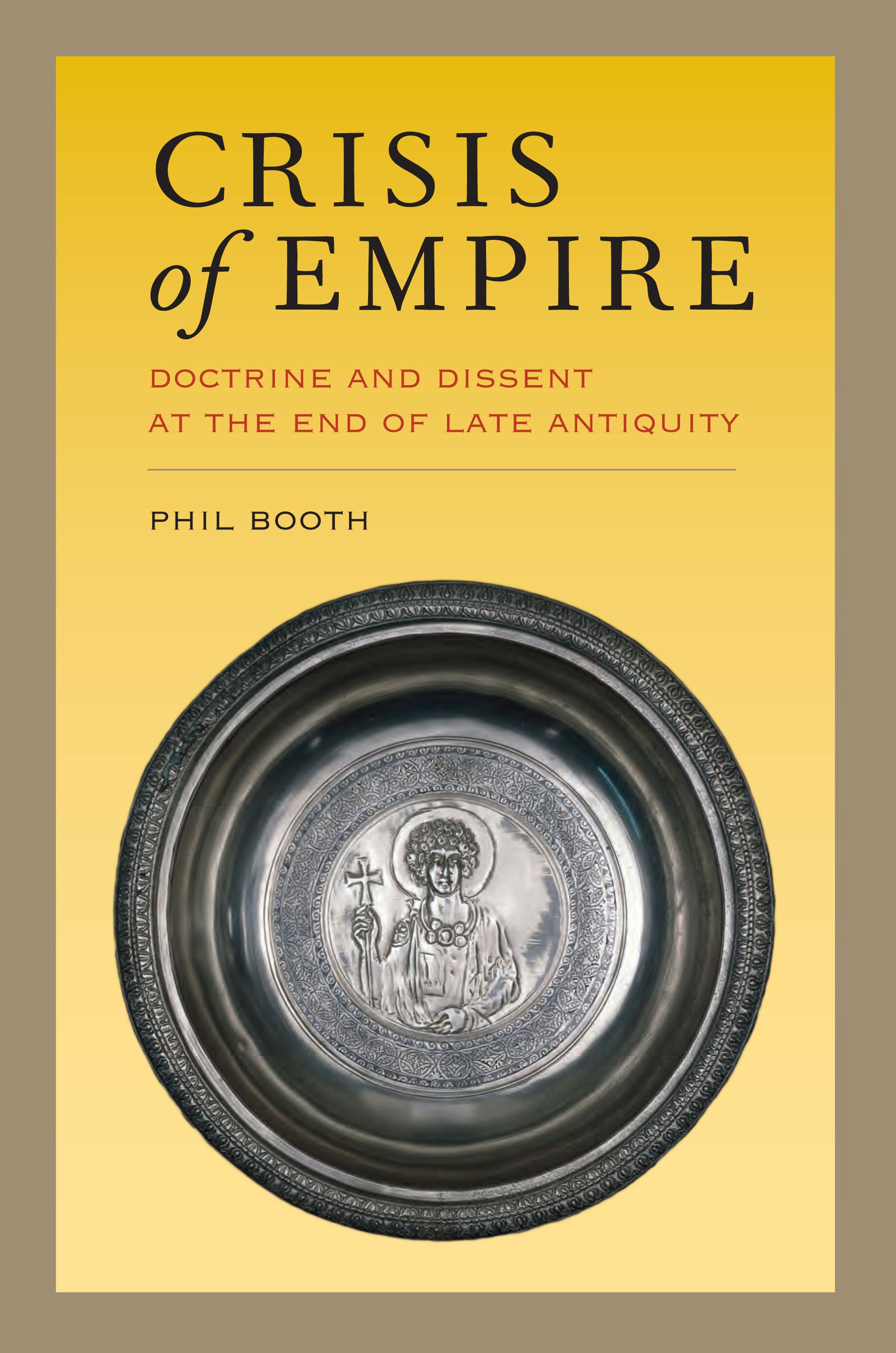
Crisis of empire
This book focuses on the attempts of three ascetics—John Moschus, Sophronius of Jerusalem, and Maximus Confessor—to determine the Church’s power and place during a period of profound crisis, as the eastern Roman empire suffered serious reversals in the face of Persian and then Islamic expansion. By asserting visions which reconciled long-standing intellectual tensions between asceticism and Church, these authors established the framework for their subsequent emergence as Constantinople's most vociferous religious critics, their alliance with the Roman popes, and their radical rejection of imperial interference in matters of the faith. Situated within the broader religious currents of the fourth to seventh centuries, this book throws new light on the nature not only of the holy man in late antiquity, but also of the Byzantine Orthodoxy that would emerge in the Middle Ages, and which is still central to the churches of Greece and Eastern Europe.
eBook
Food Therapy
This chapter contains sections titled:
Introduction
Honey
Olive Oil
Dates
Carob
Black Seed
Figs
The Pomegranate
Garlic
Edible Wild Plants
References
Book Chapter

An L.A. rabbi takes on atheists and fanatics alike
The other is the threat of violent religious fundamentalism that turns belief into a scourge, he says. In Wolpe's book, of course, that does not require Jesus, although he cites Christians as well as Jews who have found in faith the ability to \"grow in soul, to achieve goodness, to work for causes larger than existence alone.\"
Newspaper Article


Fideism
This chapter contains sections titled:
Moderate and Radical Fideism
Fideism and Skepticism
Some Key Fideist Arguments
Radical Fideism
Parity
Faith and Practical Reason
Works cited
Book Chapter

Kierkegaard and Hegel on Faith and Knowledge
This chapter contains sections titled:
Hegel's Account of Faith
Kierkegaard's Criticism: The Separation of Faith and Knowledge
Critical Evaluation
Abbreviations of Hegel's Primary Texts
Abbreviations of Works by Kierkegaard
Book Chapter

WEAPONIZING PEACE
American racial justice opponents regularly wield a desire for peace, stability, and harmony as a weapon to hinder movement toward racial equality. This Essay examines the weaponization of peace historically and in legal cases about property, education, protest, and public utilities. Such peace claims were often made in bad faith and with little or no evidence, and the discord they claimed to address was actually the result of hostility to racial equality. For a time, the Supreme Court rejected dominant peace claims for precisely these reasons. This Essay further documents the weaponization of peace in current attempts to restrict Black Lives Matter protests, denigrate calls for police defunding, outlaw critical race theory, and dismantle affirmative action. By linking these historical and contemporary arguments, this Essay finds that dominant logics of peace mask the injustice, frustration, and despair felt by subordinated groups. The Essay urges closer scrutiny of appeals to peace that primarily function to stifle the pursuit of racial justice and to maintain status quo inequality.
Journal Article

Sartre, Bad Faith and Authentic Decolonial Interventions
This article explores the concept of bad faith as conceptualized by Sartre within the context of the existential lived experiences of those Fanon (1965) refers to as the condemned, the racialized, and the dehumanized subjects of the world. I explore the logic of authenticity as a liberatory intervention in relation to decolonial interventions and anti-racist movements such as Black Lives Matter in the USA and across the globe and recently, the #EndSars movement in Nigeria. I will therefore argue that the repudiation of the entrenched universal logic of Euro-American modernity requires one to be authentic in their praxis in order to escape bad faith.
Journal Article

JUST LAWS, UNJUST LAWS, AND THEO-MORAL RESPONSIBILITY IN TRADITIONAL AND CONTEMPORARY CIVIL RIGHTS ACTIVISM
In his 1963 response to an open letter from eight white religious leaders chastising his involvement in Birmingham, Martin Luther King, Jr. explained that civil rights activists' blatant breaking of some laws while obeying others was the result of two types of laws: just laws and unjust laws. Civil rights activists believed they had a legal responsibility to obey just laws and a moral responsibility to disobey unjust laws. Today, new civil rights struggles continue to challenge unjust laws that shred the fabric of democracy that America espouses. Drawing upon both the Civil Rights Movement and the contemporary Movement for Black Lives, this article argues that unjust laws and practices must be broken and challenged before a just society is established. It identifies four ethical strategies for social activism: collective work and responsibility, strategic timing and economic disconnection, political mobilization, and faithful perseverance.
Journal Article

Hindsight Beyond 2020
The death of George Floyd in May 2020 seems like a lifetime ago, but since that's a moment we all remember so clearly because we felt it, let's use that as a road sign. See before that you had COVID. The pandemic showed up and whittled away at our general sense of safety. First, it was like a rumor. \"The friend of a friend had a cousin who worked with someone who had it.\" Then it became like a forecast for a snowstorm. In Richmond VA, when it snows (or might snow), people go crazy, and they start buying things. BlackLiq has spent his whole life with no trust in the police. No faith in our government. Watching bullshit be addressed with bullshit, then justified with more bullshit. Not to mention the times we've all been pulled over or harassed by bullshit in uniforms.
Journal Article