
Catalogue Search | MBRL


Are you sure you want to remove the book from the shelf?

{{itemTitle}}
5,323
result(s) for
"med school"
Sort by:

Premed Prep
If you're a student hoping to apply to medical school, you might be anxious or stressed about how best to prepare. What classes should you take? What kinds of research, clinical, and volunteer opportunities should you be pursuing? What grades and MCAT scores do you need? How can you stand out among thousands of applicants? Premed Prep answers all these questions and more, with detailed case studies and insider tips that can help premed students authentically prepare and enjoy the journey from the very beginning. Dr. Sunny Nakae draws from her many years of experience as a medical school admissions dean to offer wise and compassionate advice that can help premed students of all backgrounds. She also has specific tips for students who are first-generation, minority, non-traditional, and undocumented.Both forthright and supportive, Dr. Nakae's advice is offered in a keep-it-real style that gives premed students a unique window into how admissions committees view and assess them. The case studies are drawn from her years of supporting students en route to medical school. Premed Prep covers how to approach preparation with a focus on exploration and growth, and how to stop obsessing over med school application checklists. This book will do more than help you get a seat in medical school; it will start you on the process of becoming a successful future physician.
eBook

From Residency to Retirement
From Residency to Retireme nt tells the stories
of twenty American doctors over the last half century, which saw a
period of continuous, turbulent, and transformative changes to the
U.S. health care system. The cohort's experiences are reflective of
the generation of physicians who came of age as presidents Carter
and Reagan began to focus on costs and benefits of health services.
Mizrahi observed and interviewed these physicians in six timeframes
ending in 2016. Beginning with medical school in the mid-1970s,
these physicians reveal the myriad fluctuations and uncertainties
in their professional practice, working conditions, collegial
relationships, and patient interactions. In their own words, they
provide a \"view from the front lines\" both in academic and
community settings. They disclose the satisfactions and strains in
coping with macro policies enacted by government and insurance
companies over their career trajectory. They describe their
residency in internal medicine in a large southern urban medical
center as a \"siege mentality\" which lessened as they began their
careers, in Getting Rid of Patients , the title of
Mizrahi's first book (1986). As these doctors moved on in their
professional lives more of their experiences were discussed in
terms of dissatisfaction with financial remuneration, emotional
gratification, and intellectual fulfillment. Such moments of career
frustration, however, were also interspersed with moments of
satisfaction at different stages of their medical careers.
Particularly revealing was whether they were optimistic about the
future at each stage of their career and whether they would
recommend a medical career to their children. Mizrahi's subjects
also divulge their private feelings of disillusionment and fear of
failure given the malpractice epidemic and lawsuits threatened or
actually brought against so many doctors. Mizrahi's work, covering
almost fifty years, provides rarely viewed insights into the lives
of physicians over a professional life span.
eBook

From Residency to Retirement
From Residency to Retireme nt tells the stories
of twenty American doctors over the last half century, which saw a
period of continuous, turbulent, and transformative changes to the
U.S. health care system. The cohort's experiences are reflective of
the generation of physicians who came of age as presidents Carter
and Reagan began to focus on costs and benefits of health services.
Mizrahi observed and interviewed these physicians in six timeframes
ending in 2016. Beginning with medical school in the mid-1970s,
these physicians reveal the myriad fluctuations and uncertainties
in their professional practice, working conditions, collegial
relationships, and patient interactions. In their own words, they
provide a \"view from the front lines\" both in academic and
community settings. They disclose the satisfactions and strains in
coping with macro policies enacted by government and insurance
companies over their career trajectory. They describe their
residency in internal medicine in a large southern urban medical
center as a \"siege mentality\" which lessened as they began their
careers, in Getting Rid of Patients , the title of
Mizrahi's first book (1986). As these doctors moved on in their
professional lives more of their experiences were discussed in
terms of dissatisfaction with financial remuneration, emotional
gratification, and intellectual fulfillment. Such moments of career
frustration, however, were also interspersed with moments of
satisfaction at different stages of their medical careers.
Particularly revealing was whether they were optimistic about the
future at each stage of their career and whether they would
recommend a medical career to their children. Mizrahi's subjects
also divulge their private feelings of disillusionment and fear of
failure given the malpractice epidemic and lawsuits threatened or
actually brought against so many doctors. Mizrahi's work, covering
almost fifty years, provides rarely viewed insights into the lives
of physicians over a professional life span.
eBook
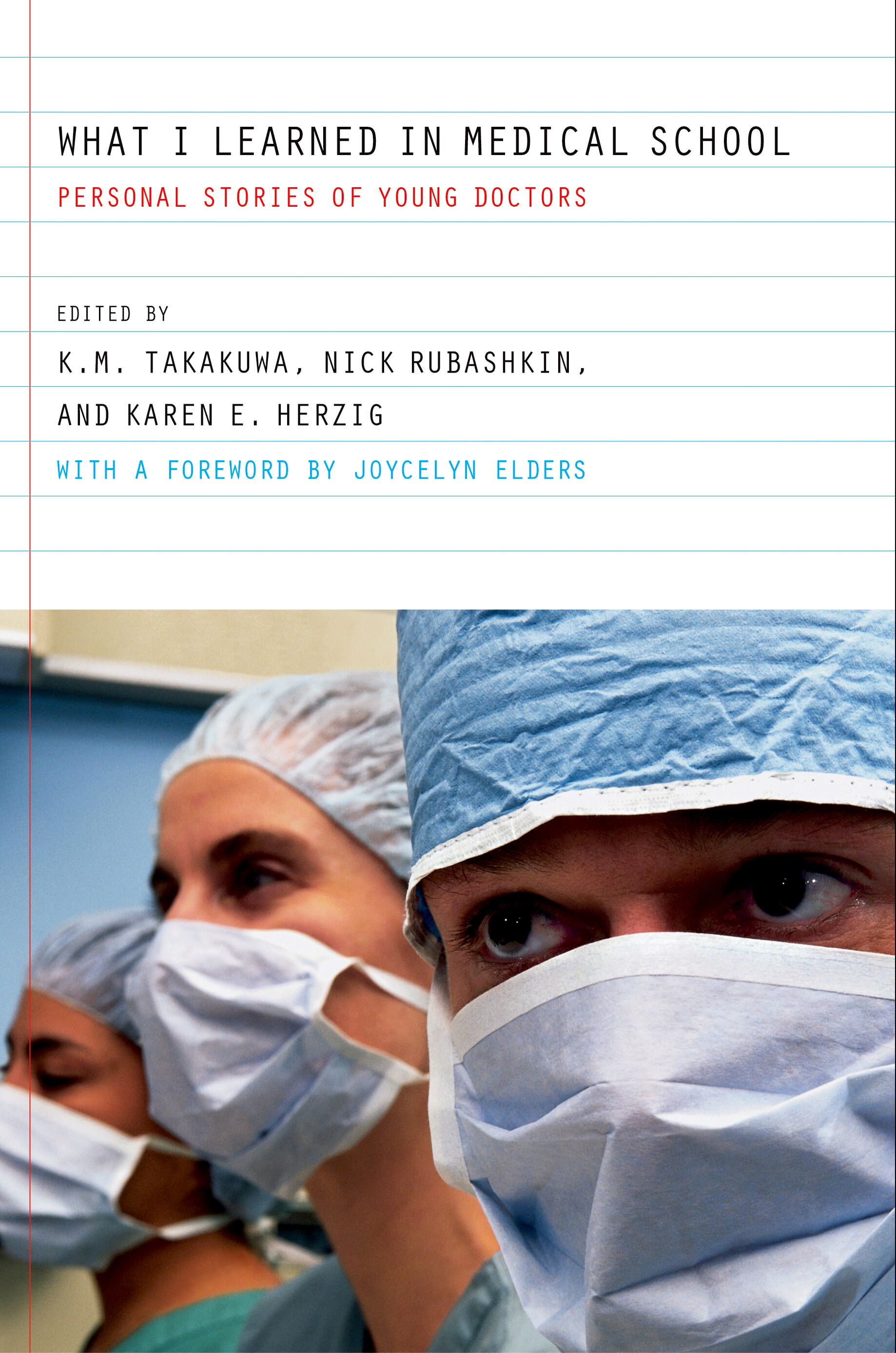
What I Learned in Medical School
Like many an exclusive club, the medical profession subjects its prospective members to rigorous indoctrination: medical students are overloaded with work, deprived of sleep and normal human contact, drilled and tested and scheduled down to the last minute. Difficult as the regimen may be, for those who don't fit the traditional mold—white, male, middle-to-upper class, and heterosexual—medical school can be that much more harrowing. This riveting book tells the tales of a new generation of medical students—students whose varied backgrounds are far from traditional. Their stories will forever alter the way we see tomorrow's doctors. In these pages, a black teenage mother overcomes seemingly insurmountable odds, an observant Muslim dons the hijab during training, an alcoholic hides her addiction. We hear the stories of an Asian refugee, a Mexican immigrant, a closeted Christian, an oversized woman—these once unlikely students are among those who describe their medical school experiences with uncommon candor, giving a close-up look at the inflexible curriculum, the pervasive competitive culture, and the daunting obstacles that come with being \"different\" in medical school. Their tales of courage are by turns poignant, amusing, eye-opening—and altogether unforgettable.
eBook
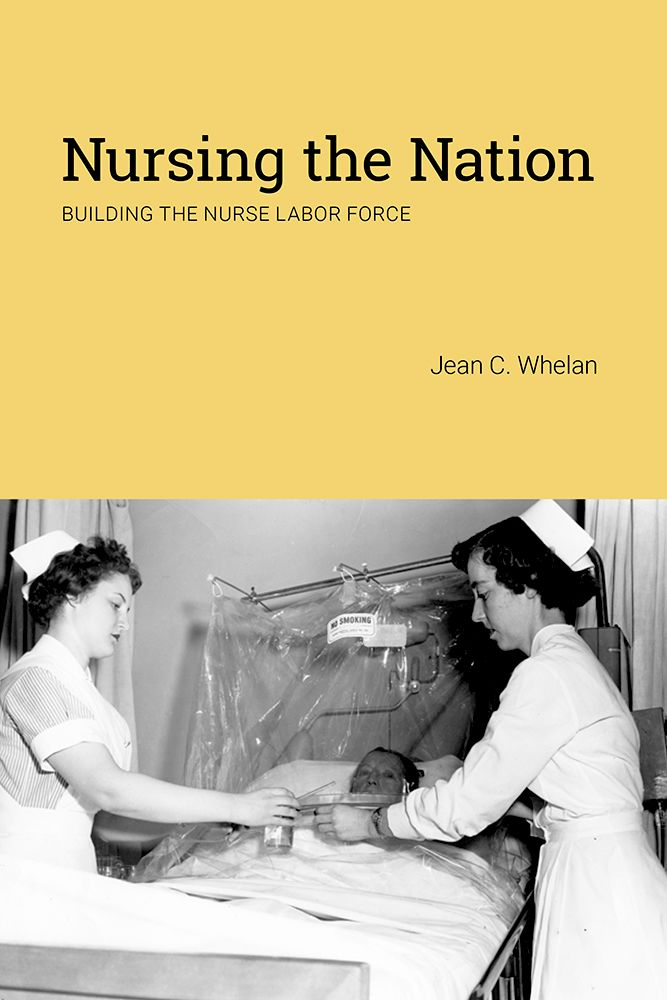
Nursing the Nation
Modern health care cannot exist without professional nurses. Throughout the twentieth century, there was seldom a sustained period when the supply of nurses was equal to demand. Nursing the Nation offers a historical analysis of the relationship between the development of nurse employment arrangements with patients and institutions and the appearance of nurse shortages from 1890 to 1950. The response to nursing supply and demand problems by health care institutions and policy-making organizations failed to address nurse workforce issues adequately, and this failure resulted in, at times, profound and lengthy nurse shortages. Nurses also lost the ability to control their own destiny within health care institutions while nevertheless establishing themselves as the most critical part of health care provision today.
eBook

Doctors Serving People
Today's physicians are medical scientists, drilled in the basics of physiology, anatomy, genetics, and chemistry. They learn how to crunch data, interpret scans, and see the human form as a set of separate organs and systems in some stage of disease. Missing from their training is a holistic portrait of the patient as a person and as a member of a community. Yet a humanistic passion and desire to help people often are the attributes that compel a student toward a career in medicine. So what happens along the way to tarnish that idealism? Can a new approach to medical education make a difference? Doctors Serving People is just such a prescriptive. While a professor at Rush Medical College in Chicago, Edward J. Eckenfels helped initiate and direct a student-driven program in which student doctors worked in the poor, urban communities during medical school, voluntarily and without academic credit. In addition to their core curriculum and clinical rotations, students served the social and health needs of diverse and disadvantaged populations. Now more than ten years old, the program serves as an example for other medical schools throughout the country. Its story provides a working model of how to reform medical education in America.
eBook

'Mini-Med School TV' seems to be painless
Presented by WTTW National Productions, the series' first two episodes are set at Northwestern Memorial Hospital and feature Northwestern doctors. Friday, the topic is aneurysm and stroke, or, as Hunt Batjer, chairman of neurological surgery at Northwestern prefers to label it, \"a brain attack.\" Batjer is a shrewd choice to launch the program, an earnest lecturer with a droll sense of humor. In trying to convey the sudden severity of the headache that can be symptomatic of stroke, he notes, \"It's not the kind of headache you get when you've got a bad boss or a bad marriage.\"
Newspaper Article

A school-based neuromuscular training program and sport-related injury incidence
Context: An estimated 40 million school-aged children (age range = 5-18 years) participate annually in sports in the United States, generating approximately 4 million sport-related injuries and requiring 2.6 million emergency department visits at a cost of nearly $2 billion. Objective: To determine the effects of a school-based neuromuscular training (NMT) program on sport-related injury incidence across 3 sports at the high school and middle school levels, focusing particularly on knee and ankle injuries. Design: Randomized controlled clinical trial. Setting: A total of 5 middle schools and 4 high schools in a single-county public school district. Patients or Other Participants: A total of 474 girls (222 middle school, 252 high school; age = 14.0 ± 1.7 years, height = 161.0 ± 8.1 cm, mass = 55.4 ± 12.2 kg) were cluster randomized to an NMT (CORE; n = 259 athletes) or sham (SHAM; n = 215 athletes) intervention group by team within each sport (basketball, soccer, and volleyball). Intervention(s): The CORE intervention consisted of exercises focused on the trunk and lower extremity, whereas the SHAM protocol consisted of resisted running using elastic bands. Each intervention was implemented at the start of the season and continued until the last competition. An athletic trainer evaluated athletes weekly for sport-related injuries. The coach recorded each athlete-exposure (AE), which was defined as 1 athlete participating in 1 coach-directed session (game or practice). Main Outcome Measure(s): Injury rates were calculated overall, by sport, and by competition level. We also calculated rates of specific knee and ankle injuries. A mixed-model approach was used to account for multiple injuries per athlete. Results: Overall, the CORE group reported 107 injuries (rate = 5.34 injuries/1000 AEs), and the SHAM group reported 134 injuries (rate = 8.54 injuries/1000 AEs; F1,578 = 18.65, P ( .001). Basketball (rate = 4.99 injuries/1000 AEs) and volleyball (rate = 5.74 injuries/1000 AEs) athletes in the CORE group demonstrated lower injury incidences than basketball (rate = 7.72 injuries/1000 AEs) and volleyball (rate = 11.63 injuries/1000 AEs; F1,275 = 9.46, P = .002 and F1,149 = 11.36, P = .001, respectively) athletes in the SHAM group. The CORE intervention appeared to have a greater protective effect on knee injuries at the middle school level (knee-injury incidence rate = 4.16 injuries/1000 AEs) than the SHAM intervention (knee-injury incidence rate = 7.04 injuries/1000 AEs; F1,261 = 5.36, P = .02). We did not observe differences between groups for ankle injuries (F1,578 = 1.02, P = .31). Conclusions: Participation in an NMT intervention program resulted in a reduced injury incidence relative to participation in a SHAM intervention. This protective benefit of NMT was demonstrated at both the high school and middle school levels.
Journal Article

Which students skip school? A comparative study of sociodemographic factors and student absenteeism using PISA data
This article explores which students–with regard to gender, socio-economic background and migration background–skip school in Germany, Japan, Sweden and the United Kingdom (UK) according to PISA data. Students who skip school are observed in many countries, but there is not much systematic research that studies this across countries. Comparable data is to a large extent missing. PISA data offers an opportunity to use comparable data. In PISA, students were asked in 2018, 2015 and 2012 whether they had skipped school a whole day in the last two weeks prior to their completion of the PISA student questionnaire. Patterns of how absence relates to sociodemographic factors vary in countries and school systems. In the comparison between the four countries the UK stands out as having a higher percentage of students who have reported that they have skipped school than in the other countries. This does not seem to be related to any specific group of students. Japan also stands out with a lower percentage of students who have reported that they have skipped school. According to PISA data, skipping school is more related to socio-economic background than any other of the variables studied. The socio-economic background seems to be related to skipping school in all three PISA studies in Sweden and the UK. Gender seems not to be an important factor in the four countries. In Sweden and Germany there is a lower percentage of non-immigrant students who report that they have skipped school than first-and second-generation immigrant students. In the UK the figures are more ambiguous. When the percentages of students skipping school are compared over time and in the countries, it is difficult to find any trends, but the data only covered three measurements during a period of six years, which may be too short a time span to see trends.
Journal Article

Promoting Healthy Lifestyles in Early Childhood at School with the 0-6 EpPOI Project: Efficacy on Motor Skills and Mediterranean Diet Adherence
Background: Childhood obesity is a global health concern. Early development of fundamental movement skills (FMS) and adherence to the Mediterranean diet (MD) are key modifiable factors for prevention. This study assessed the effectiveness of a multidisciplinary, school-based intervention for childhood obesity prevention. Methods: Children aged 3–5 years from a preschool in Messina, Italy, participated in a 9-month intervention integrating nutritional education and physical activity. FMS were evaluated using the MOBAK test. Anthropometric measurements and MD adherence (through the Kid-Med questionnaire) were collected. Caregivers completed an online survey reporting lifestyle changes. Results: Significant improvements were observed in FMS: object control (score 1) increased from 2.67 ± 1.78 to 4.28 ± 1.82, locomotor skills (score 2) from 4.69 ± 1.96 to 5.83, 5.83 ± 1.70, and total MOBAK score (score 3) from 7.35 ± 3.09 to 10.11± 2.94. (p < 0.001 for all). Kid-Med scores significantly improved from (3.79 ± 2.31 vs. 5.03 ± 2.69) (p = 0.0027), indicating enhanced MD adherence. Post-intervention, adherence was classified as poor (27.4%), moderate (53.2%), and optimal (19.4%). Although only a minority of parents reported lifestyle changes, over 50% noted increased fruit and vegetable intake in their children. Males showed higher FMS scores and waist circumference compared to females. Conclusions: A school-based multidisciplinary intervention significantly improved motor competence and dietary habits in preschool children. These findings underscore the importance of early, integrated strategies involving families and educators to support healthy development and prevent childhood obesity.
Journal Article