
Catalogue Search | MBRL


Are you sure you want to remove the book from the shelf?

{{itemTitle}}
1,023
result(s) for
"medical historian"
Sort by:

The Morning After
Since 2006, when the \"morning-after pill\" Plan B was first sold over the counter, sales of emergency contraceptives have soared, becoming an $80-million industry in the United States and throughout the Western world. But emergency contraception is nothing new. It has a long and often contentious history as the subject of clashes not only between medical researchers and religious groups, but also between different factions of feminist health advocates.
The Morning Aftertells the story of emergency contraception in America from the 1960s to the present day and, more importantly, it tells the story of the women who have used it. Side-stepping simplistic readings of these women as either radical feminist trailblazers or guinea pigs for the pharmaceutical industry, medical historian Heather Munro Prescott offers a portrait of how ordinary women participated in the development and popularization of emergency contraception, bringing a groundbreaking technology into the mainstream with the potential to alter radically reproductive health practices.
eBook

Prelude to Hospice
Hospices have played a critical role in transforming ideas about death and dying. Viewing death as a natural event, hospices seek to enable people approaching mortality to live as fully and painlessly as possible. Award-winning medical historian Emily K. Abel provides insight into several important issues surrounding the growth of hospice care. Using a unique set of records,Prelude to Hospiceexpands our understanding of the history of U.S. hospices. Compiled largely by Florence Wald, the founder of the first U.S. hospice, the records provide a detailed account of her experiences studying and caring for dying people and their families in the late 1960s and early 1970s. Although Wald never published a report of her findings, she often presented her material informally. Like many others seeking to found new institutions, she believed she could garner support only by demonstrating that her facility would be superior in every respect to what currently existed. As a result, she generated inflated expectations about what a hospice could accomplish. Wald's records enable us to glimpse the complexities of the work of tending to dying people.
eBook

Searching for the Kinkeepers: Historian Gender, Age, and Type 2 Diabetes Family History
Kinkeepers facilitate family communication and may be key to family medical history collection and dissemination. Middleaged women are frequently kinkeepers. Using type 2 diabetes (T2DM) as a model, we explored whether the predicted gender and age effects of kinkeeping can be extended to family medical historians. Through a U.S. telephone survey, nondiabetic Mexican Americans (n = 385), Blacks (n = 387), and Whites (n = 396) reported family histories of T2DM. Negative binomial regressions used age and gender to predict the number of affected relatives reported. Models were examined for the gender gap, parabolic age effect, and gender-by-age interaction predicted by kinkeeping. Results demonstrated support for gender and parabolic age effects but only among Whites. Kinkeeping may have application to the study of White family medical historians, but not Black or Mexican American historians, perhaps because of differences in family structure, salience of T2DM, and/or gender roles.
Journal Article
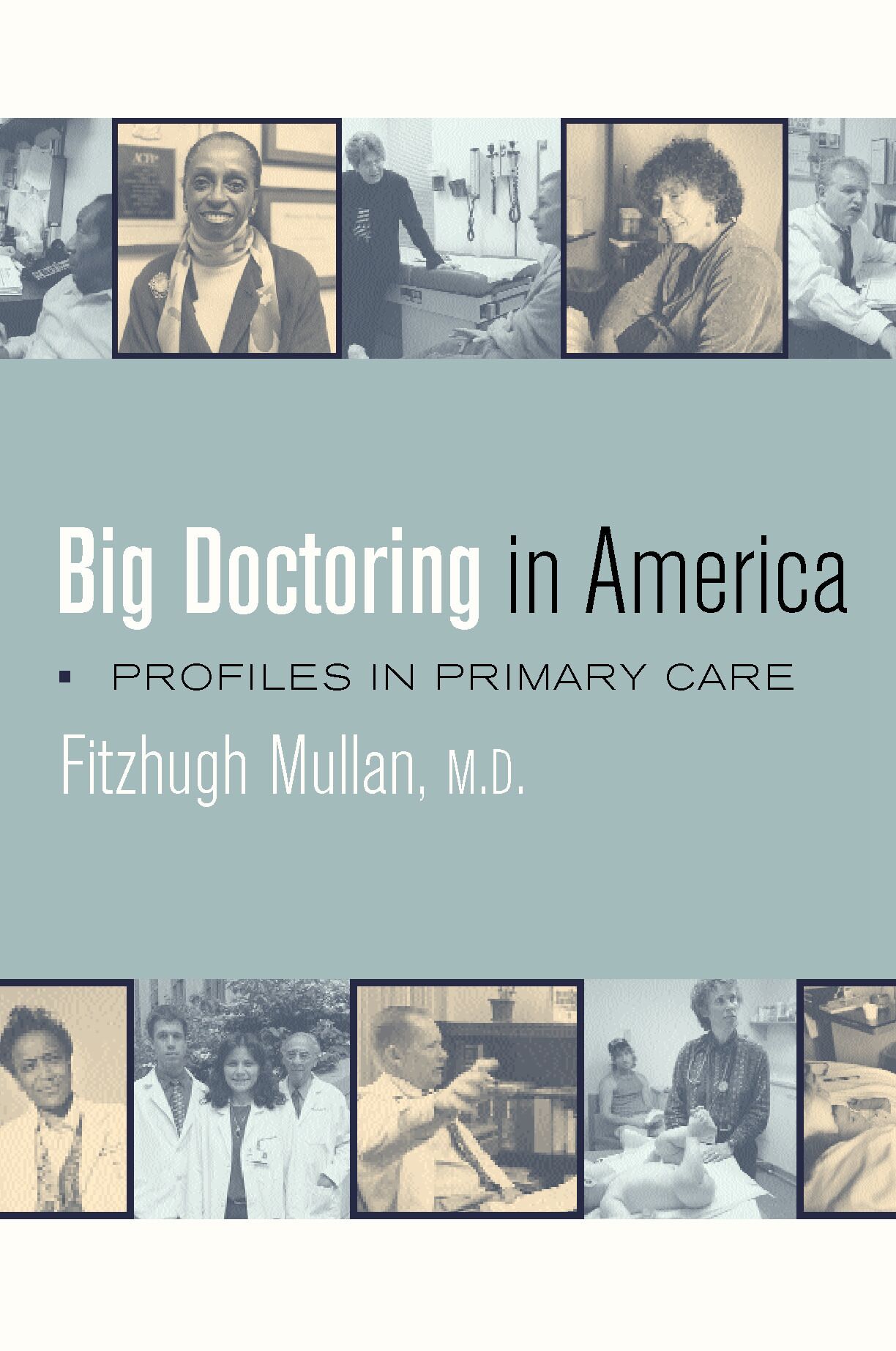
Big Doctoring in America
The general practitioner was once America's doctor. The GP delivered babies, removed gallbladders, and sat by the bedsides of the dying. But as the twentieth century progressed, the pattern of medical care in the United States changed dramatically. By the 1960s, the GP was almost extinct. The later part of the twentieth century, however, saw a rebirth of the idea of the GP in the form of primary care practitioners. In this engrossing collection of oral histories and provocative essays about the past and future of generalism in health care, Fitzhugh Mullan—a pediatrician, writer, and historian—argues that primary care is a fascinating, important, and still endangered calling. In conveying the personal voices of primary care practitioners, Mullan sheds light on the political and economic contradictions that confront American medicine.Mullan interviewed dozens of primary care practitioners—family physicians, internists, pediatricians, nurse practitioners, and physician assistants—asking them about their lives and their work. He explains how, during the last forty years, the primary care movement has emerged built on the principles of \"big doctoring\"--coordinated, comprehensive care over time. This book is essential reading for understanding core issues of the current health care dilemma. As our country struggles with managed care, market reforms, and cost containment strategies in medicine, Big Doctoring in America provides an engrossing and illuminating look at those in the trenches of the profession.
eBook


Clio in the Clinic
Sometimes, history can solve a medical mystery; at other times, it can point to the right treatment or console a despairing doctor by demonstrating a timeless connection to unchanging aspects of human existence. InClio in the Clinic, twenty-three doctors, each of whom is also an accomplished historian, write autobiographically about how they use history in their practice of medicine. Their stories of clinical experiences show that historical thinking can serve in the diagnosis and care of patients.
These essays constitute new evidence for an old argument about the utility of history in medicine. They open an intimate window on how history informs and serves clinical practice and describe what life is like for doctors when they leave the history meetings and go back to the wards.
The contributors to this volume hail from five countries and represent sixty years of training; the most senior completed medical school in 1943, the youngest in 2003. They include several internists, four pediatricians, two psychiatrists, two infectious disease specialists, one neurologist, one emergentologist, and one surgeon. Topics include: history in the service of patients, the doctor-patient relationship, disease causation, administrative dilemmas, and the use of history to reflect on current trends in the practice of medicine.
Many books make claims for the value of teaching history to future physicians, but none have explored the clinical experience of those doctors who are experts in history.Clio in the Clinicshows how knowledge of history can shape a physician's view of the profession and how it can be a surprising asset at the bedside for diagnosis and treatment. Not all the endings are happy, but these tales of medical life are written with insight, honesty, humour, and great affection for medicine, its history, and its people.
eBook


The pleasures and perils of prophetic advocacy: Henry E. Sigerist and the politics of medical reform
Henry E. Sigerist, an internationally renowned medical historian, played a surprisingly important and visible role in American medical politics in the 1930s and 1940s. Born in Paris of Swiss parents, he was professor in Leipzig, Germany, before coming to the United States in 1932 as professor of the history of medicine at Johns Hopkins University. Once in America. Sigerist became deeply involved in medical politics and the campaign for national health insurance. He argued that individualized medical practice was outdated and should gradually be superseded by state-run and state-financed health services. National health insurance was but one step in this historical progression. Sigerist thus lent the weight of history itself to the cause of medical care reform. The charming and erudite Sigerist was welcomed by the leaders of academic medicine in America. Soon, he emerged as a spokesman of the left wing of the medical profession, an effective and popular speaker and an impassioned advocate of socialized medicine. This paper traces Sigerist's political ideas and activities, and his contributions toward medical care reform in the United States.
Journal Article

