
Catalogue Search | MBRL


Are you sure you want to remove the book from the shelf?

{{itemTitle}}
584,930
result(s) for
"medical management"
Sort by:


Mistreated : why we think we're getting good health care--and why we're usually wrong
\"Despite all the debate about health care, Americans tend to assume they are in the best of hands when they enter the hospital. This is inaccurate : American health care is in the bottom half of all industrialized countries. This is only the largest in a broad set of misperceptions. We appropriately worry about the security of technology, but fail to see how its absence kills hundreds of people every day from medical errors. We over-value the impact of intervention on saving lives and ignore the 200,000 people who die each year unnecessarily from diseases they did not have to get. We worry that end of life discussions and palliative care will lead to \"death squads,\" when research proves that people actually live not only better, but also longer. We demand modern information technology from our banks, airlines, retailers and hotels, but we passively accept last century's technology in our health care. It's not just patients who get things wrong. Physicians perceive that the dollars they take from drug companies don't alter their prescribing habits, but the data demonstrates that for every dollar the pharmaceutical world spends on doctors, they get $10 in return. Academic researchers deny that their results are influenced by which company funds the work, but in 95% of the cases, the outcome supports the funding source. Dr. Robert Pearl has seen these mistakes from all sides: as a concerned citizen, a patient, a health industry leader, and most importantly, a victim of bureaucracy, whose own father died due in part to medical error. In this book, Pearl explains why misperception is so common in medicine, both for patients and physicians. Solving the challenges of health care today including excessive costs, poor quality and the lack of convenience will require an understanding of this phenomenon, and an approach that aligns health care delivery with up to date information and data. It emphasizes the power of context, and how through integration, prepayment, information technology and physician leadership, superior outcomes can be achieve. It draws on other industries and companies like Amazon and Uber that were able to overcome customer fear, and shift perception, and provides a roadmap for the future\"-- Provided by publisher.
Book

Are Electronic Medical Records Helpful for Care Coordination? Experiences of Physician Practices
BACKGROUND
Policies promoting widespread adoption of electronic medical records (EMRs) are premised on the hope that they can improve the coordination of care. Yet little is known about whether and how physician practices use current EMRs to facilitate coordination.
OBJECTIVES
We examine whether and how practices use commercial EMRs to support coordination tasks and identify work-arounds practices have created to address new coordination challenges.
DESIGN, SETTING
Semi-structured telephone interviews in 12 randomly selected communities.
PARTICIPANTS
Sixty respondents, including 52 physicians or staff from 26 practices with commercial ambulatory care EMRs in place for at least 2 years, chief medical officers at four EMR vendors, and four national thought leaders.
RESULTS
Six major themes emerged: (1) EMRs facilitate within-office care coordination, chiefly by providing access to data during patient encounters and through electronic messaging; (2) EMRs are less able to support coordination between clinicians and settings, in part due to their design and a lack of standardization of key data elements required for information exchange; (3) managing information overflow from EMRs is a challenge for clinicians; (4) clinicians believe current EMRs cannot adequately capture the medical decision-making process and future care plans to support coordination; (5) realizing EMRs’ potential for facilitating coordination requires evolution of practice operational processes; (6) current fee-for-service reimbursement encourages EMR use for documentation of billable events (office visits, procedures) and not of care coordination (which is not a billable activity).
CONCLUSIONS
There is a gap between policy-makers’ expectation of, and clinical practitioners’ experience with, current electronic medical records’ ability to support coordination of care. Policymakers could expand current health information technology policies to support assessment of how well the technology facilitates tasks necessary for coordination. By reforming payment policy to include care coordination, policymakers could encourage the evolution of EMR technology to include capabilities that support coordination, for example, allowing for inter-practice data exchange and multi-provider clinical decision support.
Journal Article

Information governance for healthcare professionals : a practical approach
\"Like other critical organizational assets, information is a strategic asset that requires high level of oversight in order to be able to effectively use it for organizational decision-making, performance improvement, cost management, and risk mitigation. Adopting an information governance program shows a healthcare organization's commitment to managing its information as a valued strategic asset. Information governance serves the dual purpose of optimizing the ability to extract clinical and business value from healthcare information while meeting compliance needs and mitigating risk. Healthcare organizations that have information governance programs will have a competitive edge over others and contributes to safety and quality of care, population health, operational efficiency and effectiveness, and cost reduction initiatives. This is a much-needed book in the healthcare market space. It will explain, in clear terms, how to develop, launch, and oversee an Information Governance program. It also provides advice and insights from leading IG, cybersecurity and information privacy professionals in healthcare\"-- Provided by publisher.
Book

Effects of 2 Forms of Practice Facilitation on Cardiovascular Prevention in Primary Care
Effective quality improvement (QI) strategies are needed for small practices.
The objective of this study was to compare practice facilitation implementing point-of-care (POC) QI strategies alone versus facilitation implementing point-of-care plus population management (POC+PM) strategies on preventive cardiovascular care.
Two arm, practice-randomized, comparative effectiveness study.
Small and mid-sized primary care practices.
Practices worked with facilitators on QI for 12 months to implement POC or POC+PM strategies.
Proportion of eligible patients in a practice meeting \"ABCS\" measures: (Aspirin) Aspirin/antiplatelet therapy for ischemic vascular disease, (Blood pressure) Controlling High Blood Pressure, (Cholesterol) Statin Therapy for the Prevention and Treatment of Cardiovascular Disease, and (Smoking) Tobacco Use: Screening and Cessation Intervention, and the Change Process Capability Questionnaire. Measurements were performed at baseline, 12, and 18 months.
A total of 226 practices were randomized, 179 contributed follow-up data. The mean proportion of patients meeting each performance measure was greater at 12 months compared with baseline: Aspirin 0.04 (95% confidence interval: 0.02-0.06), Blood pressure 0.04 (0.02-0.06), Cholesterol 0.05 (0.03-0.07), Smoking 0.05 (0.02-0.07); P<0.001 for each. Improvements were sustained at 18 months. At 12 months, baseline-adjusted difference-in-differences in proportions for the POC+PM arm versus POC was: Aspirin 0.02 (-0.02 to 0.05), Blood pressure -0.01 (-0.04 to 0.03), Cholesterol 0.03 (0.00-0.07), and Smoking 0.02 (-0.02 to 0.06); P>0.05 for all. Change Process Capability Questionnaire improved slightly, mean change 0.30 (0.09-0.51) but did not significantly differ across arms.
Facilitator-led QI promoting population management approaches plus POC improvement strategies was not clearly superior to POC strategies alone.
Journal Article

The creative destruction of medicine : how the digital revolution will create better health care
A professor of medicine reveals how technology like wireless internet, individual data, and personal genomics can be used to save lives.
Book
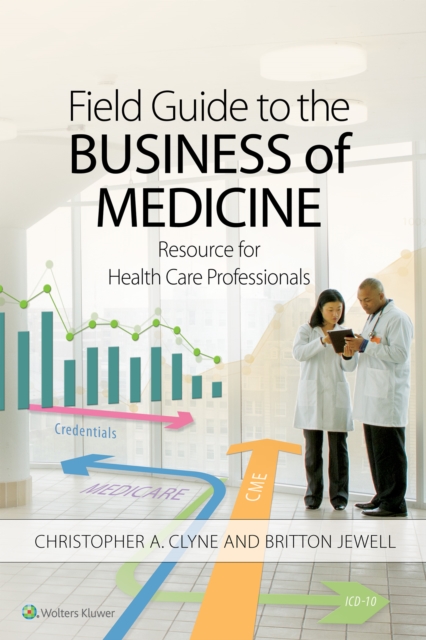
Field Guide to the Business of Medicine
Publisher's Note: Products purchased from 3rd Party sellers are not guaranteed by the Publisher for quality, authenticity, or access to any online entitlements included with the product.Today's health care is much more than Medicine. Health care professionals and administrators must be familiar with the non-medical aspects of health care if they are to be successful. From the basics of government and private insurance, to reimbursement methods, payment models, practice paradigms and new industry trends this indispensable guide provides much-needed information for medical students and residents, emerging health care professionals, and anyone who wants a clear perspective on the requisites, protocols, and regulations of today's health care system.
eBook


Effective Medical Waste Management for Sustainable Green Healthcare
This study examines the importance of medical waste management activities for developing a sustainable green healthcare environment. This study applied a multiple methodological approach as follows. A thorough review of the literature was performed to delineate the factors that have been explored for reducing medical waste; hospital staff who handle medical waste were surveyed to obtain their opinions on these factors; the analytic hierarchy process (AHP) was applied to determine the priorities among the identified key factors; and experts’ opinions were consulted to assess the actual applicability of the results derived by the AHP. The study identified the following factors as the most important: medical waste management (26.6%), operational management issues (21.7%), training for medical waste management procedures (17.8%), raising awareness (17.5%), and environmental assessment (16.4%). This study analyzed the contributing factors to the generation of medical waste based on the data collected from medical staff and the AHP for developing a sustainable green healthcare environment. The study results provide theoretical and practical implications for implementing effective medical waste management toward a sustainable green healthcare environment.
Journal Article