
Catalogue Search | MBRL


Are you sure you want to remove the book from the shelf?

{{itemTitle}}
5,729
result(s) for
"medieval life"
Sort by:


Visual Translation
Visual Translation breaks new ground in the study of French manuscripts, contributing to the fields of French humanism, textual translation, and the reception of the classical tradition in the first half of the fifteenth century.
While the prominence and quality of illustrations in French manuscripts have attracted attention, their images have rarely been studied systematically as components of humanist translation. Anne D. Hedeman fills this gap by studying the humanist book production closely supervised by Laurent de Premierfait and Jean Lebègue for courtly Parisian audiences in the first half of the fifteenth century.
Hedeman explores how visual translation works in a series of unusually densely illuminated manuscripts associated with Laurent and Lebègue circa 1404–54. These manuscripts cover both Latin texts, such as Statius's Thebiad and Achilleid, Terence's Comedies, and Sallust's Conspiracy of Cataline and Jurguthine War, and French translations of Cicero's De senectute, Boccaccio's De casibus virorum illustrium and Decameron, and Bruni's De bello Punico primo. Illuminations constitute a significant part of these manuscripts' textual apparatus, which helped shape access to and interpretation of the texts for a French audience. Hedeman considers them as a group and reveals Laurent's and Lebègue's growing understanding of visual rhetoric and its ability to visually translate texts originating in a culture removed in time or geography for medieval readers who sought to understand them. The book discusses what happens when the visual cycles so carefully devised in collaboration with libraries and artists by Laurent and Lebègue escaped their control in a process of normalization. With over 180 color images, this major reference book will appeal to students and scholars of French, comparative literature, art history, history of the book, and translation studies.
eBook

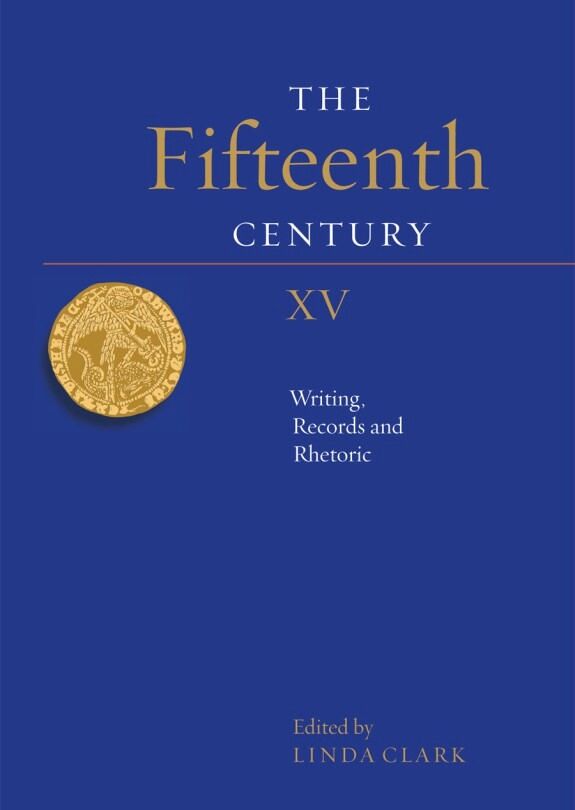
The Fifteenth Century XV
The focus of this volume may be summed up as \"The Word\". Its essays examine the contents and provenance of manuscripts which were written for polemical purposes, treasured by the duchess of York, and through the new medium of print introduced to a wider public topics of historical interest and illustrations of the geography of the known world. The essays here also consider official records of forest administration, expressed in arcane language; documents preserved in the papal curia which reveal significant facts about the lives of Scottish bishops; archives produced by the English chancery noting the movements of a royal councillor; and letters, poems and songs exposing the political strategy of a German prince. Nor is the spoken word neglected, whether employed in speeches delivered at the start of parliaments, using as their themes scriptures and classical texts to set a political agenda; or as sermons to open-air congregations gathered at St. Paul's Cross, where the oratory of Bishop Alcock stirred his listeners in different ways. Contributors: Michael Bennett, Julia Boffey, Paul Cavill, J.M. Grussenmeyer, Tom Johnson, J.L. Laynesmith, John Milner, Ben Pope, Dan E. Seward, Sarah Thomas
eBook

The Legacy of Apollo
Apollo, the classical god of poetry, truth, light, and the healing arts, held a special fascination for poets and scholars in the late-medieval period. As the English vernacular gained literary prestige in the fourteenth and fifteenth centuries, poets harnessed the precedent and authority of classical antiquity in order to grant themselves historical legitimacy. Uniquely positioned at the junctures of Latin and vernacular, pagan and Christian, human and divine, the figure of Apollo emerged as an impetus for change in the period's creative re-conceptualization of artistic identity and poetic inheritance.
In The Legacy of Apollo , Jamie C. Fumo presents a series of connected readings of classical and medieval texts that shape the god's pre-modern legacy. By examining Ovid's Metamorphoses and its commentaries, Virgil's Aeneid , mythographic manuals and iconography, popular sermons, saints' lives, and a range of Chaucerian works, Fumo innovatively brings the fruits of current scholarly practices of intertextuality to a body of medieval subject matter. This wide-ranging work traces the resonances of Apollo up to the cusp of the early modern period and reveals the medieval development of a newly self-conscious poetics of inspiration in England.
eBook
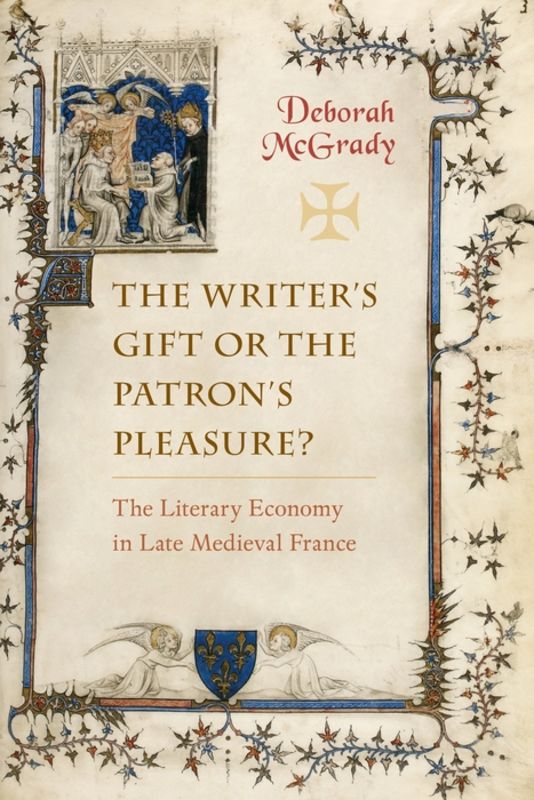
The Writer's Gift or the Patron's Pleasure?
The Writer's Gift or the Patron's Pleasure? argues that the French King Charles V's unprecedented enthusiasm for the literary commission triggered a crucial, multi-generational debate within the book community about how a work's status as solicited or unsolicited affected its value and purpose.
eBook

Macaronic sermons
Siegfried Wenzel's groundbreaking study seeks to describe and analyze the linguistically mixed, or macaronic, sermons in late fourteenth-century England. Not only are these works of considerable religious interest, they provide extensive information on their literary, linguistic, and cultural milieux. Macaronic Sermons begins by offering a typology of such works: those in which English words offer glosses, or offer structural functions, or offer neither of the two but yet are syntactically integrated. This last group is then examined in detail: reasons are given for this usage and for its origins, based on the realities of fourteenth-century England. Siefriend Wenzel draws valuable conclusions about the linguistic status quo of the era, together with the extent of education, the audiences' expectations, and the ways in which the authors' minds worked. Obviously of interest to scholars and students of early English literature, Macaronic Sermons also contains much valuable information for specialists in language development or oral theory, and for those interested in multicultural societies.
eBook