
Catalogue Search | MBRL


Are you sure you want to remove the book from the shelf?

{{itemTitle}}
9,461
result(s) for
"microcontrollers"
Sort by:

Programming PIC microcontrollers with XC8
Learn how to use microcontrollers without all the frills and math. This book uses a practical approach to show you how to develop embedded systems with 8 bit PIC microcontrollers using the XC8 compiler. It's your complete guide to understanding modern PIC microcontrollers. Are you tired of copying and pasting code into your embedded projects? Do you want to write your own code from scratch for microcontrollers and understand what your code is doing? Do you want to move beyond the Arduino? Then Programming PIC Microcontrollers with XC8 is for you! Written for those who want more than an Arduino, but less than the more complex microcontrollers on the market, PIC microcontrollers are the next logical step in your journey. You'll also see the advantage that MPLAB X offers by running on Windows, MAC and Linux environments. You don't need to be a command line expert to work with PIC microcontrollers, so you can focus less on setting up your environment and more on your application.
Book

Programming with STM32 : getting started with the Nucleo Board and C/C++
Get up and running programming the STM32 line of microcontrollers from STMicroelectronics using the hands-on information contained in this easy-to-follow guide. Written by an experienced electronics hobbyist and author, Programming with STM32: Getting Started with the Nucleo Board and C/C++ features start-to-finish projects that clearly demonstrate each technique. Discover how to set up a stable development toolchain, write custom programs, download your programs to the development board, and execute them. You will even learn how to work with external servos and LED displays!
Book

Evaluation of Assembler and C Programming Languages on PIC16F877 Microcontroller
The programming of microcontrollers is essential for their correct operation, high computational efficiency, low-power solutions, and it is also key to get the most out of their capabilities with the hardware features that each of the microcontroller families has. There are different programming languages that can be used in microcontrollers, in this work we will focus on C and Assembler. C is one of the most widely used due to its efficiency and its ability to control the hardware directly. Assembly is a low-level language that allows more control over the instructions executed in the microcontroller, two songs have been implemented in assembler and C languages and the resources used for their execution on a Microchip PIC16F877 have been analyzed. The research results allow the developer to obtain results for a selection of the optimal hardware platform as well as the programming language according to the required memory utilization. Coding performed in MPLAB software with the asm and XC8 compilers, indicate that the C-code programs cover a larger amount of memory close to 4 times greater or higher.
Journal Article


Microcontroller Unit-Based Wireless Sensor Network Nodes: A Review
In this paper, a detailed review of microcontroller unit (MCU)-based wireless sensor node platforms from recently published research articles is presented. Despite numerous research efforts in the fast-growing field of wireless sensor devices, energy consumption remains a challenge that limits the lifetime of wireless sensor networks (WSNs). The Internet-of-Things (IoT) technology utilizes WSNs for providing an efficient sensing and communication infrastructure. Thus, a comparison of the existing wireless sensor nodes is crucial. Of particular interest are the advances in the recent MCU-based wireless sensor node platforms, which have become diverse and fairly advanced in relation to the currently available commercial WSN platforms. The recent wireless sensor nodes are compared with commercially available motes. The commercially available motes are selected based on a number of criteria including popularity, published results, interesting characteristics and features. Of particular interest is to understand the trajectory of development of these devices and the technologies so as to inform the research and application directions. The comparison is mainly based on processing and memory specifications, communication capabilities, power supply and consumption, sensor support, potential applications, node programming and hardware security. This paper attempts to provide a clear picture of the progress being made towards the design of autonomous wireless sensor nodes to avoid redundancy in research by industry and academia. This paper is expected to assist developers of wireless sensor nodes to produce improved designs that outperform the existing motes. Besides, this paper will guide researchers and potential users to easily make the best choice of a mote that best suits their specific application scenarios. A discussion on the wireless sensor node platforms is provided, and challenges and future research directions are also outlined.
Journal Article

Programming the BBC micro:bit : getting started with MicroPython
This easy-to-follow guide shows, step-by-step, how to quickly get started with programming and creating fun applications on your micro:bit. Written in the straightforward style that Dr. Simon Monk is famous for, Programming the BBC micro:bit: Getting Started with MicroPython begins with basic concepts and gradually progresses to more advanced techniques. You will discover how to use the micro:bit's built-in hardware, use the LED display, accept input from sensors, attach external electronics, and handle wireless communication.
Book
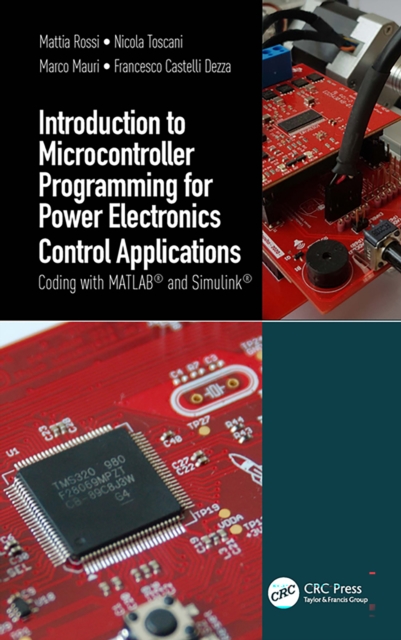
Introduction to Microcontroller Programming for Power Electronics Control Applications
Microcontroller programming is not a trivial task. Indeed, it is necessary to set correctly the required peripherals by using programming languages like C, C++ or directly machine code. Nevertheless, MathWorks® developed a model-based workflow linked with an automatic code generation tool able to translate Simulink® schemes into an executable file. This rapid prototyping procedure can be applied to many microcontroller boards available on the market. Among them, this introductory book focuses on the LaunchPadTM F28069M board from Texas InstrumentsTM to provide the reader some basic programming strategies specified to the field of power electronics-based control applications. Starting from simple examples such as turning on/off on-board leds or how to manage a Pulse-Width-Modulation peripheral, the reader is guided through the settings of all these dedicated Simulink® blocks enabled for code translation. Then, the book proposes several control problems in terms of power management of RL and RLC loads (e.g. DC-DC converters) and closed-loop control of DC motors. The control schemes are investigated as well as the working principles of power converter topologies needed to drive the systems under investigation. Finally, a couple of exercises are proposed to check the reader's understanding while presenting a processor-in-the loop (PIL) technique to emulate the dynamics of complex systems.
Thus, this book is oriented to graduate students of electrical and automation and control engineering pursuing a curriculum in power electronics and drives, as well as to engineers and researchers who want to deepen their knowledge and acquire new competences in the design and implementations of control schemes aimed to the aforementioned application fields. Indeed, it is assumed that the reader is well acquainted with fundamentals of electrical machines and power electronics, as well as with continuous-time modeling strategies and linear control techniques. In addition, familiarity with sampled-data, discrete-time system analysis and embedded design topics is a plus.
However, even if these competences are helpful, they are not essential, since this book provides some basic knowledge even to whom is approaching these topics for the first time. Key concepts are developed from scratches, including a brief review of control theory and modeling strategies for power electronic-based systems.
eBook

Remote IoT Education Laboratory for Microcontrollers Based on the STM32 Chips
The article describes the implementation of IoT technology in the teaching of microprocessor technology. The method presented in the article combines the reality and virtualization of the microprocessor technology laboratory. A created IoT monitoring device monitors the students’ microcontroller pins and sends the data to the server to which the teacher is connected via the control application. The teacher has the opportunity to monitor the development of tasks and student code of the program, where the functionality of these tasks can be verified. Thanks to the IoT remote laboratory implementation, students’ tasks during the lesson were improved. As many as 53% (n = 8) of those students who could improve their results achieved an improvement of one or up to two tasks during class. Before the IoT remote laboratory application, up to 30% (n = 6) of students could not solve any task and only 25% (n = 5) solved two tasks (full number of tasks) during the class. Before implementation, 45% (n = 9) solved one problem. After applying the IoT remote laboratory, these numbers increased significantly and up to 50% (n = 10) of students solved the full number of tasks. In contrast, only 10% (n = 2) of students did not solve any task.
Journal Article