
Catalogue Search | MBRL


Are you sure you want to remove the book from the shelf?

{{itemTitle}}
39,710
result(s) for
"microelectronics"
Sort by:


Modeling and simulation for microelectronic packaging assembly
\"This book is primarily concerned with studies of electronic packaging in assembly manufacture processes and failure mechanisms in assembly manufacture processes and tests through modeling and simulation\"--
eBook

The future of computing beyond Moore’s Law
Moore’s Law is a techno-economic model that has enabled the information technology industry to double the performance and functionality of digital electronics roughly every 2 years within a fixed cost, power and area. Advances in silicon lithography have enabled this exponential miniaturization of electronics, but, as transistors reach atomic scale and fabrication costs continue to rise, the classical technological driver that has underpinned Moore’s Law for 50 years is failing and is anticipated to flatten by 2025. This article provides an updated view of what a post-exascale system will look like and the challenges ahead, based on our most recent understanding of technology roadmaps. It also discusses the tapering of historical improvements, and how it affects options available to continue scaling of successors to the first exascale machine. Lastly, this article covers the many different opportunities and strategies available to continue computing performance improvements in the absence of historical technology drivers. This article is part of a discussion meeting issue ‘Numerical algorithms for high-performance computational science’.
Journal Article

Planar Slow-Wave Structures
This book comprehensively explores the design and application of planar slow-wave structures for millimeter-wave travelling-wave tubes, focusing on enhancing their efficiency and reducing costs. TWTs based on planar SWSs are promising for 5G/6G communications, satellite constellations, automotive radar, and security systems.
eBook
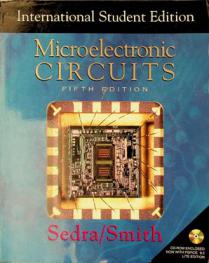
Microelectronic circuits
CD-ROM contains: free student version of PSpice 9.2 Lite Edition (SPICE simulator) and new industry-based design examples.
Book

Robust spin crossover and memristance across a single molecule
A nanoscale molecular switch can be used to store information in a single molecule. Although the switching process can be detected electrically in the form of a change in the molecule′s conductance, adding spin functionality to molecular switches is a key concept for realizing molecular spintronic devices. Here we show that iron-based spin-crossover molecules can be individually and reproducibly switched between a combined high-spin, high-conduction state and a low-spin, low-conduction state, provided the individual molecule is decoupled from a metallic substrate by a thin insulating layer. These results represent a step to achieving combined spin and conduction switching functionality on the level of individual molecules.
Switches made up of single molecules form the basis for the concept of molecular electronics. Miyamachi
et al.
demonstrate that an iron-based spin crossover molecule can be switched between different spin states, provided it is decoupled from a metallic substrate by a thin insulating layer.
Journal Article

Design and Realization of a High-Q Grounded Tunable Active Inductor for 5G NR (FR1) Transceiver Front-End Applications
This paper presents a wide tuning range, low-power tunable active inductor (AI) designed and fabricated using 130 nm CMOS technology with six metal layers. To achieve high performance with a relatively small silicon area and low power consumption, the AI structure is carefully designed and optimized using a cascode stage, a feedback resistor, and multi-gate finger transistors. In the proposed circuit topology, inductance tuning is realized by adjusting both the bias current and the feedback resistor. The performance of the circuit is evaluated in terms of tuning range, quality factor, power consumption, and chip area.The functionality of the fabricated device is experimentally validated, and the fundamental characteristics of the active inductor are measured over a wide frequency range using a Cascade GSG probe, with results compared to simulations. Experimental measurements show that, under a 1 V supply, the AI achieves a self-resonant frequency (SRF) of 3.961 GHz and a quality factor (Q) exceeding 1586 at 2.383 GHz. The inductance is tunable between 6.7 nH and 84.4 nH, with a total power consumption of approximately 2 mW. The total active area, including pads, is 345 × 400 µm².
Journal Article