
Catalogue Search | MBRL


Are you sure you want to remove the book from the shelf?

{{itemTitle}}
437
result(s) for
"migration and border controls"
Sort by:

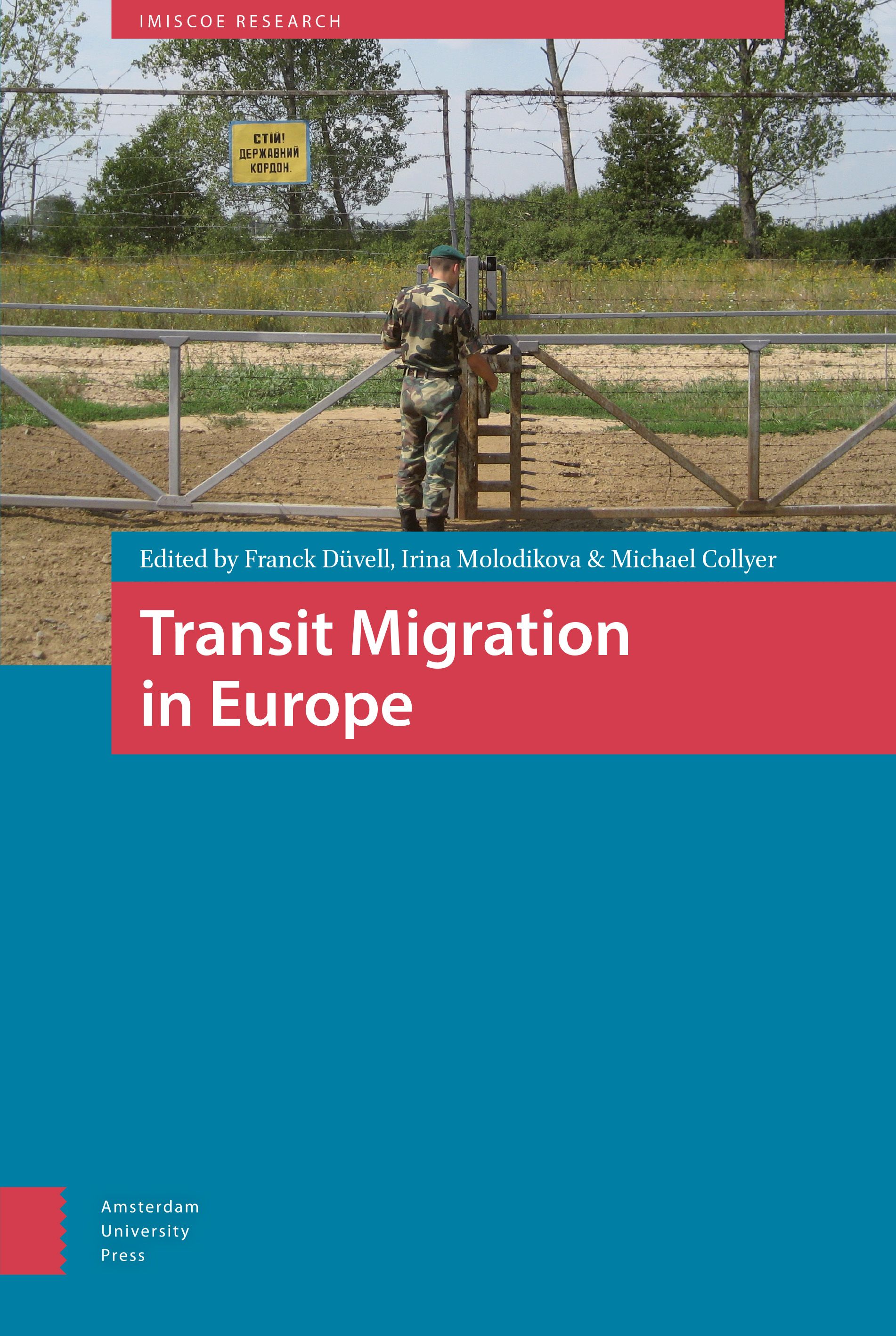
Transit Migration in Europe
Transit migration, comprising mixed flows of refugees and labour, is widely considered a concern and even security threat. However, the concept is as vague and blurred as it is politicised. This volume offers evidence-based, comprehensive coverage of the entire belt of countries in the neighbourhood of the EU, ranging from Russia to Morocco. Transit migration is critically analyzed from the perspective of sending, transit and receiving countries, offering new insights into refugee and irregular migration flows, transnational migration networks and overlapping migration systems.
eBook

Transit Migration in Europe
Transit migration is a term that is used to describe mixed flows of different types of temporary migrants, including refugees and labor migrants. In the popular press, it is often confused with illegal or irregular migration and carries associations with human smuggling and organized crime. This volume addresses that confusion, and the uncertainty of terminology and analysis that underlies it, offering an evidence-based, comprehensive approach to defining and understanding transit migration in Europe.
eBook

The Impossible Border
Between 1914 and 1922, millions of Europeans left their homes as a result of war, postwar settlements, and revolution. After 1918, the immense movement of people across Germany's eastern border posed a sharp challenge to the new Weimar Republic. Ethnic Germans flooded over the border from the new Polish state, Russian émigrés poured into the German capital, and East European Jews sought protection in Germany from the upheaval in their homelands. Nor was the movement in one direction only: German Freikorps sought to found a soldiers' colony in Latvia, and a group of German socialists planned to settle in a Soviet factory town.
In The Impossible Border, Annemarie H. Sammartino explores these waves of migration and their consequences for Germany. Migration became a flashpoint for such controversies as the relative importance of ethnic and cultural belonging, the interaction of nationalism and political ideologies, and whether or not Germany could serve as a place of refuge for those seeking asylum. Sammartino shows the significance of migration for understanding the difficulties confronting the Weimar Republic and the growing appeal of political extremism.
Sammartino demonstrates that the moderation of the state in confronting migration was not merely by default, but also by design. However, the ability of a republican nation-state to control its borders became a barometer for its overall success or failure. Meanwhile, debates about migration were a forum for political extremists to develop increasingly radical understandings of the relationship between the state, its citizens, and its frontiers. The widespread conviction that the democratic republic could not control its \"impossible\" Eastern borders fostered the ideologies of those on the radical right who sought to resolve the issue by force and for all time.
eBook


Labor Migration, Trafficking and Border Controls
This chapter contains sections titled:
Labor Migration, People Smuggling and Human Trafficking in the Riau Islands
Using the Antitrafficking Framework to Deal with Labor Migration
Conclusion
References
Book Chapter

Migra!
This is the untold history of the United States Border Patrol from its beginnings in 1924 as a small peripheral outfit to its emergence as a large professional police force. To tell this story, Kelly Lytle Hernández dug through a gold mine of lost and unseen records stored in garages, closets, an abandoned factory, and in U.S. and Mexican archives. Focusing on the daily challenges of policing the borderlands and bringing to light unexpected partners and forgotten dynamics,Migra!reveals how the U.S. Border Patrol translated the mandate for comprehensive migration control into a project of policing Mexicans in the U.S.-Mexico borderlands.
eBook

GOVERNING THROUGH MIGRATION CONTROL: Security and Citizenship in Britain
Expanding mechanisms of border control increasingly depend on the criminalization of non-citizens. While some criminology scholarship might suggest such measures announce an increasing governance of migration 'through crime', we argue that it is not simply a case of punitive crime control strategies leaching into migration policies. Not only are foreigners in a far more vulnerable position to the British citizen, but the restrictions they face play important constitutive roles in newly invigorated discourses of citizenship and nationalism. In this article, we suggest that criminologists must move on from studies that emphasize control and criminalization to consider more broadly the implications of basing a politics of national identity that aspires to 'solidarity' and shared values on the forcible exclusion of growing numbers of people.
Journal Article

Changes in the Transnational Family Structures of Mexican Farm Workers in the Era of Border Militarization
Historically, undocumented Mexican farm workers migrated circularly, leaving family behind in Mexico on short trips to the United States. Scholars have argued that border militarization has disrupted circular migration as the costs of crossing the border lead to longer stays, increased settlement, and changing transnational family practices. Yet, no study has explored changes in the transnational family structures of Mexico-U.S. migrants that span the era of border militarization. Using data from the National Agricultural Workers Survey, we document a dramatic shift away from transnational family life (as measured by location of residence of dependent children) among undocumented Mexican farm workers and a less dramatic shift among documented Mexican farm workers in the United States between 1993 and 2012. These trends are not explained by changes in the sociodemographic characteristics of farm workers or by changing demographic conditions or rising violence in Mexico. One-half of the trend can be accounted for by lengthened duration of stay and increased connections to the United States among the undocumented, but none of the trend is explained by these measures of settlement among the documented, suggesting that some Mexican farm workers adopt new family migration strategies at first migration. Increases in border control are associated with lower likelihood that children reside in Mexico—a rinding that holds up to instrumental variable techniques. Our findings confirm the argument that U.S. border militarization—a policy designed to deter undocumented migration—is instead disrupting transnational family life between Mexico and the United States and, in doing so, is creating a permanent population of undocumented migrants and their children in the United States.
Journal Article
POLICING HUMANITARIAN BORDERLANDS: FRONTEX, HUMAN RIGHTS AND THE PRECARIOUSNESS OF LIFE
The article critically examines the peculiar co-existence of the securitization of the border and the growing presence and prominence of human rights and humanitarian ideals in border policing practices. Concretely, it focuses on Frontex, the agency tasked with management of EU's external borders. Based on interviews with Frontex officials and border guard officers, and on the analysis of relevant policy documents and official reports, the article explores what may come across as a discrepancy between the organization's activities and its public self presentation. The objective is to provide an insight into the complex and volatile relationship between policing and human rights, which marks contemporary migration control as well as mundane forms of professional and personal self-understanding
Journal Article