
Catalogue Search | MBRL


Are you sure you want to remove the book from the shelf?

{{itemTitle}}
77,778
result(s) for
"military conflict"
Sort by:


The Marines, Counterinsurgency, and Strategic Culture
The United States Marine Corps has a unique culture that ensures comradery, exacting standards, and readiness to be the first to every fight. Yet even in a group that is known for innovation, culture can push leaders to fall back on ingrained preferences. Jeannie L. Johnson takes a sympathetic but critical look at the Marine Corps's long experience with counterinsurgency warfare. Which counterinsurgency lessons have been learned and retained for next time and which have been abandoned to history is a story of battlefield trial and error--but also a story of cultural collisions.
The book begins with a fascinating and penetrating look inside the culture of the Marine Corps through research in primary sources, including Marine oral histories, and interviews with Marines. Johnson explores what makes this branch of the military distinct: their identity, norms, values, and perceptual lens. She then traces the history of the Marines' counterinsurgency experience from the expeditionary missions of the early twentieth century, through the Vietnam War, and finally to the Iraq War. Her findings break new ground in strategic culture by introducing a methodology that was pioneered in the intelligence community to forecast behavior. Johnson shows that even a service as self-aware and dedicated to innovation as the Marine Corps is constrained in the lessons-learned process by its own internal predispositions, by the wider US military culture, and by national preferences. Her findings challenge the conclusions of previous counterinsurgency scholarship that ignores culture. This highly readable book reminds us of Sun Tzu's wisdom that to be successful in war, it is important to know thyself as well as the enemy. This is a must-read for anyone interested in the Marines Corps, counterinsurgency warfare, military innovation, or strategic culture.
eBook


Estimation of the Losses of the Ukraine's Financial Potential from Military Conflict
Estimation of the loss of financial potential of the state from military conflict is the basis for the development and implementation of state policies to combat the effects of hostilities and strengthen peace. The purpose of the article is to systematize methodological approaches to assessing the financial potential of the state and to substantiate the methods for determining its losses from military conflict for Ukraine in 2014-2017. Theoretical and methodological basis for the formation of the financial potential of the state on the basis of the systematic approach were substantiated. It allowed to clarify the structure of state’s financial potential and to reveal the influence of the interaction of its components and environmental factors on the development of financial potential of the state. It was found that the main methodological approaches to the estimation of the financial potential of the state (additive, multiplicative, secure, based on the analysis of macroeconomic indicators) do not allow to comprehensively assess the level of formation and use of the financial potential, taking into account its structure and resilience to financial threats. On the basis of the additive approach, a quantitative estimation of the volume of financial potential of Ukraine in 2008-2017 was conducted and the stability of the relationship between the financial potentials of authorities, economic entities and households, as well as between the total volume of financial potential of the state and GDP was revealed. It was determined that the financial potential of Ukraine suffered a significant impact of the military conflict, and in order to reach the level of 2013, it should grow annually by an average of 7.45 % during 2018-2022. To reach this level it is necessary to carry out: 1) expanding the powers of local governments in the implementation of local borrowing to stimulate the development of regions; 2) the creation of tax incentives for reinvesting the income of business entities; 3) activation of lending by financial institutions of the private sector through overcoming information asymmetries in the market and ensuring the protection of the rights of borrowers and lenders.
Journal Article


Ethics Education for Irregular Warfare
Following on from Ethics Education in the Military (eds. Paul Robinson, Nigel de Lee and Don Carrick: Ashgate 2008) which surveyed and critically analyzed the existing theory and practice of educating soldiers, sailors and airmen in the ethics of 'old fashioned' warfaring, this volume considers the extent to which such theory and practice is adequate to prepare members of the military to meet the more complex ethical challenges faced when engaging in irregular warfare in the 21st century. In recent years, events in Iraq and Afghanistan have highlighted the requirement that Western military personnel, drawn from the armed forces of many different countries, should behave in an ethical manner at all times. The contributors to this volume come from various disciplinary backgrounds, several are serving or former military officers and most are actively engaged in ethics education. The volume advances theoretical understanding of different approaches to ethics education and provides practical conclusions.
eBook

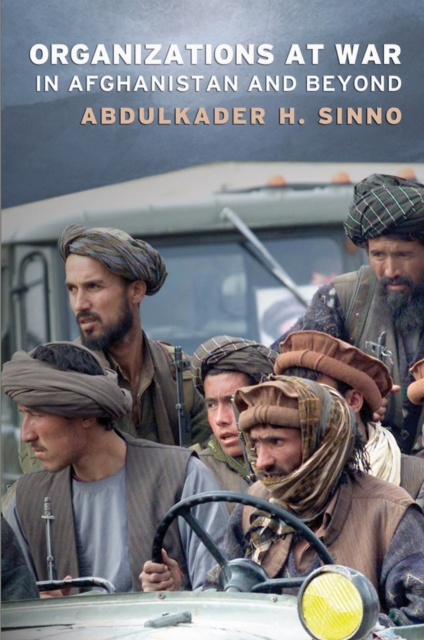
Organizations at War in Afghanistan and Beyond
While popular accounts of warfare, particularly of nontraditional conflicts such as guerrilla wars and insurgencies, favor the roles of leaders or ideology, social-scientific analyses of these wars focus on aggregate categories such as ethnic groups, religious affiliations, socioeconomic classes, or civilizations. Challenging these constructions, Abdulkader H. Sinno closely examines the fortunes of the various factions in Afghanistan, including the mujahideen and the Taliban, that have been fighting each other and foreign armies since the 1979 Soviet invasion.
Focusing on the organization of the combatants, Sinno offers a new understanding of the course and outcome of such conflicts. Employing a wide range of sources, including his own fieldwork in Afghanistan and statistical data on conflicts across the region, Sinno contends that in Afghanistan, the groups that have outperformed and outlasted their opponents have done so because of their successful organization. Each organization's ability to mobilize effectively, execute strategy, coordinate efforts, manage disunity, and process information depends on how well its structure matches its ability to keep its rivals at bay. Centralized organizations, Sinno finds, are generally more effective than noncentralized ones, but noncentralized ones are more resilient absent a safe haven.
Sinno's organizational theory explains otherwise puzzling behavior found in group conflicts: the longevity of unpopular regimes, the demise of popular movements, and efforts of those who share a common cause to undermine their ideological or ethnic kin. The author argues that the organizational theory applies not only to Afghanistan-where he doubts the effectiveness of American state-building efforts-but also to other ethnic, revolutionary, independence, and secessionist conflicts in North Africa, the Middle East, and beyond.
eBook

When the doves disappeared : a novel
\"1941. In Communist-ruled, war-ravaged Estonia, two men have deserted the Red Army--Roland, a fiercely principled freedom fighter, and his slippery cousin Edgar. When the Germans arrive, Roland goes into hiding; Edgar abandons his unhappy wife, Juudit, and takes on a new identity as a loyal supporter of the Nazi regime. 1963. Estonia is again under Communist control, independence even further out of reach behind the Iron Curtain. Edgar is now a Soviet apparatchik, desperate to hide the secrets of his past life and stay close to those in power. But his fate remains entangled with Roland's, and with Juudit, who may hold the key to uncovering the truth\"-- Provided by publisher.
Book

Killing Two Birds with One Stone? Examining the Diffusion Effect of Militant Leadership Decapitation
This note analyzes the effectiveness of leadership targeting in deterring militant operations. It broadens how we think about their deterrence effects by including nontargeted groups. I argue that leadership decapitation of one group signals to other would-be aggressors a state’s capability and determination to deploy such actions against them. Nontargeted groups are thus forced to recalculate the cost-benefit balance of conducting further attacks, which leads to indirect deterrence. Using the Global Terrorism Database from 1970 to 2008 and Price’s (2012) leadership decapitation data, targeted capturing is found to deter operations by nontargeted groups, and this effect is magnified when those militants form an alliance. While targeted killing is frequently executed through drone strikes, incurring lower costs and risk for the state, the findings indicate that killing a leader does not reduce militant operations. Policymakers should recognize the unintended effect deriving from one leadership decapitation and transform it into an intended outcome to maximize their expected payoffs.
Journal Article