
Catalogue Search | MBRL


Are you sure you want to remove the book from the shelf?

{{itemTitle}}
11,853
result(s) for
"minority conflicts"
Sort by:

Anti-Conversion Laws and the Governance of Belonging Under Hindu Nationalism
This study analyzes how state-level anti-conversion laws in India—ostensibly enacted to protect the religious freedom of vulnerable communities—can structurally generate minority–minority conflicts within Adivasi (tribal) populations. Similar patterns have surfaced across multiple regions. This study examines cases from Chhattisgarh, Odisha, and Jharkhand as illustrative modalities of this broader pattern: spectacular violence, everyday exclusion, and legal weaponization. The analysis identifies three mechanisms that produce these conflicts. Firstly, the “Hindu-plus” classificatory framework incorporates diverse indigenous traditions into an expanded Hindu category while positioning non-Indic religions as external. Secondly, anti-conversion laws frame religious change as a threat to indigenous cultural identity, and the state delegates enforcement to village councils, customary authorities, and judicial–administrative institutions. Thirdly, the politics of belonging translates these classificatory and enforcement practices into membership boundaries that operate through territorial control and cultural claims to authenticity, producing inclusion and exclusion. The findings suggest that anti-conversion laws operate as a political technology of protection, generating minority–minority conflicts while channeling disputes over rights into nationalist boundary-making over minority identity and belonging.
Journal Article

Transnational Cultural Flow from Home
Transnational Cultural Flow from Home examines New York Korean immigrants’ collective efforts to preserve their cultural traditions and cultural practices and their efforts to transmit and promote them to New Yorkers by focusing on the Korean cultural elements such as language, foods, cultural festivals, and traditional and contemporary performing arts.
eBook

Rogues and Heroes: Finding Value in Dissent
This chapter contains sections titled:
Minorities as Sources of Influence
The Reaction: Dissenters are still ‘Rogues’ and ‘Obstacles’
The Shift to Cognition: Attitude Change
The Shift to Cognition: Quality of Performance and Decision Making
Application to Social Issues Part I: Juries and ‘Truth’
Application to Social Issues Part II: Innovation in Organisations
Acknowledgements
References
Book Chapter

Winning by Process
Winning by Process asks why
the peace process stalled in the decade from 2011 to 2021 despite a
liberalizing regime, a national ceasefire agreement, and a
multilateral peace dialogue between the state and ethnic
minorities.
Winning by Process argues that stalled conflicts are
more than pauses or stalemates. \"Winning by process,\" as opposed to
winning by war or agreement, represents the state's ability to gain
advantage by manipulating the rules of negotiation, bargaining
process, and sites of power and resources. In Myanmar, five such
strategies allowed the state to gain through process: locking in,
sequencing, layering, outflanking, and outgunning. The Myanmar case
shows how process can shift the balance of power in negotiations
intended to bring an end to civil war. During the last decade, the
Myanmar state and military controlled the process, neutralized
ethnic minority groups, and continued to impose their vision of a
centralized state even as they appeared to support federalism.
eBook
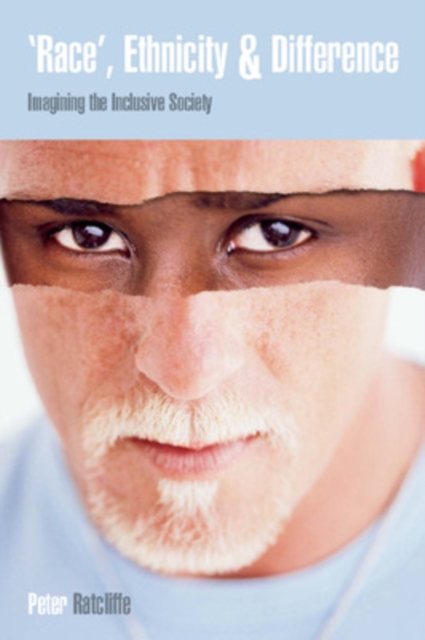
Race, ethnicity and difference : imagining the inclusive society
\"This excellent book . provides an extremely readable account which deserves to be widely read by a more general audience. In short, the author, in making sense of current imaginings, presents a mix of theoretical and empirical debates, as he challenges exclusionary forces. The book's principal aim is to take a critical look at the nature and sources of inequalities in contemporary societies and examine the prospects for an 'inclusive society'. This aim captures an important strength of the text, as the analysis attempts to move beyond simple description and provide explanations and possible solutions to enable policy and practice to tackle disadvantage and discrimination.\" Social Policy This book addresses many of the key problems facing contemporary societies. The social significance attached to various forms of difference, most notably 'race' and ethnicity, has been seen as resulting in the exclusion of some groups from their full rights as citizens. This, in turn, is viewed as presenting a series of barriers to the creation of more inclusive societies. Peter Ratcliffe explores these arguments in a variety of substantive contexts, for example immigration and the treatment of refugees and asylum seekers; housing and segregation; education; labour markets; and policing and urban conflict. Particular emphasis is placed on the role of social agency, on the part of minorities, in confronting exclusionary forces.This lively and highly readable account deals with difficult theoretical, ethical and policy issues without resort to unnecessary jargon. It is essential reading for undergraduate students in sociology, social policy, urban geography, law and political science, and is also of value to the general reader and researcher.
eBook

Religion, Law, and Violence
This chapter contains sections titled:
Defining Religion, Violence, and Law
Religion as a Legal Tool or Weapon of the State
Religion as a Threat to the State
The Tangled Web and the Limits of Control
The International Dimension
Summary
References
Book Chapter
Human Rights, Culture, and the Rule of Law
This new book examines the relationship between culture and respect for human rights. It departs from the oft-made assumption that culture is closely linked to ideas about community. Instead, it reveals culture as a quality possessed by the individual with a serious impact on her ability to enjoy the rights and freedoms as recognised in international human rights law in meaningful and effective ways. This understanding redirects attention towards a range of issues that have long been marginalised, but which warrant a central place in human rights research and on the international human rights agenda. Special attention is given to the circumstances induced by cultural differences between people and the laws by which they are expected to live. The circumstances are created by differing tools, know-how and skills (cultural equipment), diverse settlements on matters that are ultimately indifferent from the standpoint of cosmopolitan moral law (adiaphora), and conflicts having their source in conflicting doctrinesethical, religious and philosophicaladdressing deep questions about the ultimate purpose of human life (comprehensive doctrines). Each of the circumstances shifts the focus with the aim of securing effective and adequate protection of individual freedom, as societies become increasingly diversified in cultural terms and issues arise of access to laws and public institutions, exemption from legal obligations for reasons of conscience, fair resolution of conflicts having their source in differing ethical, religious and philosophical outlooks, and, excuse for breach of law in case of involuntary ignorance.
eBook

Fragmented Fatherland
1945 to 1980 marks an extensive period of mass migration of students, refugees, ex-soldiers, and workers from an extraordinarily wide range of countries to West Germany. Turkish, Kurdish, and Italian groups have been studied extensively, and while this book uses these groups as points of comparison, it focuses on ethnic communities of varying social structures—from Spain, Iran, Ukraine, Greece, Croatia, and Algeria—and examines the interaction between immigrant networks and West German state institutions as well as the ways in which patterns of cooperation and conflict differ. This study demonstrates how the social consequences of mass immigration became intertwined with the ideological battles of Cold War Germany and how the political life and popular movements within these immigrant communities played a crucial role in shaping West German society.
eBook

Ethnicity and Conflict: An Empirical Study
We examine empirically the impact of ethnic divisions on conflict, by using a specification based on Esteban and Ray (2011). That theory links conflict intensity to three indices of ethnic distribution: polarization, fractionalization, and the Gini-Greenberg index. The empirical analysis verifies that these distributional measures are significant correlates of conflict. These effects persist as we introduce countryspecific measures of group choesion and of the importance of public goods, and combine them with the distributional measures exactly as described by the theory.
Journal Article

Horizontal Inequalities and Ethnonationalist Civil War: A Global Comparison
Contemporary research on civil war has largely dismissed the role of political and economic grievances, focusing instead on opportunities for conflict. However, these strong claims rest on questionable theoretical and empirical grounds. Whereas scholars have examined primarily the relationship between individual inequality and conflict, we argue that horizontal inequalities between politically relevant ethnic groups and states at large can promote ethnonationalist conflict. Extending the empirical scope to the entire world, this article introduces a new spatial method that combines our newly geocoded data on ethnic groups’ settlement areas with spatial wealth estimates. Based on these methodological advances, we find that, in highly unequal societies, both rich and poor groups fight more often than those groups whose wealth lies closer to the country average. Our results remain robust to a number of alternative sample definitions and specifications.
Journal Article