
Catalogue Search | MBRL


Are you sure you want to remove the book from the shelf?

{{itemTitle}}
8,530
result(s) for
"misconceptions"
Sort by:


A worked example of Braun and Clarke’s approach to reflexive thematic analysis
Since the publication of their inaugural paper on the topic in 2006, Braun and Clarke’s approach has arguably become one of the most thoroughly delineated methods of conducting thematic analysis (TA). However, confusion persists as to how to implement this specific approach to TA appropriately. The authors themselves have identified that many researchers who purport to adhere to this approach—and who reference their work as such—fail to adhere fully to the principles of ‘reflexive thematic analysis’ (RTA). Over the course of numerous publications, Braun and Clarke have elaborated significantly upon the constitution of RTA and attempted to clarify numerous misconceptions that they have found in the literature. This paper will offer a worked example of Braun and Clarke’s contemporary approach to reflexive thematic analysis with the aim of helping to dispel some of the confusion regarding the position of RTA among the numerous existing typologies of TA. While the data used in the worked example has been garnered from health and wellbeing education research and was examined to ascertain educators’ attitudes regarding such, the example offered of how to implement the RTA would be easily transferable to many other contexts and research topics.
Journal Article
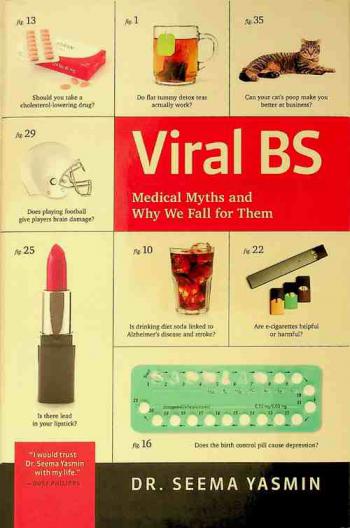
Viral BS : medical myths and why we fall for them
\"This book dissects medical myths and pseudoscience and explores how misinformation can spread faster than microbes. Yasmin debunks public health myths ranging from the spurious link between vaccines and autism to the truth about so-called chemtrails left behind by airplanes. In short chapters covering popular myths, Yasmin parses the science behind fearful rumors and models how to be a more informed consumer of health news\"-- Provided by publisher.

Student Engagement: Current State of the Construct, Conceptual Refinement, and Future Research Directions
Notwithstanding its crucial role in facilitating desired outcomes of schooling, educational psychology researchers have recognized the conceptual haziness of student engagement as a multidimensional construct. With the main purpose of refining its conceptual definition, this paper aims to attain the following four goals. First, we seek to highlight theoretical, conceptual, and operational concerns about the student engagement construct, and synthesize these concerns into four related areas: overgeneralization, jingle-jangle fallacies, object ambiguity, and under-theorization. Second, we conduct a comprehensive review of prevailing perspectives on student engagement and critically examine their strengths and limitations. Building upon such extant models, third, we offer the Dual Component Framework of Student Engagement, which differentiates learning engagement from school engagement, and articulates the conceptual definition and scope, as well as the objects and dimensions, of the two engagement constructs. Lastly, we underscore the theoretical, research, and applied implications of the proposed framework in advancing the field of student engagement.
Journal Article

Students’ perceptions of using ChatGPT in a physics class as a virtual tutor
The latest development of Generative Artificial Intelligence (GenAI), particularly ChatGPT, has drawn the attention of educational researchers and practitioners. We have witnessed many innovative uses of ChatGPT in STEM classrooms. However, studies regarding students’ perceptions of ChatGPT as a virtual tutoring tool in STEM education are rare. The current study investigated undergraduate students’ perceptions of using ChatGPT in a physics class as an assistant tool for addressing physics questions. Specifically, the study examined the accuracy of ChatGPT in answering physics questions, the relationship between students’ ChatGPT trust levels and answer accuracy, and the influence of trust on students’ perceptions of ChatGPT. Our finding indicates that despite the inaccuracy of GenAI in question answering, most students trust its ability to provide correct answers. Trust in GenAI is also associated with students’ perceptions of GenAI. In addition, this study sheds light on students’ misconceptions toward GenAI and provides suggestions for future considerations in AI literacy teaching and research.
Journal Article


Misinformation on Misinformation: Conceptual and Methodological Challenges
Alarmist narratives about online misinformation continue to gain traction despite evidence that its prevalence and impact are overstated. Drawing on research examining the use of big data in social science and reception studies, we identify six misconceptions about misinformation and highlight the conceptual and methodological challenges they raise. The first set of misconceptions concerns the prevalence and circulation of misinformation. First, scientists focus on social media because it is methodologically convenient, but misinformation is not just a social media problem. Second, the internet is not rife with misinformation or news, but with memes and entertaining content. Third, falsehoods do not spread faster than the truth; how we define (mis)information influences our results and their practical implications. The second set of misconceptions concerns the impact and the reception of misinformation. Fourth, people do not believe everything they see on the internet: the sheer volume of engagement should not be conflated with belief. Fifth, people are more likely to be uninformed than misinformed; surveys overestimate misperceptions and say little about the causal influence of misinformation. Sixth, the influence of misinformation on people’s behavior is overblown as misinformation often “preaches to the choir.” To appropriately understand and fight misinformation, future research needs to address these challenges.
Journal Article


Analysis of Interview Results on The Remediation Process of The Dynamic Equilibrium Concept With The Representation-Metacognitive Reinforcement Conceptual Change Model (R-MR CCM)
Objective: This research aims to determine conceptions and changes in conceptions and analyze the results of interviews regarding the remediation process of the dynamic equilibrium concept. Theoretical Framework: Theories associated with student misconceptions, methods for identifying student misconceptions, and methods for resolving student misconceptions. Method: The method used in this study is a mixed method which is a combination of qualitative and quantitative methods, namely the Concurrent Embedded Strategy, which is a combination of qualitative methods and quantitative methods carried out at the same time. This method is very useful for students to find out the conceptions and misconceptions that occur in students. Results and Discussion: After conducting interviews and tests on respondents, the results of the analysis were obtained in the form of misconceptions among respondents that could be identified in the test and interview results at the stage of creating cognitive conflict and respondents could realize the misconceptions experienced after going through the stage of providing assistance for equilibration and using metacognition on an example of a concept so that respondents could dispelling misconceptions altogether. Research Implications: To reduce students' misconceptions about chemical equilibrium material, it is necessary to carry out research on this. With this gradual test instrument, students can get instant feedback and correct any misconceptions they have. Originality/Value: To provide insight into students' perceptions of the misconceptions they experience and how to reduce existing misconceptions. Apart from that, it is to provide insight to teachers regarding how to identify and reduce misconceptions that occur in students. Objetivo: Esta investigación tiene como objetivo determinar concepciones y cambios en las concepciones y analizar los resultados de las entrevistas sobre el proceso de remediación del concepto de equilibrio dinámico. Marco teórico: teorías asociadas con conceptos erróneos de los estudiantes, métodos para identificar conceptos erróneos de los estudiantes y métodos para resolver conceptos erróneos de los estudiantes. Método: El método utilizado en este estudio es un método mixto que es una combinación de métodos cualitativos y cuantitativos, a saber, la Estrategia Integrada Concurrente, que es una combinación de métodos cualitativos y cuantitativos llevados a cabo al mismo tiempo. Este método es de gran utilidad para que los estudiantes descubran las concepciones y conceptos erróneos que se producen en los estudiantes. Resultados y discusión: Después de realizar entrevistas y pruebas a los encuestados, los resultados del análisis se obtuvieron en forma de conceptos erróneos entre los encuestados que pudieron identificarse en los resultados de la prueba y la entrevista en la etapa de creación de conflicto cognitivo y los encuestados pudieron darse cuenta de los conceptos erróneos experimentados. después de pasar por la etapa de brindar asistencia para el equilibrio y utilizar la metacognición en un ejemplo de un concepto para que los encuestados pudieran disipar los conceptos erróneos por completo. Implicaciones de la investigación: Para reducir las ideas erróneas de los estudiantes sobre el material en equilibrio químico, es necesario realizar investigaciones al respecto. Con este instrumento de prueba gradual, los estudiantes pueden obtener comentarios instantáneos y corregir cualquier idea errónea que tengan. Originalidad/Valor: Proporcionar información sobre las percepciones de los estudiantes sobre los conceptos erróneos que experimentan y cómo reducir los conceptos erróneos existentes. Aparte de eso, su objetivo es proporcionar información a los profesores sobre cómo identificar y reducir los conceptos erróneos que ocurren en los estudiantes. Objetivo: Esta pesquisa tem como objetivo determinar concepções e mudanças de concepções e analisar os resultados de entrevistas a respeito do processo de remediação do conceito de equilíbrio dinâmico. Referencial Teórico: Teorias associadas aos equívocos dos alunos, métodos para identificar os equívocos dos alunos e métodos para resolver os equívocos dos alunos. Método: O método utilizado neste estudo é um método misto que é uma combinação de métodos qualitativos e quantitativos, nomeadamente a Estratégia Incorporada Concorrente, que é uma combinação de métodos qualitativos e métodos quantitativos realizados ao mesmo tempo. Este método é muito útil para os alunos descobrirem as concepções e equívocos que ocorrem nos alunos. Resultados e Discussão: Após a realização de entrevistas e testes aos entrevistados, os resultados da análise foram obtidos na forma de equívocos entre os entrevistados que puderam ser identificados nos resultados dos testes e entrevistas na fase de criação do conflito cognitivo e os entrevistados puderam perceber os equívocos vivenciados depois de passar pela fase de fornecer assistência para o equilíbrio e usar a metacognição em um exemplo de conceito para que os entrevistados pudessem dissipar completamente os equívocos. Implicações de pesquisa: Para reduzir os equívocos dos alunos sobre o material em equilíbrio químico, é necessário realizar pesquisas sobre o assunto. Com este instrumento de teste gradual, os alunos podem obter feedback instantâneo e corrigir quaisquer equívocos que tenham. Originalidade/Valor: Fornecer informações sobre as percepções dos alunos sobre os equívocos que vivenciam e como reduzir os equívocos existentes. Além disso, visa fornecer informações aos professores sobre como identificar e reduzir os equívocos que ocorrem nos alunos.
Journal Article