
Catalogue Search | MBRL


Are you sure you want to remove the book from the shelf?

{{itemTitle}}
330
result(s) for
"modern comics"
Sort by:

The origins of comics : from William Hogarth to Winsor McCay
\"In The Origins of Comics: From William Hogarth to Winsor McCay, Thierry Smolderen presents a cultural landscape whose narrative differs in many ways from those presented by other historians of the comic strip. Rather than beginning his inquiry with the popularly accepted \"sequential art\" definition of the comic strip, Smolderen instead wishes to engage with the historical dimensions that inform that definition. His goal is to understand the processes that led to the twentieth-century comic strip, the highly recognizable species of picture stories that he sees crystallizing around 1900 in the United States.Featuring close readings of the picture stories, caricatures, and humoristic illustrations of William Hogarth, Rodolphe Tèopffer, Gustave Dorâe, and their many contemporaries, Smolderen establishes how these artists were immersed in a very old visual culture in which images--satirical images in particular--were deciphered in a way that was often described as hieroglyphical. Across eight chapters, he acutely points out how the effect of the printing press and the mass advent of audiovisual technologies (photography, audio recording, and cinema) at the end of the nineteenth century led to a new twentieth-century visual culture. In tracing this evolution, Smolderen distinguishes himself from other comics historians by following a methodology that explains the present state of the form of comics on the basis of its history, rather than presenting the history of the form on the basis of its present state. This study remaps the history of this influential art form\"-- Provided by publisher.
Book

Robin and the Making of American Adolescence
Holy adolescence, Batman! Robin and the Making of American Adolescence offers the first character history and analysis of the most famous superhero sidekick, Robin. Debuting just a few months after Batman himself, Robin has been an integral part of the Dark Knight's history-and debuting just a few months prior to the word \"teenager\" first appearing in print, Robin has from the outset both reflected and reinforced particular images of American adolescence. Closely reading several characters who have \"played\" Robin over the past eighty years, Robin and the Making of American Adolescence reveals the Boy (and sometimes Girl!) Wonder as a complex figure through whom mainstream culture has addressed anxieties about adolescents in relation to sexuality, gender, and race. This book partners up comics studies and adolescent studies as a new Dynamic Duo, following Robin as he swings alongside the ever-changing American teenager and finally shining the Bat-signal on the latter half of \"Batman and-.\"
eBook

Ethics in the Gutter
Ethics in the Gutter: Empathy and Historical Fiction in
Comics explores an often-overlooked genre of graphic
narratives: those that fictionalize historical realities. While
autographics, particularly those that place the memoirist in the
context of larger cultural conversations, have been the objects of
sustained study, fictional graphic narratives that-as Linda
Hutcheon has put it-both \"enshrine and question\" history are also
an important area of study. By bringing narratology and
psychological theory to bear on a range of graphic narratives, Kate
Polak seeks to question how the form utilizes point of view and the
gutter as ethical tools that shape the reader's empathetic
reactions to the content. This book's most important questions
surround how we receive and interpret representations of history,
considering the ways in which what we think we know about
historical atrocities can be at odds with the convoluted
circumstances surrounding violence. Beginning with a new look at
Watchmen , and including examinations of such popular
series as Scalped and Hellblazer as well as
Bayou and Deogratias , the book questions how
graphic narratives create an alternative route by which to
understand large-scale violence. Ethics in the Gutter
explores how graphic narrative representations of violence can
teach readers about the possibilities and limitations of empathy
and ethics.
eBook

Japanese sound-symbolic words in global contexts: from translation to hybridization version 2; peer review: 2 approved
This paper explores the global reception and development of the artistic expression of onomatopoeia and mimetic words in modern and contemporary Japanese literary texts adopting the method of comparative literature. By analyzing sound-symbolic words and their translations in modern Japanese poetry and contemporary comics, the intercultural dialogues of these texts are examined and the emergence of hybrid onomatopoeia in global comic works is illuminated. The Japanese language is often noted for its richness of sound-symbolic words. In the literary world, modern poetry adopted and elaborated the use of these words from the late 19th century in its quest for a new style of poetry. In the early 20th century, poets developed the artistic expression of sound-symbolic words and succeeded in giving musicality to the \"new-style poem\". However, the translation of Japanese sound-symbolic words has always been problematic. Experimental uses of these words in modern poems were often untranslatable, making the translations incomprehensible or dull. Nevertheless, graphic narratives and their worldwide distribution changed that situation. Japanese comics (manga) has particularly developed the artistic expression of sound-symbolic words. Usually placed outside speech balloons, these words are elaborately depicted and are important elements of the panel/page layout. Notably, the global popularity of the genre developed a new phase of intercultural dialogue. As not every word has an equivalent or is translatable in the target language, translators have left sound-symbolic words untouched in the translated versions, putting translation aside. Thus, the combination of Japanese and the target language seems to influence the visual comprehension of sound effects among the readers. Through the examinations of some cases, this paper brings to light the emergence of some hybrid onomatopoeia and reveals that the \"Third Space\" formed by the translation and hybridization of manga is a dynamic field that creates a new culture.
Journal Article

Dreaming the Graphic Novel
Winner of the Best Book Award in Comics History from the Grand Comics Database Honorable Mention, 2019-2020 Research Society for American Periodicals Book PrizeThe term \"graphic novel\" was first coined in 1964, but it wouldn't be broadly used until the 1980s, when graphic novels such as Watchmen and Maus achieved commercial success and critical acclaim. What happened in the intervening years, after the graphic novel was conceptualized yet before it was widely recognized? Dreaming the Graphic Novel examines how notions of the graphic novel began to coalesce in the 1970s, a time of great change for American comics, with declining sales of mainstream periodicals, the arrival of specialty comics stores, and (at least initially) a thriving underground comix scene. Surveying the eclectic array of long comics narratives that emerged from this fertile period, Paul Williams investigates many texts that have fallen out of graphic novel history. As he demonstrates, the question of what makes a text a 'graphic novel' was the subject of fierce debate among fans, creators, and publishers, inspiring arguments about the literariness of comics that are still taking place among scholars today. Unearthing a treasure trove of fanzines, adverts, and unpublished letters, Dreaming the Graphic Novel gives readers an exciting inside look at a pivotal moment in the art form's development.
eBook

What's So Funny? Comic Content in Depiction
This chapter contains sections titled:
Where are the Funnies?
Writing Images, Drawing Words
Without Words
Just Looking
Where's the Fun?
“What's That For?” Arts and Artifacts
Notes
References
Book Chapter
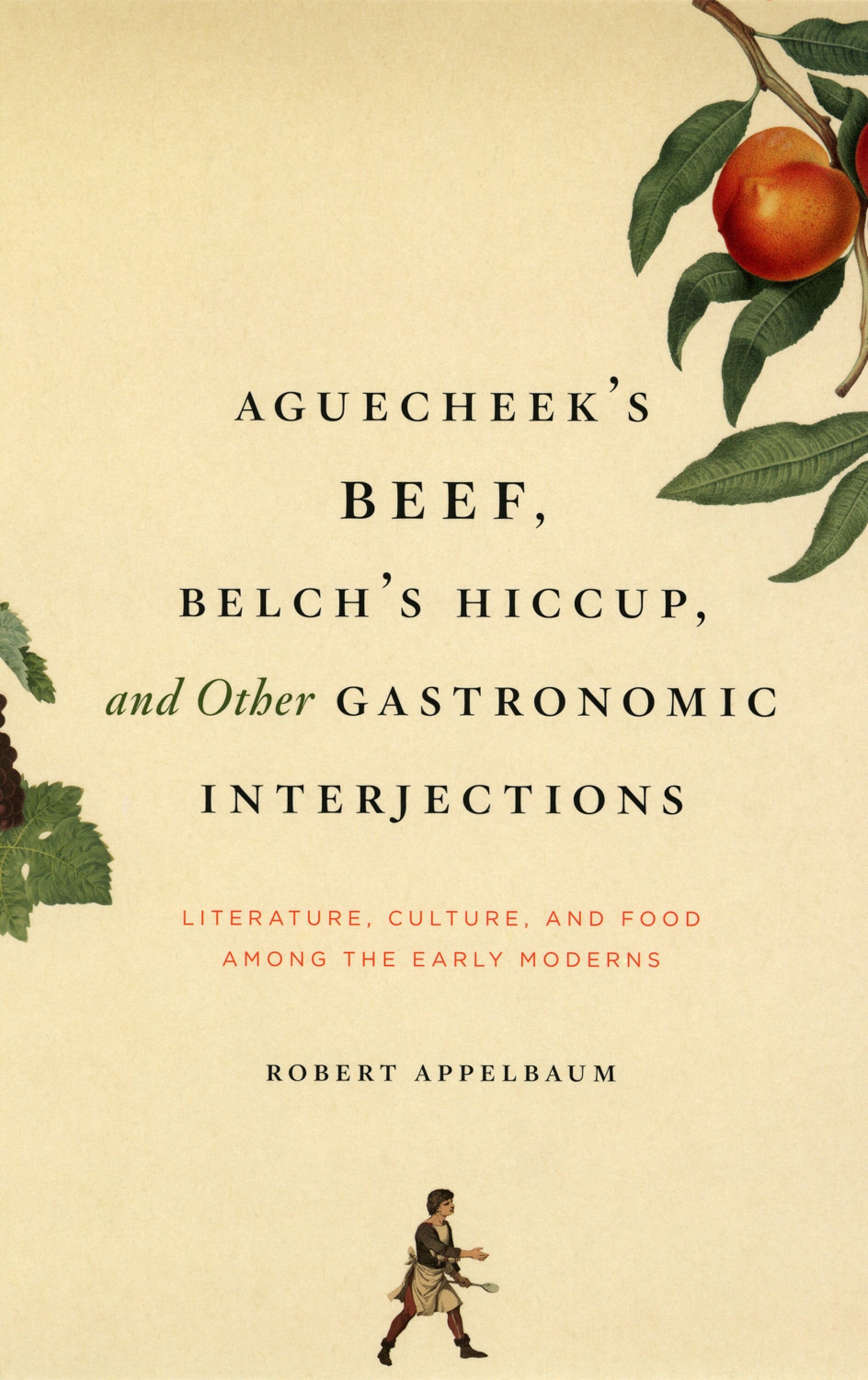
Aguecheek's beef, belch's hiccup, and other gastronomic interjections
Aguecheek’s Beef, Belch’s Hiccup tells the story of how early modern Europeans put into words these complex and evolving relationships between cooks and diners, hosts and guests, palates and tastes, food and humankind. Named after two memorable characters in Twelfth Night, this lively history of food and literature draws on sources ranging from cookbooks and medical texts to comic novels and Renaissance tragedies. Robert Appelbaum expertly weaves such sources together to show how people invented new genres and ways of speaking to express interest in food. He also recounts the evolution of culinary practices and attitudes toward food, connecting them with contemporaneous developments in medical science, economics, and colonial expansion. As he does so, Appelbaum paints a colorful picture of a remarkably conflicted culture in which food was many things—from a symbol of happy sociability to a token of selfish gluttony, from an icon of cultural life to a cause for social struggle. Peppered with illustrations and even a handful of recipes, Aguecheek’s Beef, Belch’s Hiccup looks at our basic staple of daily existence from an entirely fresh perspective that will appeal to anyone interested in early modern literature or the history of food.
eBook

The Origins of Comics
InThe Origins of Comics: From William Hogarth to Winsor McCay, Thierry Smolderen presents a cultural landscape whose narrative differs in many ways from those presented by other historians of the comic strip. Rather than beginning his inquiry with the popularly accepted \"sequential art\" definition of the comic strip, Smolderen instead wishes to engage with the historical dimensions that inform that definition. His goal is to understand the processes that led to the twentieth-century comic strip, the highly recognizable species of picture stories that he sees crystallizing around 1900 in the United States.
Featuring close readings of the picture stories, caricatures, and humoristic illustrations of William Hogarth, Rodolphe Töpffer, Gustave Doré, and their many contemporaries, Smolderen establishes how these artists were immersed in a very old visual culture in which images--satirical images in particular--were deciphered in a way that was often described as hieroglyphical. Across eight chapters, he acutely points out how the effect of the printing press and the mass advent of audiovisual technologies (photography, audio recording, and cinema) at the end of the nineteenth century led to a new twentieth-century visual culture. In tracing this evolution, Smolderen distinguishes himself from other comics historians by following a methodology that explains the present state of the form of comics on the basis of its history, rather than presenting the history of the form on the basis of its present state. This study remaps the history of this influential art form.
eBook

STYLE & CULTURE; HERO COMPLEX; The power of DC Comics; Taschen's 720-page book details history. You just might need Superman to lift it
The comic book industry, by some appraisals, now exists more to create intellectual property for film, video games and toy aisles than as a pure publishing business.
Newspaper Article

Super! Colossal! Stupendous
Q. The comic book industry, by some appraisals, now exists more to create intellectual property for film, video games and toy aisles than as a pure publishing business.
Newspaper Article