
Catalogue Search | MBRL


Are you sure you want to remove the book from the shelf?

{{itemTitle}}
2,904
result(s) for
"modern judaism"
Sort by:
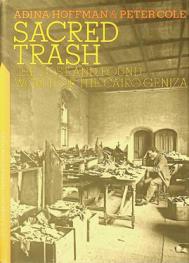
Sacred trash : the lost and found world of the Cairo Geniza
Traces the efforts of two women scholars who recovered what has become the most vital cache of Hebrew manuscripts ever discovered, in an account that explains what the findings reveal about Mediterranean Judaism.
Book

Rabbis, sorcerers, kings, and priests
Rabbis, Sorcerers, Kings, and Priests examines the impact of the Persian Sasanian context on the Babylonian Talmud, perhaps the most important corpus in the Jewish sacred canon. What impact did the Persian Zoroastrian Empire, as both a real historical force and an imaginary interlocutor, have on rabbinic identity and authority as expressed in the Talmud? Drawing from the field of comparative religion, Jason Sion Mokhtarian addresses this question by bringing into mutual fruition Talmudic studies and ancient Iranology, two historically distinct disciplines. Whereas most research on the Talmud assumes that the rabbis were an insular group isolated from the cultural horizon outside their academies, this book contextualizes the rabbis and the Talmud within a broader sociocultural orbit by drawing from a wide range of sources from Sasanian Iran, including Middle Persian Zoroastrian literature, archaeological data such as seals and inscriptions, and the Aramaic magical bowl spells. Mokhtarian also includes a detailed examination of the Talmud's dozens of texts that portray three Persian \"others\": the Persians, the Sasanian kings, and the Zoroastrian priests. This book skillfully engages and demonstrates the rich penetration of Persian imperial society and culture on the Jews of late antique Iran.
eBook
Interreligious Theology
This book is the first greater attempt to construct a dialogical theology from a Jewish point of view. It contributes to an emerging new theology that promotes the interrelatedness of religions in which encounter, openness, hospitality and permanent learning are central. The monograph is about the self and the other, inner and outer, own and strange; about borders and crossing borders, and about the sublime activities of passing and translating. Meir analyses and critically discusses the writings of great contemporary Jewish dialogical thinkers and argues that the values of interreligious theology are moored in their thoughts. In his view interreligious dialogue supposes attentive listening, humility, a critical attitude towards oneself and others, a good amount of self-relativism and humor. It is about proximity, dialogical reading, engagement and interconnectedness.
eBook

Concealment and Revelation
During the twelfth and thirteenth centuries, great new trends of Jewish thought emerged whose widely varied representatives--Kabbalists, philosophers, and astrologers--each claimed that their particular understanding revealed the actual secret of the Torah. They presented their own readings in a coded fashion that has come to be regarded by many as the very essence of esotericism. Concealment and Revelation takes us on a fascinating journey to the depths of the esoteric imagination. Carefully tracing the rise of esotericism and its function in medieval Jewish thought, Moshe Halbertal's richly detailed historical and cultural analysis gradually builds conceptual-philosophical force to culminate in a masterful phenomenological taxonomy of esotericism and its paradoxes. Among the questions addressed: What are the internal justifications that esoteric traditions provide for their own existence, especially in the Jewish world, in which the spread of knowledge was of great importance? How do esoteric teachings coexist with the revealed tradition, and what is the relationship between the various esoteric teachings that compete with that revealed tradition? Halbertal concludes that, through the medium of the concealed, Jewish thinkers integrated into the heart of the Jewish tradition diverse cultural influences such as Aristotelianism, Neoplatonism, and Hermeticisims. And the creation of an added concealed layer, unregulated and open-ended, became the source of the most daring and radical interpretations of the tradition.
eBook

The Shtiebelization of Modern Jewry
Custom and ritual, or their Hebrew equivalent minhag, has intrigued rabbis and scholars for generations. Here, Simcha Fishbane treats minhag from a socio-anthropological perspective. She discusses the theory and model of minhagim, using the Mishnah Berurah and the Arukh Hashulkhan, analyses rabbinic texts concerned with custom, and describes current rituals from a socio-anthropological viewpoint.
eBook

Forsaken
This book addresses a central question in the study of Jewish mysticism in the medieval and early modern periods: why are there no known female mystics in medieval Judaism, unlike contemporaneous movements in Christianity and Islam? Sharon Faye Koren demonstrates that the male rejection of female mystical aspirations is based in deeply rooted attitudes toward corporeality and ritual purity. In particular, medieval Jewish male mystics increasingly emphasized that the changing states of the female body between ritual purity and impurity disqualified women from the quest for mystical connection with God. Offering a provocative look at premodern rabbinical views of the female body and their ramifications for women's spiritual development, Koren compares Jewish views with medieval Christian and Muslim views of both female menstruation and the possibility of female mystical experience.
eBook
Between Jewish Tradition and Modernity
Although the ideas of \"tradition\" and \"modernity\" may seem to be directly opposed, David Ellenson, a leading contemporary scholar of modern Jewish thought, understood that these concepts can also enjoy a more fluid relationship. In honor of Ellenson, editors Michael A. Meyer and David N. Myers have gathered contributors for Between Jewish Tradition and Modernity: Rethinking an Old Opposition to examine the permutations and adaptations of these intertwined forms of Jewish expression. Contributions draw from a range of disciplines and scholarly interests and vary in subject from the theological to the liturgical, sociological, and literary. The geographic and historical focus of the volume is on the United States and the State of Israel, both of which have been major sites of inquiry in Ellenson's work. In twenty-one essays, contributors demonstrate that modernity did not simply replace tradition in Judaism, but rather entered into a variety of relationships with it: adopting or adapting certain elements, repossessing rituals that had once been abandoned, or struggling with its continuing influence. In four parts—Law, Ritual, Thought, and Culture—contributors explore a variety of subjects, including the role of reform in Israeli Orthodoxy, traditions of twentieth-century bar/bat mitzvah, end-of-life ethics, tensions between Zionism and American Jewry, and the rise of a 1960s New York Jewish counterculture. An introductory essay also presents an appreciation of Ellenson's scholarly contribution. Bringing together leading Jewish historians, anthropologists, sociologists, philosophers and liturgists, Between Jewish Tradition and Modernity offers a collective view of a historically and culturally significant issue that will be of interest to Jewish scholars of many disciplines.
eBook
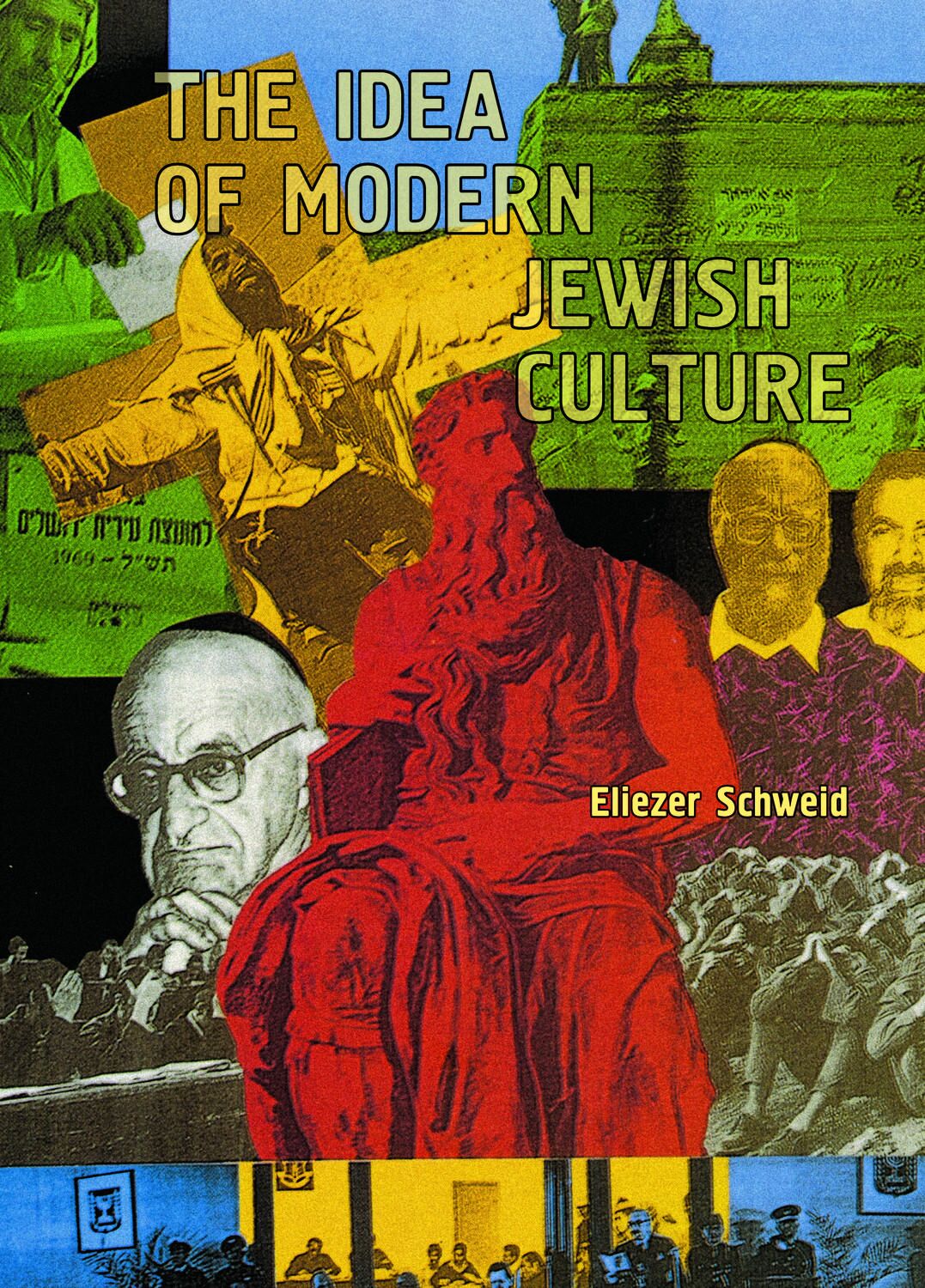
The Idea of Modern Jewish Culture
The vast majority of intellectual, religious, and national developments in modern Judaism revolve around the central idea of \"\"Jewish culture\"\". This book is the first synoptic view of these developments that organises and relates them from this vantage point.
eBook
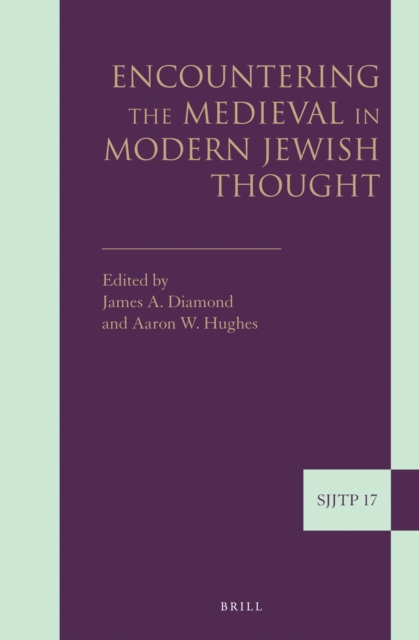
Encountering the Medieval in Modern Jewish Thought
How does the \"medieval\" function as a bearer of Jewish identity in a changing secular world? Each chapter in Encountering the Medieval in Modern Jewish Thought addresses a different Jewish return to the medieval by using a language of renewal.
eBook

“Gathering the Dispersed of Israel”: The Evolution of a Kabbalistic Prayer Addendum for Tiqqun Qeri
This article traces the evolution of a kabbalistic prayer supplication that was designed to purify male Jews from pollution caused by improper seminal emission. In doing so, it focuses on the metaphysical rationale behind it, its function, and its metamorphosis from a highly technical practice into a mainstream devotional practice. It addresses how notions of sexual pollution (qeri) were contextualized in Lurianic Kabbalah and how they were later embedded in kabbalistic manuals and prayer books. Furthermore, the article examines Jewish-Christian and inner- Jewish debates that emerged in connection with the effects of spilling semen in vain. Special attention is paid to possible social factors that may have impacted the increased anxiety about male bodily fluids and “misguided” desires. In addition to the available research on the theological and general historical background of the prohibition of wasting seed, the following analysis offers a microhistory of this short yet highly influential text.
Journal Article