
Catalogue Search | MBRL


Are you sure you want to remove the book from the shelf?

{{itemTitle}}
62
result(s) for
"monarchiens"
Sort by:

Monarchiens et monarchie en exil : conjonctures de la monarchie dans l’émigration française, 1792‒1799
Le débat sur la restauration de la monarchie commence au moment de la chute de Louis XVI en 1792. Il s’est intensifié dans l’émigration française. En analysant les relations entre les « monarchiens », monarchistes constitutionnels favorisant un système bicamériste, et les Bourbons en exil, cet article montre comment l’idée d’un rétablissement de l’Ancien Régime, souvent associé aux émigrés, est successivement écartée par les Bourbons. Les confrontations et coopérations politiques avec les monarchiens démontrent dans quelle mesure la pensée politique du futur Louis XVIII, dans les années 1790, s’oriente vers une monarchie constitutionnelle qui, déjà avant Brumaire, anticipe des éléments centraux de la Restauration de 1814. The debate on the restoration of the Monarchy began immediately after the fall of Louis XVI in 1792. It would intensify with French emigration. By analyzing the relationships between the « monarchiens », those constitutional monarchists favoring a bicameral system, and the Bourbons in exile, this article shows how the idea of the reestablishment of the Old Regime often associated with emigres was successively rejected by the Bourbons. The political confrontations and cooperation with the monarchiens demonstrates the extent to which the political thought of the future Louis XVIII in the 1790s turned towards a constitutional monarchy that, already before Brumaire, anticipated the central features of the Restoration of 1814.
Journal Article
Mémoires d'ex-, mémoires d'exil : l'émigrante noblesse auvergnate
Comme beaucoup d’autres, la noblesse auvergnate n’a pas utilisé une route unique de l’exil ; les liens culturels et affectifs, la discipline militaire ou tout au contraire le sauve-qui-peut l’ont dispersée principalement en Angleterre, en Allemagne, en Suisse ou en Espagne. Dans ce dernier pays se morfondra le marquis Chateauneuf-Randon d’Apchier : isolé dans une société qu’il trouve hostile, il subira à distance des déchirements familiaux irréversibles (exceptionnels, si l’on en juge par l’utilisation des divorces, destinés le plus fréquemment à sauver une propriété foncière ou à récupérer des biens mis sous séquestre) et mourra dans son exil. Le comte de Pontgibaud choisira au contraire de reconstruire sa vie et partie de sa fortune en se faisant colporteur et finira riche patricien à Trieste, sans conscience de déroger à des privilèges du reste abolis et sans volonté de retour. À Londres, Montlosier, monarchien convaincu, est en 1793 ostracisé par l’entourage du comte d’Artois. Avant l’Angleterre, il a cependant pu apprécier les forces de la Coalition d’Auvergne, alliance de plusieurs centaines de nobles auvergnats scellée à Fribourg deux ans plus tôt, à la faveur entre autres d’amitiés anciennes nouées par exemple à l’école royale militaire d’Effiat. Le comte d’Espinchal a combattu comme Montlosier à Valmy et, quoique monarchiste convaincu et émigré de 1789, nous laisse lui aussi des jugements critiques sur la capacité des princes à conduire la lutte, sur la reconstitution à l’étranger du milieu clos, superficiel et dispendieux de la cour versaillaise. Les hommes de la Coalition, qui se dispersent en 1793 et pour certains s’efforcent de rentrer clandestinement soit dans leurs départements d’origine soit en Vendée, gardant toutefois des liens avec Condé, demeurent un vivier pour la contre-révolution armée, très active à l’époque du Directoire : leurs filières finissent alors par s’enchevêtrer avec celles de l’évêque réfractaire du Puy-de-Dôme, François de Bonal, qui, de Suisse, organise la résistance des insermentés et un trafic de fausse monnaie. Cette rencontre favorise la mise sur pied d’un plan de soulèvement du Midi français, que le 18 Brumaire va faire avorter. Memoirs of exile: the emigrating nobility in Auvergne. Like many others, the nobility in Auvergne hasn’t chosen an only road to exile. Cultural and affective links, military discipline or, on the contrary, mad rush have scattered them mainly in England, Germany, Switzerland or in Spain. The Marquis Chateauneuf-Randon of Apchier will mope in the last mentioned. Isolated in a hostile society, he will suffer irreversible family heartbreaks (quite exceptional if we consider the use of divorces meant to save a landed property or to recover impounded goods) and will die in exile. On the contrary, the Count of Pontgibaud will choose to start a new life as a peddler and will become a rich patrician in Trieste. Montlosier, a convinced “monarchien”, is ostracized in London by the entourage of the Count of Artois in 1793. Before going to England, he has known the Coalition forces in Auvergne, an alliance sealed by the nobility two years before in Fribourg, many of them having met in the royal military school in Effiat. Like Montlosier, the Count of Espinchal took part in the battle of Valmy. Being a convinced monarchist and having emigrated in 1789, he is still critical about the Princes’ ability to lead the fight. He also denounces the reconstitution of the closed, superficial and extravagant environment of the Versailles court abroad. The men in favour of the coalition who scatter in 1793, some of them trying to come back secretly in their department or in Vendee and still remaining in contact with Condé, are ready to fight for the Counter-Revolution, which was very active during the Directoire. Their networks finally become entangled with those of the emigrated bishop François de Bonal who, from Switzerland, organizes a forged currency traffic and the resistance of the non-juring priests. This will lead to the project of an uprising of the French South which will be stopped by the 18th Brumaire.
Journal Article
Mémoires d'ex-, mémoires d'exil : l'émigrante noblesse auvergnate
Comme beaucoup d'autres, la noblesse auvergnate n'a pas utilisé une route unique de l'exil ; les liens culturels et affectifs, la discipline militaire ou tout au contraire le sauve-qui-peut l'ont dispersée principalement en Angleterre, en Allemagne, en Suisse ou en Espagne. Dans ce dernier pays se morfondra le marquis Chateauneuf-Randon d'Apchier : isolé dans une société qu'il trouve hostile, il subira à distance des déchirements familiaux irréversibles (exceptionnels, si l'on en juge par l'utilisation des divorces, destinés le plus fréquemment à sauver une propriété foncière ou à récupérer des biens mis sous séquestre) et mourra dans son exil. Le comte de Pontgibaud choisira au contraire de reconstruire sa vie et partie de sa fortune en se faisant colporteur et finira riche patricien à Trieste, sans conscience de déroger à des privilèges du reste abolis et sans volonté de retour. À Londres, Montlosier, monarchien convaincu, est en 1793 ostracise par l'entourage du comte d'Artois. Avant l'Angleterre, il a cependant pu apprécier les forces de la Coalition d'Auvergne, alliance de plusieurs centaines de nobles auvergnats scellée à Fribourg deux ans plus tôt, à la faveur entre autres d'amitiés anciennes nouées par exemple à l'école royale militaire d'Effiat. Le comte d'Espinchal a combattu comme Montlosier à Valmy et, quoique monarchiste convaincu et émigré de 1789, nous laisse lui aussi des jugements critiques sur la capacité des princes à conduire la lutte, sur la reconstitution à l'étranger du milieu clos, superficiel et dispendieux de la cour ver- saillaise. Les hommes de la Coalition, qui se dispersent en 1793 et pour certains s'efforcent de rentrer clandestinement soit dans leurs départements d'origine soit en Vendée, gardant toutefois des liens avec Condé, demeurent un vivier pour la contre-révolution armée, très active à l'époque du Directoire : leurs filières finissent alors par s'enchevêtrer avec celles de l'évêque réfractaire du Puy-de-Dôme, François de Bonal, qui, de Suisse, organise la résistance des insermentés et un trafic de fausse monnaie. Cette rencontre favorise la mise sur pied d'un plan de soulèvement du Midi français, que le 18 Brumaire va faire avorter. Philippe Bourdin, Memoirs of exile: the emigrating nobility in Auvergne. Like many others, the nobility in Auvergne hasn't chosen an only road to exile. Cultural and affective links, military discipline or, on the contrary, mad rush have scattered them mainly in England, Germany, Switzerland or in Spain. The Marquis Chateauneuf-Randon of Apchier will mope in the last mentioned. Isolated in a hostile society, he will suffer irreversible family heartbreaks (quite exceptional if we consider the use of divorces meant to save a landed property or to recover impounded goods) and will die in exile. On the contrary, the Count of Pontgibaud will choose to start a new life as a peddler and will become a rich patrician in Trieste. Montlosier, a convinced \"monar- chien\", is ostracized in London by the entourage of the Count of Artois in 1793. Before going to England, he has known the Coalition forces in Auvergne, an alliance sealed by the nobility two years before in Fribourg, many of them having met in the royal military school in Effiat. Like Montlosier, the Count of Espinchal took part in the battle of Valmy. Being a convinced monarchist and having emigrated in 1789, he is still critical about the Princes' ability to lead the fight. He also denounces the reconstitution of the closed, superficial and extravagant environment of the Versailles court abroad. The men in favour of the coalition who scatter in 1793, some of them trying to come back secretly in their department or in Vendee and still remaining in contact with Condé, are ready to fight for the Counter-Revolution, which was very active during the Directoire. Their networks finally become entangled with those of the emigrated bishop François de Bonal who, from Switzerland, organizes a forged currency traffic and the resistance of the non-juring priests. This will lead to the project of an uprising of the French South which will be stopped by the 18th Brumaire.
Journal Article
Jahrbuch für die Geschichte des Protestantismus in Österreich Sonderband (2023)
Der vorliegende Band ist dem langjährigen Vorstandsmitglied und Präsidenten der „Gesellschaft für die Geschichte des Protestantismus in Österreich“ Univ.-Prof. DDr. Rudolf Leeb zu seinem 65. Geburtstag gewidmet. Die Beiträge spiegeln die thematische Breite und die vielfältigen Interessensgebiete des Jubilars, die von der Spätantike bis in die kirchliche Zeitgeschichte reichen und ihr spezifisches Profil durch die enge Verbindung von Kunst-, Kirchen- und Kulturgeschichte erhalten. Ein Schwerpunkt liegt auf der Protestantismusgeschichte der ehemaligen Habsburgermonarchie und des heutigen Österreich.
[Yearbook for the History of Protestantism in Austria, Special Volume (2023). Festschrift for Rudolf Leeb on occasion of his 65th birthday]
This volume is dedicated to Rudolf Leeb, longtime chair and president of the »Society for the History of Protestantism in Austria«, on the occasion of his 65th birthday. The contributions reflect the thematic breadth and the diverse areas of interest of the jubilee, which reach from Late Antiquity to contemporary church history and which receive their specific profile through the close connection between the history of art, Christianity and culture. A focus is on the history of Protestantism in the former Habsburg monarchy and today's Austria.
eBook
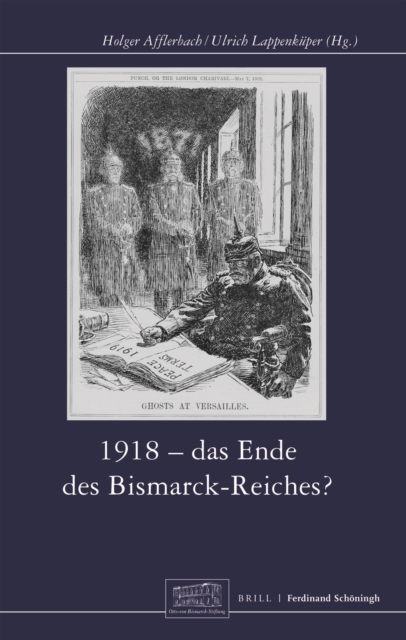
1918 - das Ende des Bismarck-Reichs?
Besaß Otto von Bismarck unverhandelbare politische Vorstellungen, die das von ihm geschaffene Reich prägten?Und was lebt von seinem politischen Erbe noch in unserem demokratisch verfassten Gemeinwesen fort?.
eBook

Political Institutions under Dictatorship
Often dismissed as window dressing, nominally democratic institutions, such as legislatures and political parties, play an important role in non-democratic regimes. In a comprehensive cross-national study of all non-democratic states from 1946 to 2002 that examines the political uses of these institutions by dictators, Jennifer Gandhi finds that legislative and partisan institutions are an important component in the operation and survival of authoritarian regimes. She examines how and why these institutions are useful to dictatorships in maintaining power. In their efforts to neutralize threats to their power and to solicit cooperation from society, autocratic leaders use these institutions to organize concessions to potential opposition. The use of legislatures and parties to co-opt opposition results in significant institutional effects on policies and outcomes under dictatorship.
eBook
Der Preußische Hof Von 1786 Bis 1918
Mit dem Quellenband werden der Forschung erstmals Schlüsseldokumente zur Amtsorganisation und zum Personal des preußischen Hofes im langen 19. Jahrhundert zur Verfügung gestellt. Basierend auf den jüngeren Thesen zur „Neuerfindung der Monarchie“ und einer betont kultur- und sozialgeschichtlich ausgerichteten Hofforschung thematisiert der Band das preußische Beispiel. Unter dem Fokus von Wandel und Traditionalität sind die organisatorischen Grundlagen der Hohenzollernmonarchie auch in europäischer und globaler Perspektive dokumentiert. Neben den vielstufigen höfischen Verwaltungsstrukturen werden ebenso Facetten zum höheren wie niederen Hofpersonals offengelegt und Einblicke in die sich wandelnde Arbeits- und Lebenswelt am Hofe gewährt.
eBook
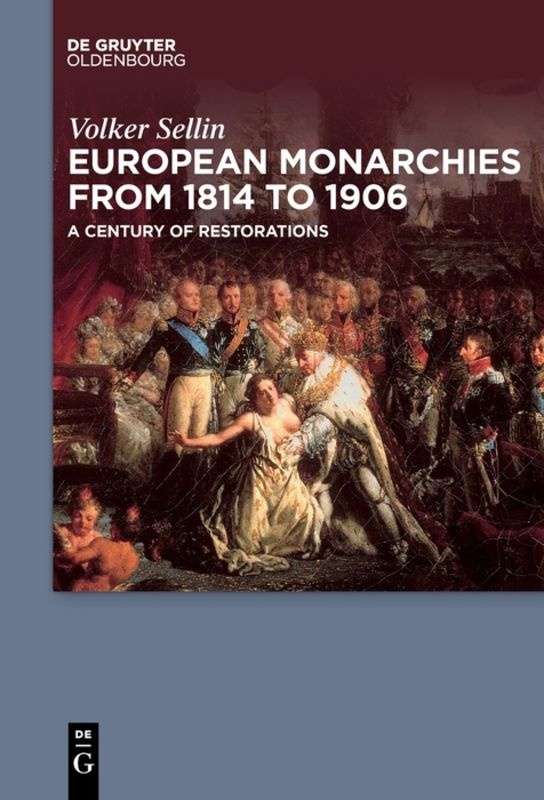
European Monarchies from 1814 to 1906
Der Sturz Napoleons jährt sich 2014 zum zweihundertsten Mal; und ebenso die Restauration der französischen Monarchie unter den Bourbonen. Was bedeutet aber überhaupt \"Restauration\"? Volker Sellin löst den Begriff aus der Fixierung auf das Epochenjahr 1814 und interpretiert Restauration übergreifend als eine Politik der Konsolidierung der von der Revolution bedrohten Monarchien durch den Erlass von Verfassungen. Europäisch vergleichend von Spanien bis Russland entwirft er auf dieser Grundlage eine überraschende Geschichte des 19. Jahrhunderts.
eBook
Instrumente Monarchischer Selbstregierung
Zivil- und Militärkabinett, Gründungen des 18.Jahrhunderts, waren Instrumente königlicher Selbstregierung.Die Kabinettschefs, adelige Offiziere und adelige Laufbahnbeamte, bildeten als Vertrauensleute der Monarchen deren Pufferinstanz gegenüber der wachsenden Staatsverwaltung und eigenwilligen Ministern.
eBook

Deutsche Kolonien in Bosnien-Herzegowina bis 1914
Die Regierung der österreichisch-ungarischen Monarchie in Bosnien-Herzegowina von 1878 bis 1918 wurde unter anderem durch die Ansiedlung von Beamten, Ingenieuren, Handwerkern, Bauern und Menschen anderer Berufe aus verschiedenen Gebieten der Monarchie gekennzeichnet. Einen wichtigen Platz unter ihnen nahmen deutsche Bauern ein, welche in den letzten Jahrzehnten des 19. Jahrhunderts fruchtbare Gebiete im Norden Bosnien-Herzegowinas ansiedelten, besonders dessen nordwestliche Gebiete, und ihre Kolonien gründeten. Trotz Schwierigkeiten, auf die sie am Anfang stießen, gelang es ihnen, dank ihrer unermüdlichen Arbeit und Ausdauer, der Nutzung von für die damalige Zeit modernen landwirtschaftlichen Maschinen und Geräten und dem Unternehmen einiger Maßnahmen, sowie der Hilfe aus Deutschland und Erleichterungen, welche sie von der bosnisch-herzegowinischen Regierung bekamen, eine beträchtliche Steigerung der landwirtschaftlichen Produktion zu erreichen. Bereits in den ersten Jahren begannen sie Kirchen und Schulen zu bauen, wobei sie große Unterstützung bei den Mönchen aus dem Trappisten-Kloster in der Nähe von Banja Luka fanden. Dadurch konnten sie ihr soziales und kulturelles Leben organisieren und ihre nationale Identität bewahren. Unter den deutschen Kolonien zeichneten sich besonders Windthorst und Rudolfstal in der Nähe von Banja Luka aus, sowohl durch ihre Oberfläche und Einwohnerzahl als auch durch eine erfolgreiche landwirtschaftliche Produktion. Dank den deutschen Kolonien wurde die landwirtschaftliche Produktion in Bosnien-Herzegowina erheblich verbessert.
Journal Article