
Catalogue Search | MBRL


Are you sure you want to remove the book from the shelf?

{{itemTitle}}
432
result(s) for
"moore method"
Sort by:

Interval Energy Flow Analysis in Integrated Electrical and Natural-Gas Systems Considering Uncertainties
As integrated electrical and natural-gas systems (IENGS) are popularized, the uncertainties brought by variation of electrical load, power generation, and gas load should not be ignored. The aim of this paper is to analyze the impact of those uncertain variables on the steady-state operation of the whole systems. In this paper, an interval energy flow model considering uncertainties was built based on the steady-state energy flow. Then, the Krawczyk–Moore interval iterative method was used to solve the proposed model. To obtain precise results of the interval model, interval addition and subtraction operations were performed by affine mathematics. The case study demonstrated the effectiveness of the proposed approach compared with Monte Carlo simulation. Impacts of uncertainties brought by the variation of electrical load, power generation, and gas load were analyzed, and the convergence of energy flow under different uncertainty levels of electrical load was studied. The results led to the conclusion that each kind of uncertainties would have an impact on the whole system. The proposed method could provide good insights into the operating of IENGS with those uncertainties.
Journal Article

Interfacial Instability of Thixotropic Fluids in Triple-Layered Channel Flow
Interfacial stability of purely-viscous fluids is numerically investigated in channel flow. It is assumed that the main fluid (i.e., the fluid flowing through the center of the channel) is thixotropic and obeys the Moore model as its constitutive equation while the fluids flowing above and below this central (core) layer are assumed to be the same Newtonian fluids with the same thickness. Having found an analytical solution for the base-flow in all three layers, a temporal, normal-mode, linear stability analysis is employed to investigate the vulnerability of the base flow to small perturbations. An eigenvalue problem is obtained this way which is solved numerically using the pseudo-spectral collocation method. The main objective of the work is to explore the role played by the time-constant introduced through the core fluid's thixotropic behavior on the critical Reynolds number. It is found that the thixotropic behavior of the core fluid has a stabilizing effect on the interface. An increase in the viscosity of the upper/lower Newtonian fluids is predicted to have a stabilizing or destabilizing effect on the interface depending on the parameter values of the Moore model (e.g., the ratio of the zero-shear viscosity to infinite-shear viscosity in this fluid model).
Journal Article

Existence and uniqueness for Moore-Gibson-Thompson equation with, source terms, viscoelastic memory and integral condition
This manuscript deals with the existence and uniqueness for the fourth order of Moore-Gibson-Thompson equation with, source terms, viscoelastic memory and integral condition by using Galerkin's method.
Journal Article

Plato's Ghost
Plato's Ghost is the first book to examine the development of mathematics from 1880 to 1920 as a modernist transformation similar to those in art, literature, and music. Jeremy Gray traces the growth of mathematical modernism from its roots in problem solving and theory to its interactions with physics, philosophy, theology, psychology, and ideas about real and artificial languages. He shows how mathematics was popularized, and explains how mathematical modernism not only gave expression to the work of mathematicians and the professional image they sought to create for themselves, but how modernism also introduced deeper and ultimately unanswerable questions.
eBook
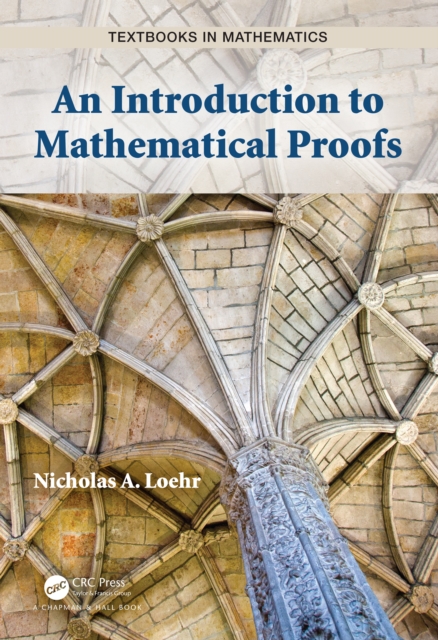
An Introduction to Mathematical Proofs
An Introduction to Mathematical Proofs presents fundamental material on logic, proof methods, set theory, number theory, relations, functions, cardinality, and the real number system. The text uses a methodical, detailed, and highly structured approach to proof techniques and related topics. No prerequisites are needed beyond high-school algebra.
New material is presented in small chunks that are easy for beginners to digest. The author offers a friendly style without sacrificing mathematical rigor. Ideas are developed through motivating examples, precise definitions, carefully stated theorems, clear proofs, and a continual review of preceding topics.
Features
Study aids including section summaries and over 1100 exercises
Careful coverage of individual proof-writing skills
Proof annotations and structural outlines clarify tricky steps in proofs
Thorough treatment of multiple quantifiers and their role in proofs
Unified explanation of recursive definitions and induction proofs, with applications to greatest common divisors and prime factorizations
About the Author:
Nicholas A. Loehr is an associate professor of mathematics at Virginia Technical University. He has taught at College of William and Mary, United States Naval Academy, and University of Pennsylvania. He has won many teaching awards at three different schools. He has published over 50 journal articles. He also authored three other books for CRC Press, including Combinatorics, Second Edition, and Advanced Linear Algebra.
Logic
Propositions; Logical Connectives; Truth Tables
Logical Equivalence; IF-Statements
IF, IFF, Tautologies, and Contradictions
Tautologies; Quantifiers; Universes
Properties of Quantifiers: Useful Denials
Denial Practice; Uniqueness
Proofs
Definitions, Axioms, Theorems, and Proofs
Proving Existence Statements and IF Statements
Contrapositive Proofs; IFF Proofs
Proofs by Contradiction; OR Proofs
Proof by Cases; Disproofs
Proving Universal Statements; Multiple Quantifiers
More Quantifier Properties and Proofs (Optional)
Sets
Set Operations; Subset Proofs
More Subset Proofs; Set Equality Proofs
More Set Quality Proofs; Circle Proofs; Chain Proofs
Small Sets; Power Sets; Contrasting ∈ and ⊆
Ordered Pairs; Product Sets
General Unions and Intersections
Axiomatic Set Theory (Optional)
Integers
Recursive Definitions; Proofs by Induction
Induction Starting Anywhere: Backwards Induction
Strong Induction
Prime Numbers; Division with Remainder
Greatest Common Divisors; Euclid’s GCD Algorithm
More on GCDs; Uniqueness of Prime Factorizations
Consequences of Prime Factorization (Optional)
Relations and Functions
Relations; Images of Sets under Relations
Inverses, Identity, and Composition of Relations
Properties of Relations
Definition of Functions
Examples of Functions; Proving Equality of Functions
Composition, Restriction, and Gluing
Direct Images and Preimages
Injective, Surjective, and Bijective Functions
Inverse Functions
Equivalence Relations and Partial Orders
Reflexive, Symmetric, and Transitive Relations
Equivalence Relations
Equivalence Classes
Set Partitions
Partially Ordered Sets
Equivalence Relations and Algebraic Structures (Optional)
Cardinality
Finite Sets
Countably Infinite Sets
Countable Sets
Uncountable Sets
Real Numbers (Optional)
Axioms for R; Properties of Addition
Algebraic Properties of Real Numbers
Natural Numbers, Integers, and Rational Numbers
Ordering, Absolute Value, and Distance
Greatest Elements, Least Upper Bounds, and Completeness
Suggestions for Further Reading
Nicholas A. Loehr is an associate professor of mathematics at Virginia Technical University. He has taught at College of William and Mary, United States Naval Academy, and University of Pennsylvania. He has won many teaching awards at three different schools. He has published over 50 journal articles. He also authored three other books for CRC Press, including Combinatorics, Second Edition, and Advanced Linear Algebra.
eBook

The Coverage Issue
We address coverage versus depth as a false dichotomy, and reframe the issue in terms of critical questions for instructors to consider regarding student learning. We also review some key reasons to favor inquiry-based learning as an approach to undergraduate instruction.
Journal Article
From Inquiry-Based Learning to Student Research in an Undergraduate Mathematics Program
As an extension to various sponsored summer undergraduate research programs, academic year research for undergraduate students is becoming popular. Mathematics faculty around the country are getting involved with this type of research and administrators are encouraging this effort. Since 2007, we have been conducting academic year research at Lamar University. This study describes our academic year research program and some of its benefits.
Journal Article

Identification of Wind Load Exerted on the Jacket Wind Turbines from Optimally Placed Strain Gauges Using C-Optimal Design and Mathematical Model Reduction
Wind turbine towers experience complex dynamic loads during actual operation, and these loads are difficult to accurately predict in advance, which may lead to inaccurate structural fatigue and strength assessment during the structural design phase, thereby posing safety risks to the wind turbine tower. However, online monitoring of wind loads has become possible with the development of load identification technology. Therefore, an identification method for wind load exerted on wind turbine towers was developed in this study to estimate the wind loads using structural strain, which can be used for online monitoring of wind loads. The wind loads exerted on the wind turbine tower were simplified into six equivalent concentrated forces on the topside of the tower, and the initial mathematical model for wind load identification was established based on dynamic load identification theory in the frequency domain, in which many candidate sensor locations and directions were considered. Then, the initial mathematical model was expressed as a linear system of equations. A numerical example was used to verify the accuracy and stability of the initial mathematical model for the wind load identification, and the identification results indicate that the initial mathematical model combined with the Moore–Penrose inverse algorithm can provide stable and accurate reconstruction results. However, the initial mathematical model uses too many sensors, which is not conducive to engineering applications. Therefore, D-optimal and C-optimal design methods were used to reduce the dimension of the initial mathematical model and determine the location and direction of strain gauges. The C-optimal design method adopts a direct optimisation search strategy, while the D-optimal design method adopts an indirect optimisation search strategy. Then, four numerical examples of wind load identification show that dimensionality reduction of the mathematical model leads to high accuracy, in which the C-optimal design algorithm provides more robust identification results. Moreover, the fatigue damage calculated based on the load identification wind loads closely approximates that derived from finite element simulation wind load, with a relative error within 6%. Therefore, the load identification method developed in this study offers a pragmatic solution for the accurate acquisition of the actual wind load of a wind turbine tower.
Journal Article
Chop Wood, Carry Water, Use Definitions: Survival Lessons of an IBL Rookie
This article describes the author's pedagogical transformation from \"traditional\" lecture-based instruction to Inquiry Based Learning (IBL) instruction of an introductory proofs class for sophomore mathematics majors. The story of the course overhaul follows from inception, through implementation, and ultimately to reflection. Quantitative and qualitative data suggest that the author's shift to IBL in this course was a change for the better.
Journal Article
One Size Can Fit All: A Problem-Solving Capstone Course
A problem-solving capstone course for mathematics and mathematics education majors can help majors synthesize material learned in the major, create a basis for lifelong learning in the discipline, develop confidence, and promote interest in graduate study. Such a course may also play a role in departmental assessment of the major. This article details such a course, including course design, classroom practice, student comments, and resources for faculty interested in developing a similar course.
Journal Article