
Catalogue Search | MBRL


Are you sure you want to remove the book from the shelf?

{{itemTitle}}
209
result(s) for
"munshi"
Sort by:

Modernity and Caste in Khatri and High-Caste Men’s Auto/Biographies
This paper studies the auto/biographies of high-caste middle-class Punjabi Khatri men, and those of cognate castes like Arora and Baniya, written in the first half of the twentieth century: men who were born in the second half of the nineteenth century or early twentieth century. While the discourse on caste under the colonial regime exploded, there was also an embarrassment about caste, or re-thinking its place in society among the upper-caste groups who invested in ideas of progress, improvement and scientism. It is argued that caste was referenced in the memoirs, life stories and self-reflexive writing when these men spoke of their familial backgrounds and admired the deep religiosity and devotionalism of their fathers even though some paternal practices were incongruent with the reformism of the sons. Caste is also in play when one traces the advantages of literacy, education, professional accomplishments, mobility, and reformist activities of men who came to have an important presence in public life. A number of these men had similar life trajectories, indicative of how some aspects of colonial educational and administrative structures could be utilized by them.
Journal Article


The Widow, the Wife, and the Courtesan: A Comparative Study of Social Reform in Premchand's Sevasadan and the Late Nineteenth-Century Bengali and Urdu Novel
This paper argues for reading late nineteenth- and early twentieth-century South Asian social reform novels in multiple linguistic traditions in conjunction with each other in order to gain a broader understanding of the novels' articulations of women's agency. I argue that Hindi novelist Munshi Premchand's Sevasadan (1917) (The House of Service) critiques the institution of marriage, much like the Bengali widow remarriage novel Kishnakanter Uil (1878) (Krishnakanta's Will) by Bankimchandra Chatterjee and Charitraheen (1913) (Characterless) by Saratchandra Chatterjee. Sevasadan draws on Urdu educational reform novels such as Nazir Ahmad's Fasana-e-Mubtala (1885) (The Story of Mubtala) and M.H. Ruswa's Umrao Jaan Ada (1899) to evoke an alternative triangulation of sexuality, respectability, and femininity through the figure of the courtesan. However, reformist and nationalist anxieties about women's sexuality prevent her from becoming a viable alternative. The novel then espouses a specifically Gandhian nationalist ideology, which opens up space for a new figure—the Indian woman, rather than the Hindu woman. Sevasadan, then, unlike the Bengali and Urdu social reform novels, offers a nationalist solution to the question of social reform. However, this solution remains unrealized within the scope of the novel for the birth of the nation is inhibited by the mores of Hindu society.
Journal Article

Writing Self, Writing Empire
Writing Self, Writing Empireexamines the life, career, and writings of the Mughal state secretary, or munshi, Chandar Bhan \"Brahman\" (d. c.1670), one of the great Indo-Persian poets and prose stylists of early modern South Asia. Chandar Bhan's life spanned the reigns of four different emperors, Akbar (1556-1605), Jahangir (1605-1627), Shah Jahan (1628-1658), and Aurangzeb Alamgir (1658-1707), the last of the Great Mughals whose courts dominated the culture and politics of the subcontinent at the height of the empire's power, territorial reach, and global influence. As a high-caste Hindu who worked for a series of Muslim monarchs and other officials, forming powerful friendships along the way, Chandar Bhan's experience bears vivid testimony to the pluralistic atmosphere of the Mughal court, particularly during the reign of Shah Jahan, the celebrated builder of the Taj Mahal. But his widely circulated and emulated works also touch on a range of topics central to our understanding of the court's literary, mystical, administrative, and ethical cultures, while his letters and autobiographical writings provide tantalizing examples of early modern Indo-Persian modes of self-fashioning. Chandar Bhan's oeuvre is a valuable window onto a crucial, though surprisingly neglected, period of Mughal cultural and political history.
eBook


Profile: Medha Munshi: tailoring diabetes care for older patients
[...] many older people cannot perform the tasks that are required to control their diabetes, including measuring their blood sugar, adjusting insulin accordingly, planning meals, timing their meals and medications, and following up on eye examinations and other appointments. [...] cognitive issues and other symptoms like depression often go undiagnosed.
Journal Article
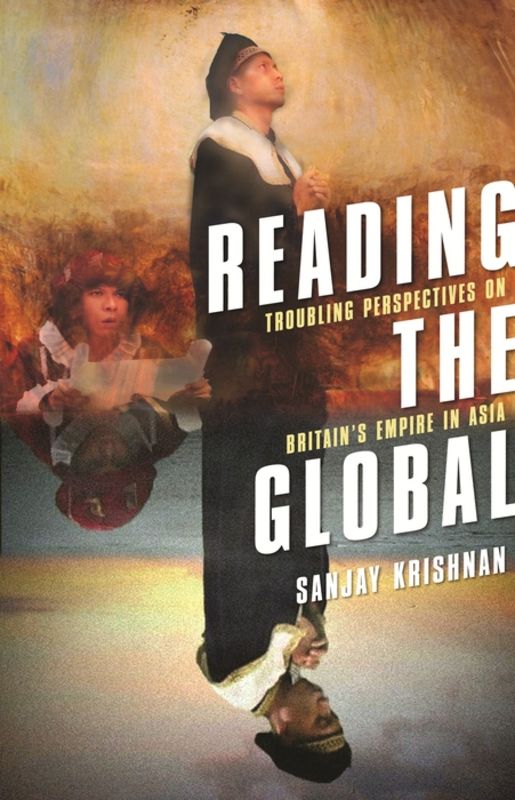
Reading the Global
The global is an instituted perspective, not just an empirical process. Adopted initially by the British in order to make sense of their polyglot territorial empire, the global perspective served to make heterogeneous spaces and nonwhite subjects \"legible,\" and in effect produced the regions it sought merely to describe. The global was the dominant perspective from which the world was produced for representation and control. It also set the terms within which subjectivity and history came to be imagined by colonizers and modern anticolonial nationalists. In this book, Sanjay Krishnan demonstrates how ideas of the global took root in eighteenth- and nineteenth-century descriptions of Southeast Asia. Krishnan turns to the works of Adam Smith, Thomas De Quincey, Abdullah bin Abdul Kadir, and Joseph Conrad, four authors who discuss the Malay Archipelago during the rise and consolidation of the British Empire. These works offer some of the most explicit and sophisticated discussions of the world as a single, interconnected entity, inducting their readers into comprehensive and objective descriptions of the world. The perspective organizing these authors' conception of the global-the frame or code through which the world came into view-is indebted to the material and discursive possibilities set in motion by European conquest. The global, therefore, is not just a peculiar mode of thematization; it is aligned to a conception of historical development unique to European colonial capitalism. Krishnan troubles this dominant perspective. Drawing on the poststructuralist and postcolonial approaches of Jacques Derrida, Michel Foucault, and Gayatri Chakravorty Spivak, and challenging the recent historiography of empire and economic histories of globalization, he elaborates a bold new approach to the humanities in the age of globalization.
eBook

Writing Fiction, Living History: Kanhaiyalal Munshi's historical trilogy
Kanhaiyalal Munshi was a pre-eminent Gujarati author, freedom fighter and politician. A member of the Indian National Congress and a close associate of Mahatma Gandhi, he is credited with having developed and popularized the concept of Gujarat ni asmita, or Gujarati self-consciousness. This paper focusses on a trilogy of Munshi's historical fiction namely Patan Ni Prabhuta (The Glory of Patan) (1916), Gujarat No Nath (The Master of Gujarat) (1917–1918) and Rajadhiraj (The King of Kings) (1922). This paper offers a close reading of these texts, to argue that the trilogy offers the possibility of opening up notions of Gujarati identity, and of showing its constructed nature. Munshi's engagement with the ideas of politics, heroism and nation-building reflects the concerns of a movement that is trying to understand both itself and the nation that it is in the process of imagining. Highlighting the subversion of the texts is an attempt to stretch the boundaries of Gujarati identity, and think differently about the meaning of being Gujarati.
Journal Article

Premchand Plays Chess
This article contextualises and compares the Urdu and Hindi versions of Premchand's 1924 short story The Chess Players. Close examination of the two texts offers fascinating insight into the challenges of adjustment for Premchand as he moved from his Persian/Urdu literary home-base to the world of modern Hindi that he did so much to help create in the early decades of twentieth-century India.
Journal Article
Mpm Capital Limited Partnership
MPM Capital might be behind that latest medical breakthrough. The investment firm targets biotechnology, specialty pharmaceutical, and medical technology companies. With more than $2 billion of committed capital in four funds, it invests in all stages of a firm's development, typically offering between $5 million and $50 million per transaction, and takes a long-term approach. MPM Capital's portfolio includes about 60 firms, including Affymax, AVEO Pharmaceuticals, Oxagen, and Surface Logix. Most of MPM Capital's investments are in US concerns, but the company also seeks opportunities in Europe, and more recently, Asia and Australia. The company has offices in Boston and San Francisco.
Report