
Catalogue Search | MBRL


Are you sure you want to remove the book from the shelf?

{{itemTitle}}
80,403
result(s) for
"mushroom"
Sort by:

Mushroom cultivation in the circular economy
Commercial mushrooms are produced on lignocellulose such as straw, saw dust, and wood chips. As such, mushroom-forming fungi convert low-quality waste streams into high-quality food. Spent mushroom substrate (SMS) is usually considered a waste product. This review discusses the applications of SMS to promote the transition to a circular economy. SMS can be used as compost, as a substrate for other mushroom-forming fungi, as animal feed, to promote health of animals, and to produce packaging and construction materials, biofuels, and enzymes. This range of applications can make agricultural production more sustainable and efficient, especially if the CO2 emission and heat from mushroom cultivation can be used to promote plant growth in greenhouses.
Journal Article

A Review of Mushrooms as a Potential Source of Dietary Vitamin D
When commonly consumed mushroom species are exposed to a source of ultraviolet (UV) radiation, such as sunlight or a UV lamp, they can generate nutritionally relevant amounts of vitamin D. The most common form of vitamin D in mushrooms is D2, with lesser amounts of vitamins D3 and D4, while vitamin D3 is the most common form in animal foods. Although the levels of vitamin D2 in UV-exposed mushrooms may decrease with storage and cooking, if they are consumed before the ‘best-before’ date, vitamin D2 level is likely to remain above 10 μg/100 g fresh weight, which is higher than the level in most vitamin D-containing foods and similar to the daily requirement of vitamin D recommended internationally. Worldwide mushroom consumption has increased markedly in the past four decades, and mushrooms have the potential to be the only non-animal, unfortified food source of vitamin D that can provide a substantial amount of vitamin D2 in a single serve. This review examines the current information on the role of UV radiation in enhancing the concentration of vitamin D2 in mushrooms, the effects of storage and cooking on vitamin D2 content, and the bioavailability of vitamin D2 from mushrooms.
Journal Article
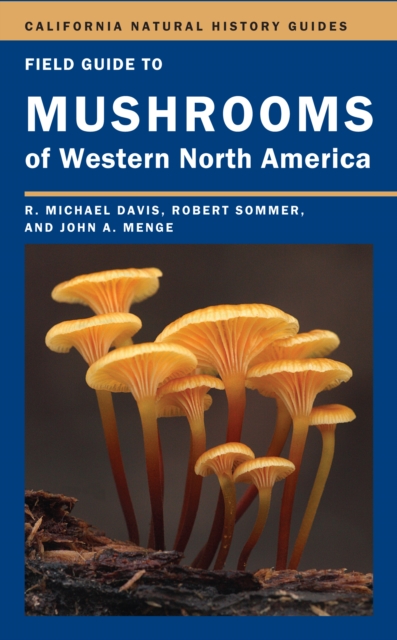
Field guide to mushrooms of western North America
California and the Western States are rich in abundant and diverse species of mushrooms. Amateur mushroom collectors and mycologists alike will find over 300 species of the region's most common, distinctive, and ecologically important mushrooms profiled in this comprehensive field guide. It provides the most up-to-date science on the role of fungi in the natural world, methods to identify species, and locations of mushroom habitats. With excellent color illustrations showing top and side views of mushrooms of the Western States and a user-friendly text, it is informative but still light enough to be carried into the woods. When used to identify mushrooms, keys bring the reader to individual species, with a descriptive text providing cues for identifying additional species. Mushrooms common in urban landscapes are included, which is especially useful for the casual encounter with backyard fungi. The guide also provides a table of both old and new species names, and information on edibility and look-alikes, both dangerous and benign. A section on mushroom arts and crafts features mushroom photography, painting, philately, spore prints, dyes, and cultivation. The guide also offers a comprehensive list of resources including national field guides, general mushroom books and periodicals, club and society contact information, and web sites. · Primary descriptions and illustrations of 300 species of mushrooms plus text descriptions of many more. · Latest word in mushroom taxonomy and nomenclature. Clear discussion of DNA sequencing and new classifications. · Especially good coverage of southern California and Southwestern mushrooms often neglected in other field guides.
eBook

Comprehensive Clinical Profile of Amanita exitialis Poisoning: Integrating Toxin Detection and Autopsy Pathology
is a lethal mushroom species found in southern China. Its amatoxins can cause acute liver injury with a high case-fatality rate. However, reports combining toxin detection in clinical specimens with autopsy pathology remain limited. We conducted a retrospective analysis of
poisoning events treated at Chuxiong Yi Autonomous Prefecture People's Hospital from 2019 to 2024. Toxins were measured in collected mushrooms, patient blood, and urine. Clinical data included demographics, complications, laboratory parameters, and autopsy findings. Associations between a time-weighted urinary amatoxin exposure metric and laboratory indices were assessed. Ten poisoning incidents involving 27 individuals were identified, including five deaths. We collected 10 mushroom samples, 120 urine samples, and 108 blood samples. α-amanitin, β-amanitin, phallacidin, and phallisacin were detected in mushrooms and urine. The detection rates of α-AMA, β-AMA, PCD, and PSC in urine samples were 31.67%, 5.00%, 38.33%, and 49.17%, respectively. Only three blood samples tested positive for α-AMA. The time-weighted urinary amatoxin exposure metric was positively correlated with total bilirubin (TBIL), aspartate aminotransferase (AST), alanine aminotransferase (ALT), blood urea nitrogen (BUN), creatinine (Cr), creatine kinase (CK), creatine kinase isoenzymes (CK-MB), prothrombin time (PT), activated partial thromboplastin time (APTT), and international normalized ratio (INR). Early symptoms included nausea, vomiting, diarrhea, abdominal pain, and distention; later findings involved injury to the liver, kidneys, intestines, heart, and lungs. On the fourth day following ingestion, there was a marked increase in bilirubin levels and a concurrent decrease in liver enzymes, indicating severe damage to the hepatocytes. Platelet count, white blood cell count, hemoglobin, and red blood cell count decreased over time. Autopsies demonstrated hepatic, renal, and myocardial injury, gastrointestinal mucosal exfoliation, and multiorgan hemorrhage. In summary,
poisoning is primarily characterized by liver damage, accompanied by injuries to the kidneys, myocardium, and intestines, as well as multiorgan hemorrhaging, which may lead to blood toxicity. The detection rate of toxins in urine samples is relatively high, and early urine toxin testing can help clarify the diagnosis and guide treatment.
Journal Article

Mushroom poisoning deaths and prevention practices in Hunan, 2014–2023
Wild mushroom poisoning is a major cause of foodborne illness-related deaths in Hunan Province. By analyzing the epidemiological characteristics of fatal incidents due to wild mushroom poisoning in Hunan Province over the past decade and preventive measures implemented in recent years, in this study, we aimed to provide insights for nationwide prevention and control of wild mushroom poisoning, focusing on reducing mortality.
Data from the \"Foodborne Disease Outbreak Surveillance System\" in Hunan Province were used to describe the characteristics of wild mushroom poisoning. Kernel density analysis was performed using ArcMap 10.8.1 to identify spatial clustering.
It showed that from 2014 to 2023, 80 fatal wild mushroom poisoning incidents and 111 deaths, with a case fatality rate of 1.5%, were reported in Hunan Province. June (40 events, 50.0%) and August (17 events, 21.3%) are the peak periods for wild mushroom poisoning. The species most frequently associated with fatal poisoning were Russula subnigricans (20 events, 25.0%), Amanita fuliginea (18 events, 22.5%), and Amanita rimosa (11 events, 13.5%). Kernel density analysis indicated that the fatalities were primarily concentrated in the central and eastern regions of Hunan Province. All (100%) fatal incidence collected from households with poisoning caused by accidental harvesting and consumption. Rural areas accounted for 93.8% of the fatal incidents. The highest proportion of deaths (48.7%) occurred in the age group of 60 years and above.
Fatalities due to wild mushroom poisoning incidents exhibit seasonal and regional variations. We call for multi-sectoral collaboration in prevention and control efforts, focusing on key populations, regions, and time to conduct public education and promotion and ensure smooth access to medical care, which are crucial strategies for preventing wild mushroom poisoning incidents and reducing mortality.
Journal Article
Toxic Potential of Traditionally Consumed Mushroom Species—A Controversial Continuum with Many Unanswered Questions
Mushroom poisonings remain a significant cause of emergency medicine. While there are well-known species, such as Amanita phalloides, causing life-threatening poisonings, there is also accumulating evidence of poisonings related to species that have been considered edible and are traditionally consumed. In particular, the Tricholoma equestre group was reported to cause myotoxicity. In addition, particular wild mushrooms that are traditionally consumed especially in Asia and Eastern Europe have been subject to suspicion due to possible mutagenicity. Hitherto, the causative agents of these effects often remain to be determined, and toxicity studies have yielded contradictory results. Due to this, there is no consensus about the safety of these species. The issue is further complicated by difficulties in species identification and other possible sources of toxicity, such as microbiological contamination during storage, leading to sometimes opposite conclusions about the edibility of a species. This review focuses on existing data about these types of mushroom poisonings, including the still sparse knowledge about the causative chemical agents. In addition, the aim is to initiate a meta-discussion about the issue and to give some suggestions about how to approach the situation from the viewpoint of the collector, the researcher, and the practicing physician.
Journal Article
Compost bacteria and fungi that influence growth and development of Agaricus bisporus and other commercial mushrooms
Mushrooms are an important food crop for many millions of people worldwide. The most important edible mushroom is the button mushroom (Agaricus bisporus), an excellent example of sustainable food production which is cultivated on a selective compost produced from recycled agricultural waste products. A diverse population of bacteria and fungi are involved throughout the production of Agaricus. A range of successional taxa convert the wheat straw into compost in the thermophilic composting process. These initially break down readily accessible compounds and release ammonia, and then assimilate cellulose and hemicellulose into compost microbial biomass that forms the primary source of nutrition for the Agaricus mycelium. This key process in composting is performed by a microbial consortium consisting of the thermophilic fungus Mycothermus thermophilus (Scytalidium thermophilum) and a range of thermophilic proteobacteria and actinobacteria, many of which have only recently been identified. Certain bacterial taxa have been shown to promote elongation of the Agaricus hyphae, and bacterial activity is required to induce production of the mushroom fruiting bodies during cropping. Attempts to isolate mushroom growth-promoting bacteria for commercial mushroom production have not yet been successful. Compost bacteria and fungi also cause economically important losses in the cropping process, causing a range of destructive diseases of mushroom hyphae and fruiting bodies. Recent advances in our understanding of the key bacteria and fungi in mushroom compost provide the potential to improve productivity of mushroom compost and to reduce the impact of crop disease.
Journal Article
Edible mushroom industry in China: current state and perspectives
China is one of the largest producers and exporters of wild edible fungi in the world. Cultivation mushroom production value ranks within the top five after grain, vegetable, fruit, and edible oil plantation, greater than sugar, cotton, and tobacco business. More than 40 new varieties of high market value mushrooms from our group were highlighted in this article. Mushroom cultivations have a high impact on China’s poverty alleviation program, with earnings at least ten times higher than rice and corn. The products were exported to 137 countries and regions, mainly to Japan, South Korea, ASEAN, the USA, and the European Union, among these, Japan is the biggest import market for cultivated mushrooms from China. Rapid development in the market and an increased demand for edible fungi generally enhance the economy of domestic edible fungi. We are the leading research group in logical farm design that is HACCP-certified to reduce the cost of investment for agriculture, thus broadening the consumption market of edible mushrooms and forming a demand-oriented leading industry for the promotion of human health. The enterprise needs to re-examine the operation plan and the strategic thinking to improve the fundamental drivers based on the available resources of the locality. Mushrooms growing intergrate with upgraded technologies and equipment to become smart agriculture which have smart production and intelligent factories. The purpose of suitable products will not change: delicious, nutritious, healthy, and modern.
Key points
• Cultivation mushroom production value ranks within the top five after grain, vegetable, fruit, and edible oil plantation, greater than sugar, cotton, and tobacco business.
• Mushroom cultivations have a high impact on China’s poverty alleviation program, with earnings at least ten times higher than rice and corn.
• The development of transportation and industrialization of mushrooms facilitate the modernization of mushroom industry in China.
Journal Article

Amanitins: The Most Poisonous Molecules of the Fungal World
Among the toxic metabolites of the fungal world, those that, due to their strong biological effect, can seriously (even fatally) damage the life processes of humans (and certain groups of animals) stand out. Amatoxin-containing mushrooms and the poisonings caused by them stand out from the higher fungi, the mushrooms. There are already historical data and records about such poisonings, but scientific research on the responsible molecules began in the middle of the last century. The goals of this review work are as follows: presentation of the cosmopolitan mushroom species that produce amanitins (which are known from certain genera of four mushroom families), an overview of the chemical structure and specific properties of amanitins, a summary of the analytical methods applicable to them, a presentation of the “medical history” of poisonings, and a summary of the therapeutic methods used so far. The main responsible molecules (the amanitins) are bicyclic octapeptides, whose structure is characterized by an outer loop and an inner loop (bridge). It follows from the unusual properties of amanitins, especially their extreme stability (against heat, the acidic pH of the medium, and their resistance to human, and animal, digestive enzymes), that they are absorbed almost without hindrance and quickly transported to our vital organs. Adding to the problems is that accidental consumption causes no noticeable symptoms for a few hours (or even 24–36 h) after consumption, but the toxins already damage the metabolism of the target organs and the synthesis of nucleic acid and proteins. The biochemical catastrophe of the cells causes irreversible structural changes, which lead to necrotic damage (in the liver and kidneys) and death. The scientific topicality of the review is due to the recent publication of new data on the probable antidote molecule (ICR: indocyanine green) against amanitins. Further research can provide a new foundation for the therapeutic treatment of poisonings, and the toxicological situation, which currently still poses a deadly threat, could even be tamed into a controllable problem. We also draw attention to the review conclusions, as well as the mycological and social tasks related to amanitin poisonings (prevention of poisonings).
Journal Article

Mushroom body output neurons encode valence and guide memory-based action selection in Drosophila
Animals discriminate stimuli, learn their predictive value and use this knowledge to modify their behavior. In Drosophila, the mushroom body (MB) plays a key role in these processes. Sensory stimuli are sparsely represented by ∼2000 Kenyon cells, which converge onto 34 output neurons (MBONs) of 21 types. We studied the role of MBONs in several associative learning tasks and in sleep regulation, revealing the extent to which information flow is segregated into distinct channels and suggesting possible roles for the multi-layered MBON network. We also show that optogenetic activation of MBONs can, depending on cell type, induce repulsion or attraction in flies. The behavioral effects of MBON perturbation are combinatorial, suggesting that the MBON ensemble collectively represents valence. We propose that local, stimulus-specific dopaminergic modulation selectively alters the balance within the MBON network for those stimuli. Our results suggest that valence encoded by the MBON ensemble biases memory-based action selection. An animal's survival depends on its ability to respond appropriately to its environment, approaching stimuli that signal rewards and avoiding any that warn of potential threats. In fruit flies, this behavior requires activity in a region of the brain called the mushroom body, which processes sensory information and uses that information to influence responses to stimuli. Aso et al. recently mapped the mushroom body of the fruit fly in its entirety. This work showed, among other things, that the mushroom body contained 21 different types of output neurons. Building on this work, Aso et al. have started to work out how this circuitry enables flies to learn to associate a stimulus, such as an odor, with an outcome, such as the presence of food. Two complementary techniques—the use of molecular genetics to block neuronal activity, and the use of light to activate neurons (a technique called optogenetics)—were employed to study the roles performed by the output neurons in the mushroom body. Results revealed that distinct groups of output cells must be activated for flies to avoid—as opposed to approach—odors. Moreover, the same output neurons are used to avoid both odors and colors that have been associated with punishment. Together, these results indicate that the output cells do not encode the identity of stimuli: rather, they signal whether a stimulus should be approached or avoided. The output cells also regulate the amount of sleep taken by the fly, which is consistent with the mushroom body having a broader role in regulating the fly's internal state. The results of these experiments—combined with new knowledge about the detailed structure of the mushroom body—lay the foundations for new studies that explore associative learning at the level of individual circuits and their component cells. Given that the organization of the mushroom body has much in common with that of the mammalian brain, these studies should provide insights into the fundamental principles that underpin learning and memory in other species, including humans.
Journal Article