
Catalogue Search | MBRL


Are you sure you want to remove the book from the shelf?

{{itemTitle}}
80,593
result(s) for
"mushrooms"
Sort by:

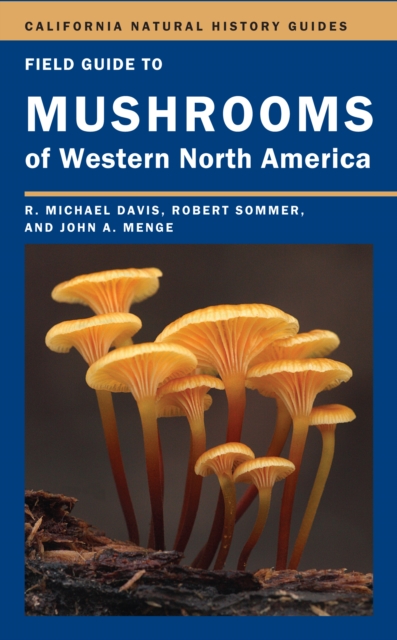
Field guide to mushrooms of western North America
California and the Western States are rich in abundant and diverse species of mushrooms. Amateur mushroom collectors and mycologists alike will find over 300 species of the region's most common, distinctive, and ecologically important mushrooms profiled in this comprehensive field guide. It provides the most up-to-date science on the role of fungi in the natural world, methods to identify species, and locations of mushroom habitats. With excellent color illustrations showing top and side views of mushrooms of the Western States and a user-friendly text, it is informative but still light enough to be carried into the woods. When used to identify mushrooms, keys bring the reader to individual species, with a descriptive text providing cues for identifying additional species. Mushrooms common in urban landscapes are included, which is especially useful for the casual encounter with backyard fungi. The guide also provides a table of both old and new species names, and information on edibility and look-alikes, both dangerous and benign. A section on mushroom arts and crafts features mushroom photography, painting, philately, spore prints, dyes, and cultivation. The guide also offers a comprehensive list of resources including national field guides, general mushroom books and periodicals, club and society contact information, and web sites. · Primary descriptions and illustrations of 300 species of mushrooms plus text descriptions of many more. · Latest word in mushroom taxonomy and nomenclature. Clear discussion of DNA sequencing and new classifications. · Especially good coverage of southern California and Southwestern mushrooms often neglected in other field guides.
eBook


Mushroom cultivation in the circular economy
Commercial mushrooms are produced on lignocellulose such as straw, saw dust, and wood chips. As such, mushroom-forming fungi convert low-quality waste streams into high-quality food. Spent mushroom substrate (SMS) is usually considered a waste product. This review discusses the applications of SMS to promote the transition to a circular economy. SMS can be used as compost, as a substrate for other mushroom-forming fungi, as animal feed, to promote health of animals, and to produce packaging and construction materials, biofuels, and enzymes. This range of applications can make agricultural production more sustainable and efficient, especially if the CO2 emission and heat from mushroom cultivation can be used to promote plant growth in greenhouses.
Journal Article

The River Cottage mushroom handbook
In the first of an exciting new 'River Cottage Handbook' series, mycologist John Wright uncovers the secret habits and habitats of Britain's thriving mushrooms - and the team at River Cottage explain how to cook them to perfection.
Book

A Review of Mushrooms as a Potential Source of Dietary Vitamin D
When commonly consumed mushroom species are exposed to a source of ultraviolet (UV) radiation, such as sunlight or a UV lamp, they can generate nutritionally relevant amounts of vitamin D. The most common form of vitamin D in mushrooms is D2, with lesser amounts of vitamins D3 and D4, while vitamin D3 is the most common form in animal foods. Although the levels of vitamin D2 in UV-exposed mushrooms may decrease with storage and cooking, if they are consumed before the ‘best-before’ date, vitamin D2 level is likely to remain above 10 μg/100 g fresh weight, which is higher than the level in most vitamin D-containing foods and similar to the daily requirement of vitamin D recommended internationally. Worldwide mushroom consumption has increased markedly in the past four decades, and mushrooms have the potential to be the only non-animal, unfortified food source of vitamin D that can provide a substantial amount of vitamin D2 in a single serve. This review examines the current information on the role of UV radiation in enhancing the concentration of vitamin D2 in mushrooms, the effects of storage and cooking on vitamin D2 content, and the bioavailability of vitamin D2 from mushrooms.
Journal Article

A cook's initiation into the gorgeous world of mushrooms
\"This beautiful guide to buying, storing, and cooking more than 20 varieties of wild and cultivated mushrooms (and truffles!) also collects 125 mouthwatering recipes. More than 100 color photographs capture the unique characteristics and, indeed, the elegance, of each type of mushroom, providing tempting visuals for the 100 dishes featured in the book. An evocative object in itself, 'A Cook's Initiation into the Gorgeous World of Mushrooms' will be equally at home on a gourmet's kitchen countertop and a nature lover's coffee table.\"--Publisher description.
Book


Meetings with remarkable mushrooms : forays with fungi across hemispheres
\"Meetings with remarkable mushrooms are an all-year event for Australian ecologist Alison Pouliot. Bifurcating her life between the northern and southern hemispheres, she ensures that she experiences two autumns per year and has double the chances to find fungi. In this book, she uses visits around the world to show readers the diversity of this life-and makes the case that appreciating fungi is a key to understanding the power and fragility of our planet. With Pouliot as our guide, we learn that fire-loving truffles in the genus Mesophelia transform their scent after burning-from a sweet nut-like aroma into a stink like rotting onion-to lure mammals that excavate and eat these truffles, and then spread their spores. Or, with her, we spot the eerie glow of the ghost fungus. The ghost fungus looks like an edible oyster mushroom, but don't confuse them. If you put ghost fungus in your mouth, it will soon come back out, with everything else in your stomach. Or you might enjoy seeing vegetable caterpillars-neither vegetable nor caterpillar-but a fungus that eats arthropods from the inside out. Pouliot's focus on the global community of fungus experts, the importance of local knowledge, and the historic and current contributions of women in mycology all reinforce her message that understanding fungi is fundamental for us all\"-- Provided by publisher.
Book
