
Catalogue Search | MBRL


Are you sure you want to remove the book from the shelf?

{{itemTitle}}
550
result(s) for
"narrative cartography"
Sort by:

Introducing cultural schema into heritage tourism map design: the case of 'Suzhou Classical Gardens' Narrative Map, China
Heritage tourism has been booming all around the world during the recent past. However, current heritage tourism maps have been locked into the traditional cartographic paradigms in standard formats and are thus incapable of exhibiting the local cultures and the stories behind them. To address this issue, this paper introduces the cultural schema theory into narrative cartographic design and proposes a novel theoretical framework for making heritage tourism maps. We use a typical 'Suzhou Classical Gardens' Narrative Map to demonstrate the usefulness and practicability of the proposed theoretical framework. We finally summarize five cartographic design guidelines for making heritage tourism maps. This study is believed to shed fresh light on cartographic design research.
Journal Article

A Skeleton of the Nation: Networks and Infrastructure in The Review
This article argues that Daniel Defoe's tendency to write as a form of narrative cartographer predates his novels of the 1720s and owes much to his periodical writing in the early 1700s. Defoe's Review (1704–13) is an unusually peripatetic periodical, written while its author was travelling widely on the business of Robert Harley. Focusing on the periodical's early years (1704–5), this article explores how The Review acts as a repository for geospatial information. It uses correspondence and advertisements to consider how the periodical details the logistics of its publication and distribution, and how that distribution responds to changes in national infrastructure and politics.
Journal Article

The Art Nouveau Path: Valuing Urban Heritage Through Mobile Augmented Reality and Sustainability Education
Cultural heritage is framed as a living resource for citizenship and education, although evidence on how in situ augmented reality can cultivate sustainability competences remains limited. This study examines the Art Nouveau Path, a location-based mobile augmented reality game across eight points of interest in Aveiro, Portugal, aligned with the GreenComp framework. Within a design-based research case study, the analysis integrates repeated cross-sectional student questionnaires (S1-PRE N = 221; S2-POST N = 439; S3-FU N = 434), anonymized gameplay logs from 118 collaborative groups, and 24 teacher field observations (T2-OBS), using quantitative summaries with reflexive thematic analysis. References to heritage preservation in students’ sustainability conceptions rose from 28.96% at baseline to 61.05% immediately after gameplay, remaining above baseline at follow-up (47.93%). Augmented reality items were answered more accurately than non- augmented reality items (81% vs. 73%) and involved longer on-site exploration (+10.17 min). Triangulated evidence indicates that augmented reality and multimodality amplified attention to architectural details and prompted debates about authenticity. Built heritage, mobilized through lightweight augmented reality within a digital teaching and learning ecosystem, can serve as an effective context for Education for Sustainable Development, strengthening preservation literacy and civic responsibility and generating interoperable cultural traces for future reuse.
Journal Article

MAPPING LIFE STORIES OF EXILED LATVIANS
By using the framework of digital humanities and narrative research, I will discuss why and how to map life stories of exiled Latvians, what problems can occur during the mapping oral history, and what are the first/main results and visualizations of the ongoing research. Thereby, the basis of the article is the fundamental research in humanities whose approach regarding the use of IT will be twofold: (1) applicatory--employing IT tools and digital humanities methods for data procession, visualization and analysis; (2) reflexive--bringing under scrutiny the opportunities of digital scholarship in oral history. This will allow sharing the new knowledge and ways of research about oral history and migration issues in Latvia. Keywords: oral history, migration, narrative cartography, mapping
Journal Article

Beautiful Geography: The Pictorial Maps of Ruth Taylor White
This paper explores the career of Ruth Taylor White, an American cartographic illustrator who published a significant number of pictorial maps from the 1920s into the 1940s. Taylor White's 'cartographs' (as she called them) were characterized by her signature bobble-headed cartoon characters who romped through colourful, attractive landscapes. These visually rich and highly narrative maps simultaneously strove for accuracy and engaged in profound stereotyping with regard to culture, race, gender and class. They reveal not only the aesthetic and conceptual preferences of their maker but also the cultural biases of their middle-class, white American audience.
Journal Article
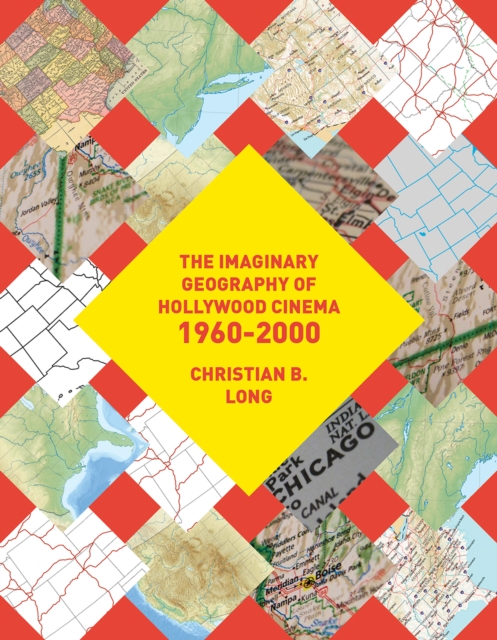
The Imaginary Geography of Hollywood Cinema 1960–2000
The Imaginary Geography of Hollywood Cinema 1960-2000 combines digital cartography with close readings of representative films to write a history of twentieth century Hollywood narrative cinema at the intersection of the geographies of narrative location, production, consumption and taste in the post-classical era, before the rise of digital cinema. This text reorients and redraws the boundaries of film history both literally and figuratively by cataloguing films’ narrative locations on digital maps to examine where Hollywood locates its narratives over time.
eBook
Making a narrative tourism map: the case of Jiaxing's 'Red Boat Spirit Map', China
Today, the marriage between cartographic language and narrative strategies has reshaped maps with the generative capability to represent the intangible historical characters and events involved in social memories following a narrative manner. Despite these advances, rather few efforts have been spared to unveil the potential of tourism maps in a narrative form. This paper seeks to rectify the gaps in this line of research by unfolding the underlying theories and cartographic design guidelines for making narrative tourism maps. In particular, a narrative cartographic design approach is demonstrated and evidenced to be practical using the case of 'Red Boat Spirit Map', a tourism map designed for Jiaxing City, one of the most well-known destinations of China's red tourism. It is believed that the theoretical instrument and cartographic design guidelines presented in our paper are particularly relevant and can be easily adapted to more general research of narrative maps.
Journal Article

Antarctica storytelling: creating interactive story maps for polar regions with graphic-based approach
Although story maps have gained popularity for storytelling related to spatial information, existing story maps authoring tools often fall short in delivering diverse narrative forms and struggle to accurately render polar regions due to the limitations of tile-based mapping. In this work, we introduce a graphic-based method to address these challenges, developing a framework specifically designed for creating story maps for polar regions. Our key contribution lies in offering heuristic strategies for story map design, emphasizing their role in effectively visualizing and disseminating polar culture. This paper outlines essential design tasks for story map creation and introduces three pivotal narrative strategies: integration of map and other visual elements, attention cue, and cartographic interaction. Additionally, we emphasize the significance of storyboard design, focusing on aspects such as logical sequencing, temporal order, map scale, and interactive design. To validate the effectiveness of our story map design framework, we develop several story map cases centered around the exploration history of Antarctica. These examples highlight the diversity and interactivity in the story maps produced through our methodology. Finally, we explore the challenges and limitations encountered in the process of creating story maps, and from these observations, we identify prospective areas for further research.
Journal Article

Plotting practices and politics: (im)mutable narratives in OpenStreetMap
It has been argued that crowd-sourcing offers a radical alternative to conventional ways of mapping, challenging the hegemony of official and commercial cartographies. In this view mapping might begin to offer a forum for different voices, mapping different things, enabling new ways of living. Instead of the Latourian notion of the map as immutable mobile, fixing knowledge and bodies and facilitating governance, the wikification of mapping might facilitate a more mutable politics. This paper focuses on these possibilities by examining OpenStreetMap (OSM), arguably the most significant and emancipatory of neo-geographic assemblages. While not underplaying the importance of a political economic understanding of the Geoweb, it suggests we need to attend more to the contexts through which emergent knowledge communities enact alternatives, and that notions of practice are central in any evaluation of changing politics of representation. Communities involved in OSM contest the geographies that they call into being, and this process can be narrated through a consideration of local action, in different map spaces and places. A processual view of mapping reveals the extent of mutability of OSM, and highlights many of the tensions evident in collaborative remapping. New ways of mapping reciprocally create and reinforce newly expert knowledge communities that may be emancipatory, but that may also reify power relations. Crowd-sourced mapping is likely to comprise a hybrid of mutable and immutable elements.
Journal Article

Cartography I
This report focuses on the growing interest in the relationship between maps, narratives and metanarratives. Following a brief historical contextualization of these relationships, this report explores their current state in the Geoweb era. Using the distinction between story maps and grid maps as an analytical framework, I review emerging issues around the extensive use of technologies and online mapping services (i.e. Google maps) to convey stories and to produce new ones. Drawing on literature in film studies, literary studies, visual arts, computer science and communication, I also emphasize the emergence of new forms of spatial expressions interested in providing different perspectives about places and about stories associated to places. In sum, I argue that mapping both vernacular knowledge and fiction is central to understanding places in depth.
Journal Article