
Catalogue Search | MBRL


Are you sure you want to remove the book from the shelf?

{{itemTitle}}
699
result(s) for
"national consensus"
Sort by:

National Consensus on the Use of Sedation Drugs in the Gastrointestinal Endoscopic Procedures
Gastrointestinal endoscopy is rapidly developing and several gastrointestinal endoscopy equipment are available for both diagnostic and therapeutic purposes. Proper sedation is critical in performing endoscopic procedures, both for patients and physicians. This consensus is used as a guideline and not as a legal standard in performing endoscopic services. This consensus explained the definition, indication, contraindication, and complication prevention during sedation. Factors affecting the need of sedation is patient factors, procedure factors, and sedation level. Diagnostic or therapeutic upper gastrointestinal tract endoscopy which not complicated can be performed with minimal sedation or moderate sedation, while deep sedation can be considered for longer and more complex procedures. Furthermore, assessment and selection of sedation was explained, followed by the guide to choose pharmacological sedation and analgesics. Currently, diazepam, midazolam, propofol, fentanyl, and pethidine is the most likely used sedation during gastrointestinal endoscopy, with midazolam as the preferred medication of choice. This consensus also explained the antidote of each drug and the recovery after procedure. This consensus aimed to improve gastrointestinal endoscopic procedure services in Indonesia.
Journal Article

Suitability and Allocation of Protein-Containing Foods According to Protein Tolerance in PKU: A 2022 UK National Consensus
Introduction: There is little practical guidance about suitable food choices for higher natural protein tolerances in patients with phenylketonuria (PKU). This is particularly important to consider with the introduction of adjunct pharmaceutical treatments that may improve protein tolerance. Aim: To develop a set of guidelines for the introduction of higher protein foods into the diets of patients with PKU who tolerate >10 g/day of protein. Methods: In January 2022, a 26-item food group questionnaire, listing a range of foods containing protein from 5 to >20 g/100 g, was sent to all British Inherited Metabolic Disease Group (BIMDG) dietitians (n = 80; 26 Inherited Metabolic Disease [IMD] centres). They were asked to consider within their IMD dietetic team when they would recommend introducing each of the 26 protein-containing food groups into a patient’s diet who tolerated >10 g to 60 g/day of protein. The patient protein tolerance for each food group that received the majority vote from IMD dietetic teams was chosen as its tolerance threshold for introduction. A virtual meeting was held using Delphi methodology in March 2022 to discuss and agree final consensus. Results: Responses were received from dietitians from 22/26 IMD centres (85%) (11 paediatric, 11 adult). For patients tolerating protein ≥15 g/day, the following foods were agreed for inclusion: gluten-free pastas, gluten-free flours, regular bread, cheese spreads, soft cheese, and lentils in brine; for protein tolerance ≥20 g/day: nuts, hard cheeses, regular flours, meat/fish, and plant-based alternative products (containing 5–10 g/100 g protein), regular pasta, seeds, eggs, dried legumes, and yeast extract spreads were added; for protein tolerance ≥30 g/day: meat/fish and plant-based alternative products (containing >10–20 g/100 g protein) were added; and for protein tolerance ≥40 g/day: meat/fish and plant-based alternatives (containing >20 g/100 g protein) were added. Conclusion: This UK consensus by IMD dietitians from 22 UK centres describes for the first time the suitability and allocation of higher protein foods according to individual patient protein tolerance. It provides valuable guidance for health professionals to enable them to standardize practice and give rational advice to patients.
Journal Article

Suitability and Allocation of Protein-Containing Foods According to Protein Tolerance in PKU
Funding Information: No funding was required for this project. All work was conducted as part of routine service by all dietitians involved. Publisher Copyright: © 2022 by the authors.
Introduction: There is little practical guidance about suitable food choices for higher natural protein tolerances in patients with phenylketonuria (PKU). This is particularly important to consider with the introduction of adjunct pharmaceutical treatments that may improve protein tolerance. Aim: To develop a set of guidelines for the introduction of higher protein foods into the diets of patients with PKU who tolerate >10 g/day of protein. Methods: In January 2022, a 26-item food group questionnaire, listing a range of foods containing protein from 5 to >20 g/100 g, was sent to all British Inherited Metabolic Disease Group (BIMDG) dietitians (n = 80; 26 Inherited Metabolic Disease [IMD] centres). They were asked to consider within their IMD dietetic team when they would recommend introducing each of the 26 protein-containing food groups into a patient’s diet who tolerated >10 g to 60 g/day of protein. The patient protein tolerance for each food group that received the majority vote from IMD dietetic teams was chosen as its tolerance threshold for introduction. A virtual meeting was held using Delphi methodology in March 2022 to discuss and agree final consensus. Results: Responses were received from dietitians from 22/26 IMD centres (85%) (11 paediatric, 11 adult). For patients tolerating protein ≥15 g/day, the following foods were agreed for inclusion: gluten-free pastas, gluten-free flours, regular bread, cheese spreads, soft cheese, and lentils in brine; for protein tolerance ≥20 g/day: nuts, hard cheeses, regular flours, meat/fish, and plant-based alternative products (containing 5–10 g/100 g protein), regular pasta, seeds, eggs, dried legumes, and yeast extract spreads were added; for protein tolerance ≥30 g/day: meat/fish and plant-based alternative products (containing >10–20 g/100 g protein) were added; and for protein tolerance ≥40 g/day: meat/fish and plant-based alternatives (containing >20 g/100 g protein) were added. Conclusion: This UK consensus by IMD dietitians from 22 UK centres describes for the first time the suitability and allocation of higher protein foods according to individual patient protein tolerance. It provides valuable guidance for health professionals to enable them to standardize practice and give rational advice to patients.
Journal Article

Palliative Care Nursing in Australia and the Role of the Registered Nurse in Palliative Care
The registered nurse has crucial preventative, therapeutic, sociocultural, and advocacy roles in promoting quality holistic patient-centred palliative care. This paper examines, describes, and analyses this multifaceted role from an antipodean perspective. We conducted systematic searches using PubMed, Google Scholar, government guidelines, authoritative body regulations, quality control guidelines, and government portals pertaining to palliative care nursing in Australia. This paper relies upon the information garnered from publications, reports, and guidelines resulting from these searches and analyses. The fundamental principles and guiding values of palliative care (and nursing) and the raison d’etre for palliative care as a discipline are underscored and expanded on. Australian Clinical Practice Guidelines (CPGs) pertaining to palliative end-of-life (EOL) nursing care and associated services are discussed. The relevant NMBA nursing standards that RNs need to have to administer opioids/narcotics in palliative care are summarised. The identification of patients who need EOL care, holistic person-centred care planning for them, and consultative multidisciplinary palliative clinical decision making are discussed in the palliative care context. Several components of advance care planning apropos health deterioration and conflicts are discussed. Several aspects of EOL care, especially palliative nursing care, are analysed using research evidence, established nursing and palliative care standards, and the Australian EOL CPGs.
Journal Article

Delphi-Based Consensus on Interstitial Lung Disease Screening in Patients with Connective Tissue Diseases (Croatian National-Based Study)
The aim of this study was to develop a Croatian Delphi-based expert consensus for screening interstitial lung disease (ILD) associated with connective tissue disease (CTD). A systematic literature review was conducted on risk factors for the development of ILD, prevalence and incidence of ILD, diagnostic and screening methods for ILD, and prognosis of ILD in idiopathic inflammatory myopathy (IIM), mixed connective tissue disease (MCTD), primary Sjögren’s syndrome (pSS), rheumatoid arthritis (RA), systemic lupus erythematosus (SLE), and systemic sclerosis (SSc) were performed. Based on the evidence found, experts developed questionnaires for screening and monitoring ILD in each CTD, which were provided via an online survey. Following the electronic survey, two screening algorithms were developed based on the consensus opinions. The detection strategy for ILD included high-resolution computed tomography (HRCT) in addition to pulmonary function testing for IIM, MCTD, and SSc. and pulmonary function testing for newly diagnosed pSS, RA and SLE. However, in patients with identified risk factors for ILD HRCT, these tests should also be performed. A screening strategy for early identification of patients with various CTD-ILD was first developed by a multidisciplinary team of rheumatologists, pulmonologists, and radiologists to identify early CTD patients at risk of ILD, a severe extra-articular manifestation of CTD.
Journal Article

Theoretical appraisal of multimodal federalism as a framework of governance and the prospect of sustainable development in Nigeria
Arising from some retrogressive logic, an ongoing, unresolved debate rages about Nigeria’s ever uncertain federalism. Compared to American history, five decades of nationhood is indeed relatively small. But with the opportunity of learning from existing successful federations coupled with her vast human and material resources, there seems no reason for Nigeria to remain as turbulent and underdeveloped as it stands at present. This paper adopts an historical approach and is subjected to the logic of comparative analysis and attempts, within the prism of well-developed prototype models of federalism, to appraise the workings of the Nigerian federal arrangement. It concludes that as a developing contentious multimodal federation, the leadership class has the arduous task of redefining the process of engagement and reconstruction in order to achieve much needed national consensus towards the attainment of equitable structures and accelerated national development.Suscitado de alguma lógica retrogressiva, um debate em curso, não resolvido, enfurece o federalismo sempre incerto da Nigéria. Em comparação com a história americana, cinco décadas de nacionalidade são relativamente poucas. Mas com a oportunidade de aprender com as federações bem-sucedidas existentes, juntamente com seus vastos recursos humanos e materiais, não parece haver nenhuma razão para a Nigéria permanecer tão turbulenta e subdesenvolvida como está atualmente. Este artigo adopta uma abordagem histórica e é submetido à lógica da análise comparativa e tenta, dentro do prisma de protótipos bem desenvolvidos do federalismo, avaliar o funcionamento do acordo federal nigeriano. Conclui que, como uma federação multimodal contenciosa em desenvolvimento, a classe de liderança tem a árdua tarefa de redefinir o processo de engajamento e reconstrução, a fim de alcançar o consenso nacional necessário para a obtenção de estruturas equitativas e desenvolvimento nacional acelerado.
Journal Article
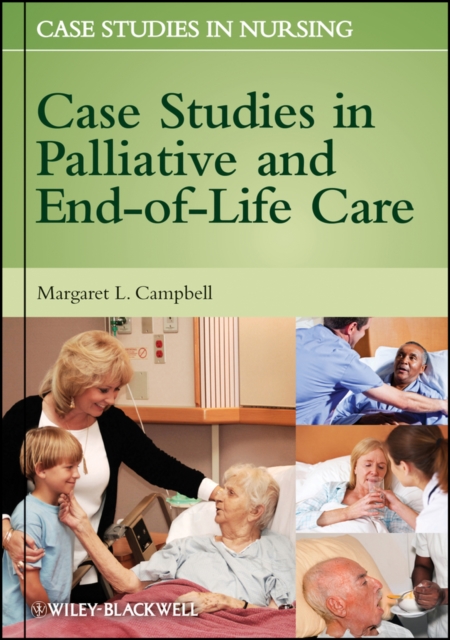
Case studies in palliative and end-of-life care
Case Studies in Palliative and End-of-Life Care uses a case-based approach to provide students and practitioners with an important learning tool to improve critical thinking skills and encourage discussion toward improving experiences for patients and their families.
eBook

The National Consensus Project for Quality Palliative Care Clinical Practice Guidelines Domain 8: Ethical and Legal Aspects of Care
In 2001, leaders with palliative care convened to discuss the standardization of palliative care and formed the National Consensus Project for Quality Palliative Care. In 2004, the National Consensus Project for Quality Palliative Care produced the first edition of Clinical Guidelines for Quality Palliative Care. The Guidelines were developed by leaders in the field who examined other national and international standards with the intent to promote consistent, accessible, comprehensive, optimal palliative care through the health care spectrum. Within the guidelines there are eight domains to the provision of palliative care. This article focuses on the last, but very significant Domain 8—Ethical and Legal Aspects of Care.
Journal Article

Structure and Processes of Care
The first volume in the HPNA Palliative Nursing Series, Structure and Processes of Care provides an overview of palliative nursing care, reviews National Consensus Project guidelines, and offers tools for initiating and maintaining palliative care programs.
eBook

Risk factors for chronic graft-versus-host disease after anti-thymocyte globulin-based haploidentical hematopoietic stem cell transplantation in acute myeloid leukemia
Chronic graft-versus-host disease (cGVHD) is a major complication following unmanipulated haploidentical hematopoietic stem cell transplantation (haplo-HSCT). We aimed to identify the risk factors for cGVHD in patients who underwent anti-thymocyte globulin-based haplo-HSCT for acute myeloid leukemia ( n=280). The diagnosis of cGVHD was in accordance with the National Institutes of Health consensus criteria. A total of 169 patients suffered from cGVHD. The patients who had 3 loci mismatched had a higher 8-year incidence of cGVHD (total, 66.0% vs. 53.7%, P=0.031; moderate to severe, 42.4% vs. 30.1%, P=0.036) than the patients who had 1 to 2 loci mismatched. The patients who had maternal donors had a higher 8-year incidence of moderate to severe cGVHD (49.2% vs. 32.9%, P=0.024) compared with the patients who had other donors. The patients who had grades III to IV acute GVHD (aGVHD) had higher 8-year incidence of cGVHD (total, 88.0% vs. 50.4%, P<0.001; moderate to severe, 68.0% vs. 27.0%, P<0.001) compared with the patients without aGVHD. In multivariate analysis, grades III to IV aGVHD was the only independent risk factor for cGVHD. Thus, further interventions should be considered in patients with severe aGVHD to prevent cGVHD.
Journal Article