
Catalogue Search | MBRL


Are you sure you want to remove the book from the shelf?

{{itemTitle}}
83,081
result(s) for
"national resources"
Sort by:


Decision making in natural resource management : a structured, adaptive approach
This book is intended for use by natural resource managers and scientists, and students in the fields of natural resource management, ecology, and conservation biology, who are confronted with complex and difficult decision making problems.
eBook
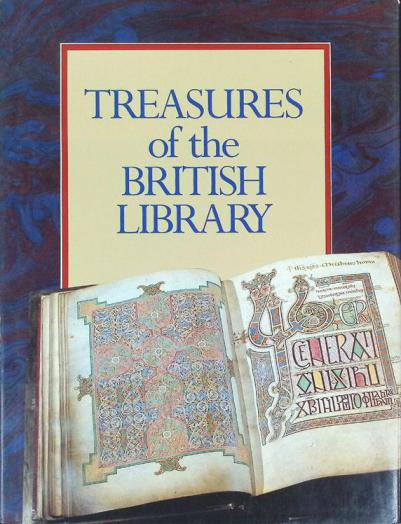
Treasures of the British Library
This definitive volume offers a curated journey through one of the world’s greatest repositories of human knowledge and culture. Compiled by renowned bibliographer Nicolas Barker in collaboration with the British Library’s expert curators, the work showcases the institution’s most significant acquisitions, spanning over two millennia of recorded history. It serves not only as a catalog of rarities but as a narrative of the evolution of the written word, from ancient papyri to the digital age.
BOOK

Critical reflections on existing lawful water uses (ELUs) in South African water law
The National Water Act 36 of 1998 (NWA) introduced a new water law framework for South Africa. According to the NWA, all water uses must be authorised in terms of a water use licence, unless the water use constitutes a Schedule 1 water use, falls under a general authorisation, the need for a licence is dispensed with, or is recognised as an 'existing lawful water use' (ELU). This paper provides a critical analysis of the ELU concept within the context of South African water law. It explores the complexities and challenges associated with ELUs, including their validation, verification and registration, and also reviews recent case law that has helped to elucidate certain key aspects of ELUs. The paper underscores the necessity for more specific legislation to address these ambiguities and uncertainties. Additionally, it critically assesses the potential implications of the recently published National Water Resource Strategy III and the National Water Amendment Bill of 2023. This Bill proposes to abolish the right to declare an ELU, and to empower the relevant authority to impose conditions and/or obligations on ELUs as well as to curtail current ELU volumes.
Journal Article
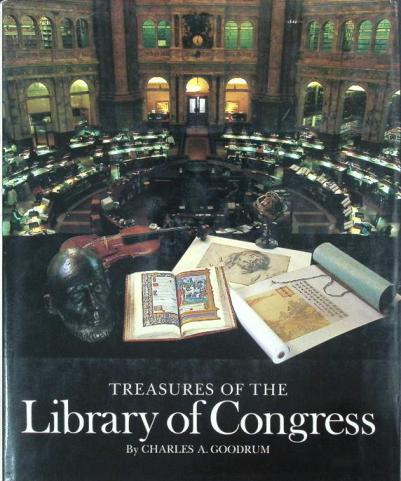
Treasures of the Library of Congress
\"Treasures of the Library of Congress\" is a lavishly illustrated and meticulously researched survey of the vast holdings within the world’s largest library. Authored by Charles A. Goodrum—a long-time staff member and historian of the institution—the volume serves as a curated journey through the Library's most significant cultural, historical, and artistic artifacts. Rather than a dry inventory, the work provides the \"biography\" of the objects, explaining how they came to the Library and their pivotal role in the American and global narrative. It captures the essence of the Library of Congress as both the \"nation’s memory\" and a universal repository of human knowledge.
BOOK

The Brazilian Water Resources Management Policy: Fifteen Years of Success and Challenges
As a result of the increasing global awareness about the importance of water, many developed and developing countries have reviewed their water resources management policies and laws. In Brazil, Law 9,433, enacted in (
1997
), establishes the National Water Resources Policy (NWRP) and the National Water Resource Management System (NWRMS), introducing a new integrated approach to water resources management through the application of planning and economic instruments. At the institutional level, this brought many changes. A new institutional framework was established with the creation of river basin committees and water agencies. Almost 15 years after the Law took effect, these changes are still being implemented, and some adjustments have been necessary. In light of the Brazilian NWRP, this paper presents and analyzes the legal and institutional reform that has been taking place in Brazil’s water resources sector since 1997. An initial analysis shows that today, the implementation process still faces many challenges, hindering the effective consolidation of the instruments set out by Law 9,433/
1997
. The paper concludes that although Brazil’s model is generally in line with international trends, and despite the major progress that has been made to date, in some hydrographic regions the instruments conceived in the country’s model are still in the incipient stage of implementation, indicating that greater efforts are necessary, some of which are suggested in this article.
Journal Article

The paradox of preservation : wilderness and working landscapes at Point Reyes National Seashore
\"Point Reyes National Seashore has a long history as a working landscape, with dairy and beef ranching, fishing, and oyster farming; yet, since 1962 it has also been managed as a National Seashore. The Paradox of Preservation chronicles how national ideals about what a park 'ought to be' have developed over time and what happens when these ideals are implemented by the National Park Service (NPS) in its efforts to preserve places that are also lived-in landscapes. Using the conflict surrounding the closure of the Drakes Bay Oyster Company, Laura Alice Watt examines how NPS management policies and processes for land use and protection do not always reflect the needs and values of local residents. Instead, the resulting landscapes produced by the NPS represent a series of compromises between use and protection--and between the area's historic pastoral character and a newer vision of wilderness. A fascinating and deeply researched book, The Paradox of Preservation will appeal to those studying environmental history, conservation, public lands, and cultural landscape management, or to those looking to learn more about the history of this dynamic California coastal region\"--Provided by publisher.
Book

The Climate of Rebellion in the Early Modern Ottoman Empire
The Climate of Rebellion in the Early Modern Ottoman Empire explores the serious and far-reaching impacts of Little Ice Age climate fluctuations in Ottoman lands. This study demonstrates how imperial systems of provisioning and settlement that defined Ottoman power in the 1500s came unraveled in the face of ecological pressures and extreme cold and drought, leading to the outbreak of the destructive Celali Rebellion (1595–1610). This rebellion marked a turning point in Ottoman fortunes, as a combination of ongoing Little Ice Age climate events, nomad incursions and rural disorder postponed Ottoman recovery over the following century, with enduring impacts on the region's population, land use and economy.
eBook


Resource abundance and economic development
Since the 1960s the resource-poor countries have grown much faster than the resource-rich ones. This reflects basic differences in the speed of industrialization and the nature of the political state that are rooted in the natural resource endowment. Most resource-rich countries experienced a growth collapse in the 1960s and 1970s. This book shows.
eBook