
Catalogue Search | MBRL


Are you sure you want to remove the book from the shelf?

{{itemTitle}}
92
result(s) for
"nationalism in literature 21st century"
Sort by:


Detective Fiction in a Post-Truth World: Eva Rossmann’s Patrioten
Detective fiction is known as a genre that is concerned with revealing truths, both in the fictional world of the text as well as in the society after which it is patterned. The current socio-political environment, however, has been described as an era of post-truth politics and political propaganda, in which truth is more often determined by the relative strength of its representation. While some contemporary crime novels continue to propagate a reassuring message of truth, select Austrian narratives reflect this new so-called post-truth world. Bringing together theories of detective fiction and post-truth discourse, this article demonstrates how Eva Rossmann’s 2017 crime novel Patrioten (Patriots) adapts the themes and structures of traditional detective narratives to expose a society in which certainty is determined less by objective facts than by their construction in the media and socio-political discourse. The analysis concludes that the novel’s thematic and formal innovations help to redefine the socio-critical potential of contemporary detective fiction by showing the imminent dangers of an unregulated post-truth society.
Journal Article


Colony, Nation, and Globalisation
The literature of Malaysia and Singapore, the multicultural epicenter of Asia, offers a rich body of source material for appreciating the intellectual heritage of colonial and postcolonial Southeast Asia. Focusing on themes of home and belong, Eddie Tay illuminates many aspects of identity anxiety experienced in the region, and helps construct a dialogue between postcolonial theory and the Anglophone literatures of Singapore and Malaysia. A chronologically ordered selection of texts is examined, including Swettenham, Bird, Maugham, Burgess, and Thumboo. The genealogy of works includes travel writings and sketches as well as contemporary diasporic novels by Malaysian and Singapore-born authors based outside their countries of origin. The premise is that home is a physical space as well as a symbolic terrain invested with social, political and cultural meanings. As discussions of politics and history argument close readings of literary works, the book should appeal not only to scholars of literature, but also to scholars of Southeast Asian politics and history.
eBook

Public discourses of contemporary China : the narration of the nation in popular literatures, film, and television
\"This book explores the ways the narration of the nation in popular literatures, film, and television gives rise to various public discourses of contemporary China, and defines social subjects such as intellectuals, netizens, media elites, and state-sponsored filmmakers. It argues that these subjects have, to varying degrees, transformed the state project of modernization into their own through mass aestheticization of the nation, whereby postsocialist politics is contingent upon and performative through national aesthetics. By analyzing cultural products from a wide range of media, including the Internet, this book sheds light on the historical significance of nationalism for mass imagination and identification in the less-than-democratic system of China for the past three decades. \"-- Provided by publisher.
Book
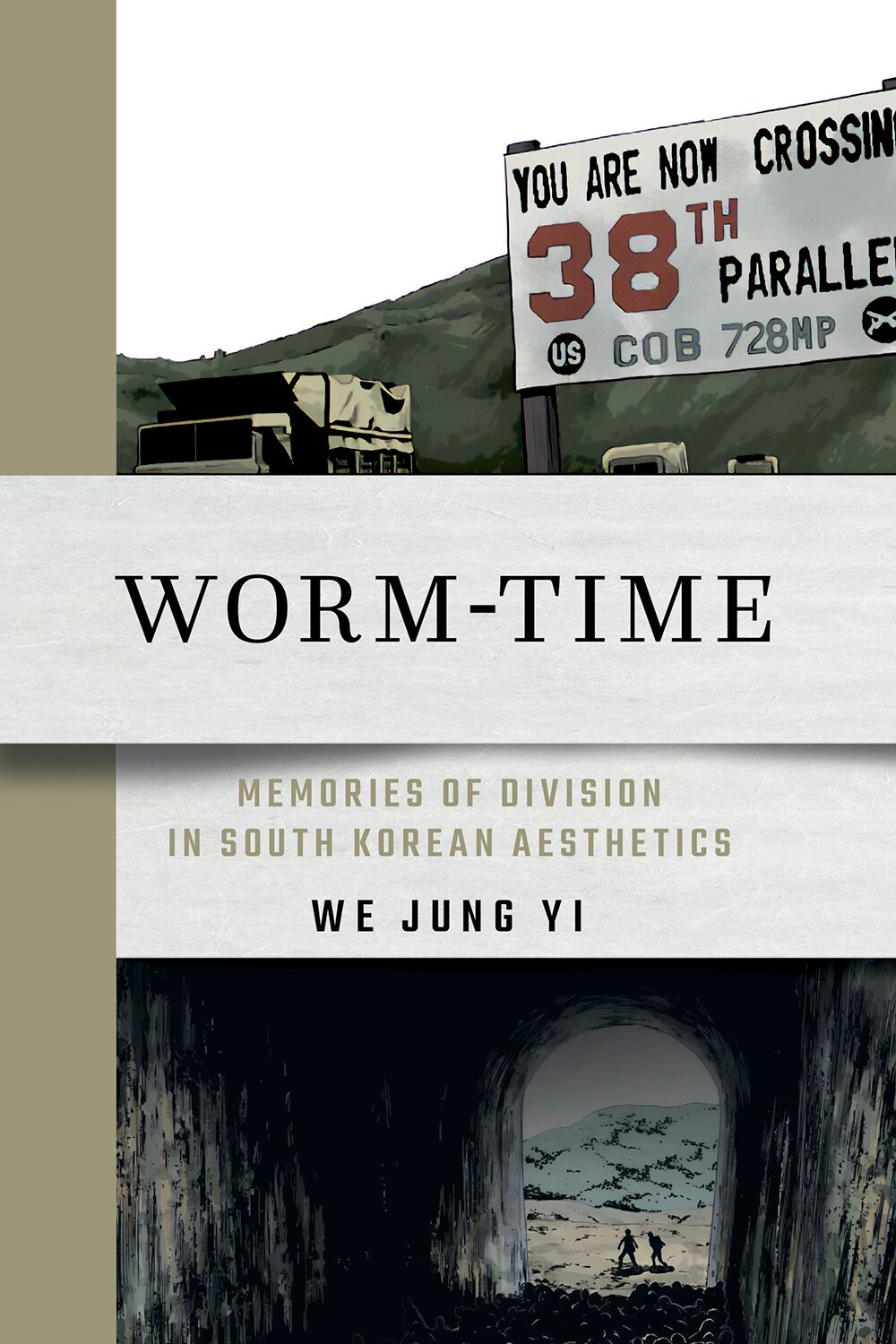
Worm-Time
Worm-Time challenges
conventional narratives of the Cold War and its end, presenting an
alternative cultural history based on evolving South Korean
aesthetics about enduring national division. From novels
of dissent during the authoritarian era to films and webtoons in
the new millennium, We Jung Yi's transmedia analyses unearth
people's experiences of \"wormification\"-traumatic survival,
deferred justice, and warped capitalist growth in the wake of the
Korean War.
Whether embodied as refugees, leftists, or broken families, Yi's
wormified protagonists transcend their positions as displaced
victims of polarized politics and unequal development. Through
metamorphoses into border riders who fly over or crawl through the
world's dividing lines, they reclaim postcolonial memories buried
in the pursuit of modernization under US hegemony and cultivate a
desire for social transformation. Connecting colonial legacies,
Cold War ideologies, and neoliberal economics, Worm-Time
dares us to rethink the post-WWII consensus on freedom, peace, and
prosperity.
eBook


Gender, nation, and the Arabic novel Egypt , 1892–2008
A nuanced understanding of literary imaginings of masculinity and femininity in the Egytian novelGender studies in Arabic literature have become equated with women's writing, leaving aside the possibility of a radical rethinking of the Arabic literary canon and Arab cultural history. While the 'woman question' in the Arabic novel has received considerable attention, the 'male question' has gone largely unnoticed. Now, Hoda Elsadda bucks that trend.Foregrounding voices that have been marginalised alongside canonical works, she engages with new directions in the novel tradition.Sheds new light on key debates, including: >The project of nation-building in the modern periodThe process of inclusion and exclusion in canon formationThe geopolitics of definitions of national or cultural identity in the global worldThe conceptual discourses on gender and nationThe meaning of national identity in a global context
eBook

Close to the Sources
European and African works have found it difficult to move past the image of Africa as a place of exotica and relentless brutality. This book explores the status and critical relationship between politics, culture, literary creativity, criticism, education and publishing in the context of promoting Africa's indigenous knowledge, and seeks to recover some of the sites where Africans continue to elaborate conflicting politics of self-affirmations. It both acknowledges and steps outside the protocols of analysis informed by nationalism, differentiating the forms that postcolonial theories have taken, and arguing for a selective appropriation of theory that emerges from Africa's lived experiences.
eBook

Nationalism and the Postcolonial
The contributions in Nationalism and the Postcolonial examine forms, representations, and consequences of ubiquitous nationalisms in languages, popular culture, and literature across the globe from the perspectives of linguistics, political science, cultural studies, and literary studies.
eBook