
Catalogue Search | MBRL


Are you sure you want to remove the book from the shelf?

{{itemTitle}}
17,968
result(s) for
"new media"
Sort by:


Life after New Media
An argument for a shift in understanding new media—from a fascination with devices to an examination of the complex processes of mediation.
In Life after New Media, Sarah Kember and Joanna Zylinska make a case for a significant shift in our understanding of new media. They argue that we should move beyond our fascination with objects—computers, smart phones, iPods, Kindles—to an examination of the interlocking technical, social, and biological processes of mediation. Doing so, they say, reveals that life itself can be understood as mediated—subject to the same processes of reproduction, transformation, flattening, and patenting undergone by other media forms.
By Kember and Zylinska's account, the dispersal of media and technology into our biological and social lives intensifies our entanglement with nonhuman entities. Mediation—all-encompassing and indivisible—becomes for them a key trope for understanding our being in the technological world. Drawing on the work of Bergson and Derrida while displaying a rigorous playfulness toward philosophy, Kember and Zylinska examine the multiple flows of mediation. Importantly, they also consider the ethical necessity of making a “cut” to any media processes in order to contain them. Considering topics that range from media-enacted cosmic events to the intelligent home, they propose a new way of “doing” media studies that is simultaneously critical and creative, and that performs an encounter between theory and practice.
eBook

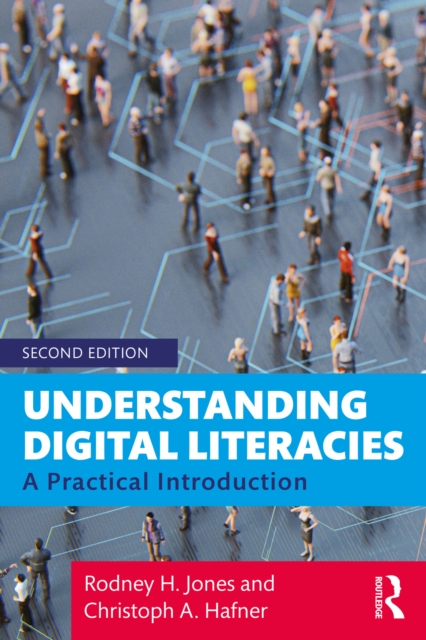
Understanding Digital Literacies
Understanding Digital Literacies Second Edition provides an accessible and timely introduction to new media literacies. This book equips students with the theoretical and analytical tools with which to explore the linguistic dimensions and social impact of a range of digital literacy practices. Each chapter in the volume covers a different topic, presenting an overview of the major concepts, issues, problems, and debates surrounding it, while also encouraging students to reflect on and critically evaluate their own language and communication practices.
Features of the second edition include:
Expanded coverage of a diverse range of digital media practices that now includes Instagram, Snapchat, TikTok, Tinder, and WhatsApp;
Two entirely new chapters on mobility and materiality, and surveillance and privacy;
Updated activities in each chapter which engage students in reflecting on and analysing their own media use;
E-resources featuring a glossary of key terms and supplementary material for each chapter, including additional activities and links to useful websites, articles, and videos.
This book is an essential textbook for undergraduate and postgraduate students studying courses in new media and digital literacies.
eBook


Aesthetics of interaction in digital art
An art-historical perspective on interactive media art that provides theoretical and methodological tools for understanding and analyzing digital art.Since the 1960s, artworks that involve the participation of the spectator have received extensive scholarly attention. Yet interactive artworks using digital media still present a challenge for academic art history. In this book, Katja Kwastek argues that the particular aesthetic experience enabled by these new media works can open up new perspectives for our understanding of art and media alike. Kwastek, herself an art historian, offers a set of theoretical and methodological tools that are suitable for understanding and analyzing not only new media art but also other contemporary art forms. Addressing both the theoretician and the practitioner, Kwastek provides an introduction to the history and the terminology of interactive art, a theory of the aesthetics of interaction, and exemplary case studies of interactive media art.Kwastek lays the historical and theoretical groundwork and then develops an aesthetics of interaction, discussing such aspects as real space and data space, temporal structures, instrumental and phenomenal perspectives, and the relationship between materiality and interpretability. Finally, she applies her theory to specific works of interactive media art, including narratives in virtual and real space, interactive installations, and performance-with case studies of works by Olia Lialina, Susanne Berkenheger, Stefan Schemat, Teri Rueb, Lynn Hershman, Agnes Hegedüs, Tmema, David Rokeby, Sonia Cillari, and Blast Theory.
eBook


Hanan al-cinema : affections for the moving image
An examination of experimental cinema and media art from the Arabic-speaking world that explores filmmakers' creative and philosophical inventiveness in trying times. In this book, Laura Marks examines one of the world's most impressive, and affecting, bodies of independent and experimental cinema from the last twenty-five years: film and video works from the Arabic-speaking world. Some of these works' creative strategies are shared by filmmakers around the world; others arise from the particular economic, social, political, and historical circumstances of Arab countries, whose urgency, Marks argues, seems to demand experiment and invention. Grounded in a study of infrastructures for independent and experimental media art in the Arab world and a broad knowledge of hundreds of films and videos, Hanan al-Cinema approaches these works thematically. Topics include the nomadism of the highway, nostalgia for '70s radicalism, a romance with the archive, algorithmic and glitch media, haptic and networked space, and cinema of the body. Marks develops an aesthetic of enfolding and unfolding to elucidate the different ways that cinema can make events perceptible, seek connections among them, and unfold in the bodies and thoughts of audiences. The phrase Hanan al-cinema expresses the way movies sympathize with the world and the way audiences feel affection for, and are affected by, them. Marks's clear and expressive writing conveys these affections in works by such internationally recognized artists and filmmakers as Akram Zaatari, Elia Suleiman, Hassan Khan, Mounir Fatmi, and Joana Hadjithomas and Khalil Joreige, and others who should be better known.
eBook
Sensations of history : animation and new media art
\"In Sensations of History, James J. Hodge argues that animation in new media art transforms historical experience in the digital age. Combining close textual analysis of experimental new media artworks with discussion of key phenomenological texts, Sensations of History argues for the broad critical significance of animation as we shift from analog to digital technologies. Hodge looks closely at animation aesthetics, which allow for a clear grasp of the ways digital technologies transform our sense of historical experience\"-- Provided by publisher.
Book

Critical Code Studies
An argument that we must read code for more than what it does—we must consider what it means. Computer source code has become part of popular discourse. Code is read not only by programmers but by lawyers, artists, pundits, reporters, political activists, and literary scholars; it is used in political debate, works of art, popular entertainment, and historical accounts. In this book, Mark Marino argues that code means more than merely what it does; we must also consider what it means. We need to learn to read code critically. Marino presents a series of case studies—ranging from the Climategate scandal to a hactivist art project on the US-Mexico border—as lessons in critical code reading. Marino shows how, in the process of its circulation, the meaning of code changes beyond its functional role to include connotations and implications, opening it up to interpretation and inference—and misinterpretation and reappropriation. The Climategate controversy, for example, stemmed from a misreading of a bit of placeholder code as a “smoking gun” that supposedly proved fabrication of climate data. A poetry generator created by Nick Montfort was remixed and reimagined by other poets, and subject to literary interpretation. Each case study begins by presenting a small and self-contained passage of code—by coders as disparate as programming pioneer Grace Hopper and philosopher Friedrich Kittler—and an accessible explanation of its context and functioning. Marino then explores its extra-functional significance, demonstrating a variety of interpretive approaches.
eBook