
Catalogue Search | MBRL


Are you sure you want to remove the book from the shelf?

{{itemTitle}}
2,286
result(s) for
"noodles"
Sort by:


The noodle narratives
Tasty, convenient, and cheap, instant noodles are one of the most remarkable industrial foods ever. Consumed around the world by millions, they appeal to young and old, affluent and impoverished alike. The authors examine the history, manufacturing, marketing, and consumption of instant noodles. By focusing on three specific markets, they reveal various ways in which these noodles enable diverse populations to manage their lives. The first market is in Japan, where instant noodles have facilitated a major transformation of post-war society, while undergoing a seemingly endless tweaking in flavors, toppings, and packaging in order to entice consumers. The second is in the United States, where instant noodles have become important to many groups including college students, their nostalgic parents, and prison inmates. The authors also take note of \"heavy users,\" a category of the chronically hard-pressed targeted by U.S. purveyors. The third is in Papua New Guinea, where instant noodles arrived only recently and are providing cheap food options to the urban poor, all the while transforming them into aspiring consumers. Finally, this study examines the global \"Big Food\" industry. As one of the food system’s singular achievements, the phenomenon of instant noodles provides insight into the pros and cons of global capitalist provisioning.
eBook


Varietal differences in the yield and quality of noodles produced from early-season rice and associated crop traits
Early-season rice often faces limited market competition due to its lower quality, which diminishes farmers' incentives to cultivate it. Developing specific early-season rice varieties tailored for rice noodle production represents a practical solution to this challenge. However, limited information exists on the varietal differences regarding the yield and quality of noodles produced from early-season rice and their determinants. To address this gap, this study conducted field experiments with 15 early-season rice varieties during 2022 and 2023. The results revealed significant varietal differences in rice noodle yield per unit of land area and cooking and eating (texture) qualities of the noodles, with the variety Zhuliangyou 4024 standing out for its ability to produce rice noodles that are both high yielding and of superior cooking and eating qualities. Correlation analysis showed the yield of rice noodles per unit of land area was significantly related to grain yield per unit of land, which in turn was linked to grain weight. Additionally, the analysis showed the cooking loss rate of rice noodles and their chewiness were significantly correlated with both amylose and amylopectin content, whereas the hardness, springiness, and resilience of cooked rice noodles were significantly correlated only with amylose content. However, partial correlation analysis indicated that all these quality traits were significantly correlated solely with amylose content when controlling the influence of other chemical properties. These findings indicate that selecting early-season rice varieties with high grain weight and high amylose content can lead to the production of high-yield and high-quality rice noodles.
Journal Article

Noodles on a bicycle
Children watch in amazement as the bicycle food deliverers of Tokyo stack their noodle bowls like architects, zip through the city like acrobats, and deliver delicious noodles to students, office workers, and families.
CHILDBOOK

Spice-Induced Metal Contamination and Microbiological Risk Assessment of Instant Noodles Prepared for Human Consumption
With the rising worries of potential metal contamination in cooked noodles, this study aimed at unravelling, for the first time, the possible source of metal contamination in cooked noodles. Noodles cooked with full spices (CWFS), cooked with half spices (CWHS), cooked with quarter spices (CWQS), and cooked with no spices (CWNS: control) and their spices were analysed for metals using inductively coupled plasma-atomic emission spectrometry. The microbiological quality of the noodles was also evaluated. Metal concentrations in cooked noodles varied with spice quantity. Noodles CWFS had the highest significant (p < 0.05) concentration of Pb (0.36 ± 0.12 mg/kg), Ni (1.05 ± 0.01 mg/kg), Cd (0.07 ± 0.04 mg/kg), Co (0.02 ± 0.002 mg/kg), and Na (9.45 ± 0.04 mg/kg), compared to the control (CWNS). The mean Pb and Ni of spice and cooked noodles were above the WHO acceptable limits for food and could be harmful to consumers. Pearson’s correlation and PCA showed that packed noodle spices introduced metals into the cooked noodles. Although the hazard indices (adults and children) in all noodle’s groups were less than 1, children still had the potential to contract cancer from Ni exposure because the carcinogenic risk values of CWQS (2.87 × 10⁻⁴), CWHS (3.03 × 10⁻⁴), and CWFS (3.21 × 10⁻⁴) were greater than 10–4. Microbiological analysis revealed the presence of potential pathogens that showed multidrug resistance and the ability to elaborate protease and amylase enzymes. Given the impending chronic health risks inherent in processed noodles, consistent consumption should be avoided.
Journal Article
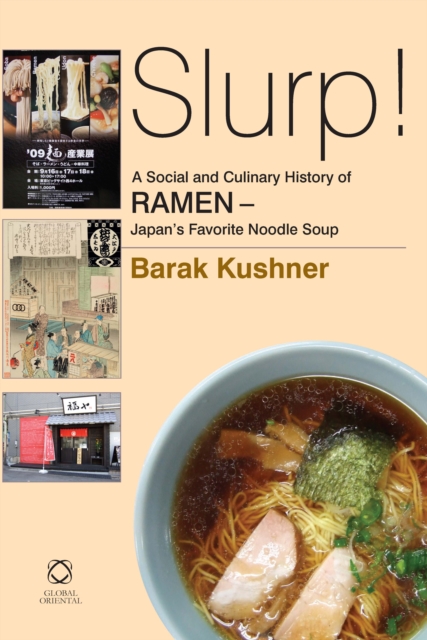
Slurp! A Social and Culinary History of Ramen – Japan’s Favorite Noodle Soup
Based on research in Chinese and Japanese, as well as interviews with comedians, food service professionals, entertainment managers, store-owners, customers, and scholars of food history, Kushner explores the history of ramen and Japan's noodle culture over the last 1,000 years.
eBook

Effect of Ginkgo Biloba Powder on the Physicochemical Properties and Quality Characteristics of Wheat Dough and Fresh Wet Noodles
Effects of ginkgo biloba powder (GBP) on the chemical, physicochemical properties and quality of dough and fresh wet noodles were investigated. Lower contents of gluten and starch, and higher contents of fibre, amylose and flavonoids in GBP than wheat flour, were detected. Water absorption of dough increased and the development time and stability time of dough were decreased with GBP addition. Meanwhile, the pasting properties results showed that the addition of GBP reduced the aging degree of starch and improved the thermal stability of dough. Scanning electron microscopy results showed that addition of GBP smoothed the surface of raw noodles while increasing the hole size of the cooked noodles. With increased GBP addition (0~40%), the chewiness and extensibility of the fresh wet noodles increased significantly (p < 0.05), and the sensory scores changed, ascending from 0~20% substitution, and then descending from 20~40% substitution. The digestibility and estimated glycemic index (eGI) values of the GBP fresh wet noodles decreased significantly (p < 0.05). In general, 20% GBP addition could improve the chewiness, extensibility, taste and nutrition of fresh wet noodles, and decrease the digestibility and eGI values of noodles. Thus, GBP has potential for application in the noodle industry.
Journal Article

